Sunday, July 9, 2023

Walt Whitman and Abraham Lincoln, a Concise Overview.

In 1856, Walt Whitman wrote a lengthy description of his ideal president: a "heroic" figure who was cunning and bold in temperament and knowledgeable about the world, a "Lincolnesque figure," according to Whitman biographer Justin Kaplan. He also opined on this hypothetical president's physical attributes: bearded and dressed in "a clean suit of working attire." Whitman explicitly mentions blacksmiths and boatmen as ideal precursor occupations. Two years later, Whitman first said Lincoln by name in writing. That year, he supported Stephen Douglas over Lincoln for election to the United States Senate. Whitman first saw Lincoln as the president-elect traveling through New York City on February 19, 1861. Whitman noticed Lincoln's "striking appearance" and "unpretentious dignity" and trusted his "supernatural tact" and "idiomatic Western genius." Whitman's admiration of Lincoln steadily grew in the following years; in October 1863, Whitman wrote in his diary, "I love the President personally."
President Abraham Lincoln. 1863


Although they never met, Whitman estimated in a letter he saw Lincoln about twenty to thirty times between 1861 and 1865, sometimes at close quarters. Lincoln passed Whitman several times and nodded to him, interactions that Whitman detailed in letters to his mother. Lincoln biographer William Barton writes there was little "evidence of recognition," and Lincoln likely nodded to many passersby as he traveled. Whitman and Lincoln were in the same room twice: at a reception in the White House following Lincoln's first inauguration in 1861 and when Whitman visited John Hay, Lincoln's private secretary, at the White House.

In August 1863, Whitman wrote in The New York Times, "I see the president almost every day." Later that year, Whitman wrote a letter about Lincoln describing the president's face as a "Hoosier Michel Angelo, so awful ugly it becomes beautiful." In the letter, he described Lincoln as captaining the "ship of state."] Whitman considered himself and Lincoln "afloat in the same stream" and "rooted in the same ground." They shared similar views on slavery and the Union—both men opposed allowing slavery to expand across the U.S. but considered preserving the Union more critical. Whitman consistently supported Lincoln's politics, and similarities have been noted in their literary styles and inspirations. Whitman later said, "Lincoln gets almost nearer me than anybody else."

It remains unclear how much Lincoln knew about Whitman, though he knew of him and his admiration for him. There is an account of Lincoln reading Leaves of Grass in his office and another of the president saying, "Well, he looks like a man!" upon seeing Whitman in Washington, D.C., but these accounts may be fictitious. Whitman was present at Lincoln's second inauguration in 1865 and left D.C. shortly after to visit his family.

On April 15, 1865, shortly after the end of the American Civil War, Lincoln was assassinated. Whitman was residing in Brooklyn while on a break from his job at the Department of the Interior when he heard the news. He recalled that although breakfast was served, the family did not eat and "not a word was spoken all day."

Lectures
In 1875, Whitman published Memoranda During the War. The book, a collection of diary entries, includes a telling of Lincoln's assassination from the perspective of someone who was present. The New York Sun published that section in 1876 to a positive reception. Whitman, by then in failing health, presented himself as neglected, unfairly criticized, and deserving of pity in the form of financial aid. Richard Watson Gilder and several of Whitman's other friends soon suggested he give a "Lincoln Lectures" series aimed at raising both funds and Whitman's profile. Whitman adapted his New York Sun article for the lectures.
Whitman gave a series of lectures on Lincoln from 1879 to 1890. They centered on the assassination and covered the years leading up to and during the American Civil War. Whitman occasionally gave poetry readings, such as "O Captain! My Captain!.' The lectures were generally popular and well-received. In 1980, Whitman's biographer Justin Kaplan wrote that Whitman's 1887 lecture in New York City and its after-party marked the closest he came to "social eminence on a large scale.'

In 1885, Whitman contributed an essay about his experiences with Lincoln to a volume compiled by Allen Thorndike Rice. Novelist Bram Stoker gave at least one lecture on Lincoln and discussed the deceased president with Whitman in November 1886. The two met when Stoker wrote a lengthy letter to Whitman in 1872 and were friends afterward. Robert J. Havlik, in the Walt Whitman Quarterly, noted that their "mutual respect for Lincoln" was the foundation of their relationship.

Whitman's Poetry on Abraham Lincoln
Walt Whitman's first poem on Lincoln's assassination was "Hush'd Be the Camps To-Day," dated April 19, 1865—the day of Lincoln's funeral in Washington. Near the publication of Drum-Taps, Whitman decided the collection would be incomplete without a poem on Lincoln's death and hastily added "Hush'd Be the Camps To-Day.' He halted further distribution of the work and stopped publication on May 1, primarily to develop his Lincoln poems. He followed that poem with "O Captain! My Captain!" and "When Lilacs Last in the Dooryard Bloom'd.' "My Captain" first appeared in The Saturday Press on November 4, 1865, and was published with "Lilacs" in Sequel to Drum-Taps around the same time. Although Sequel to Drum-Taps had been published in early October, copies were not ready for distribution until December. English professor Amanda Gailey described Whitman's decision to publish "My Captain" in The Saturday Press as a teaser for Sequel.
Walt Whitman
In 1866, Whitman's friend William D. O'Connor published The Good Gray Poet: A Vindication, a short, promotional work for Whitman. O'Connor presented Whitman as Lincoln's "foremost poetic interpreter,' proclaiming "Lilacs" as "the grandest and the only grand funeral music poured around Lincoln's bier.'

Whitman did not compose "This Dust Was Once the Man,' his fourth on Lincoln, until 1871. The four poems were first grouped together in the "President Lincoln's Burial Hymn" cluster of Passage to India (1871). Ten years later, in a later edition of Leaves of Grass, the grouping was named "Memories of President Lincoln.' The poems were not revised substantially following their publication.

Whitman wrote two other poems on Lincoln's assassination that were not included in the cluster. Shortly before Whitman's death, he wrote a final poem with the president as its subject, titled "Abraham Lincoln, Born February 12, 1809," in honor of Lincoln's birthday. It appeared in the New York Herald on February 12, 1888. The poem has only two lines and is not well known.

Whitman's Interpretation of Lincoln
Shortly after Lincoln's assassination, hundreds of poems were composed about his death. Historian Stephen B. Oates wrote that the American public had never mourned the death of a head of state so profoundly. Whitman was ready and willing to write poetry on the topic, seizing the opportunity to present himself as an "interpreter of Lincoln" to increase the readership of Leaves of Grass while honoring a man he admired. In 2004, Pannapacker described poetry as a "mixture of innovation and opportunism." Scholar Daniel Aaron writes that "Whitman placed himself and his work in the reflected limelight" of Lincoln's death.

The work of poets like Whitman and Lowell helped to establish Lincoln as the "first American,' epitomizing the newly reunited America. Whitman portrayed Lincoln using metaphors such as the captain of the ship of state and made his assassination a monumental event. Aaron wrote that Whitman treated Lincoln's death as a moment that could unite the American people. The historian Merrill D. Peterson wrote similarly, noting that Whitman's poetry placed Lincoln's assassination firmly in the American consciousness. Kaplan considers responding to Lincoln's death to have been Whitman's "crowning challenge." However, he believes Whitman's poems, such as "My Captain" and "Lilacs," to be less bold and emotionally direct than his earlier work.

Pannapacker concludes that Whitman reached the "heights of fame" through his poetry on Lincoln. He fashioned Lincoln as the "redeemer of the promise of American democracy." The philosopher Martha C. Nussbaum considers Lincoln to be the only individual subject of love in Whitman's poetry. The Chilean critic Armando Donoso wrote that Lincoln's death allowed Whitman to find significance in his feelings surrounding the Civil War. Several critics consider Whitman's response to Lincoln's death to memorialize all those who had died in the Civil War. For Whitman, Lincoln's death was the culmination of all the tragedies the Civil War had brought, according to scholar Betsy Erlikka.

Critics have noted Whitman's departure from his earlier poetry in his Lincoln poems; for instance, in 1932, Floyd Stovall felt that Whitman's "barbaric yawp" had been "silenced" and replaced by a more sentimental side; he noted an undercurrent of melancholy arising from the subject of death. Ed Folsom argues that, although Whitman may have struggled with his success coming from work uncharacteristic of his other poetry, he decided that acceptance was "preferable to exclusion and rejection"

Walt Whitman's Poems in "Memories of President Lincoln"
HUSH'D BE THE CAMPS TO-DAY. MAY 1865
HUSH'D be the camps to-day,
And soldiers let us drape our war-worn weapons,
And each with musing soul retire to celebrate,
Our dear commander's death.

No more for him life's stormy conflicts,
Nor victory, nor defeat—no more time's dark events,
Charging like ceaseless clouds across the sky.

But sing poet in our name,
Sing of the love we bore him—because you, dweller in camps,
know it truly.

As they invault the coffin there,
Sing—as they close the doors of earth upon him—one verse,
For the heavy hearts of soldiers.


O CAPTAIN! MY CAPTAIN! NOVEMBER 1865
O CAPTAIN! my captain! our fearful trip is done;
The ship has weathered every rack, the prize we sought is won;
The port is near, the bells I hear, the people are exulting,
While follow eyes the steady keel, the vessel grim and daring:
But O heart! heart! heart!
Leave you not the little spot,
Where on the deck my captain lies,
Fallen cold and dead.

O captain! my captain! rise up and hear the bells;
Rise up—for you the flag is flung—for you the bugle trills;
For you bouquets and ribbon'd wreaths—for you the shores a-crowding;
For you they call, the swaying mass, their eager faces turning;
O captain! dear father!
This arm I push beneath you;
It is some dream that on the deck,
You've fallen cold and dead.
.
My captain does not answer, his lips are pale and still;
My father does not feel my arm, he has no pulse nor will:
But the ship, the ship is anchor'd safe, its voyage closed and done;
From fearful trip, the victor ship, comes in with object won:
Exult, O shores, and ring, O bells!
But I, with silent tread,
Walk the spot my captain lies,
Fallen cold and dead.


THIS DUST WAS ONCE THE MAN. 1871
THIS dust was once the man,
Gentle, plain, just and resolute, under whose cautious hand,
Against the foulest crime in history known in any land or age,
Was saved the Union of these States.


WHEN LILACS LAST IN THE DOORYARD BLOOM'D. 1865
1
WHEN lilacs last in the dooryard bloom'd,
And the great star early droop'd in the western sky in the night,
I mourn'd, and yet shall mourn with ever-returning spring.

Ever-returning spring, trinity sure to me you bring,
Lilac blooming perennial and drooping star in the west,
And thought of him I love.

2
powerful western fallen star!
shades of night—O moody, tearful night!
great star disappear'd—O the black murk that hides the star!
cruel hands that hold me powerless—O helpless soul of me!
harsh surrounding cloud that will not free my soul.

3
In the dooryard fronting an old farm-house near the white-wash'd palings,
Stands the lilac-bush tall-growing with heart-shaped leaves of rich green,
With many a pointed blossom rising delicate, with the perfume strong I love,

With every leaf a miracle—and from this bush in the dooryard,
With delicate-color'd blossoms and heart-shaped leaves of rich green,
A sprig with its flower I break.

4
In the swamp in secluded recesses,
A shy and hidden bird is warbling a song.

Solitary the thrush,
The hermit withdrawn to himself, avoiding the settlements,
Sings by himself a song.

Song of the bleeding throat,
Death's outlet song of life, (for well dear brother I know,
If thou wast not granted to sing thou would'st surely die.)

5
Over the breast of the spring, the land, amid cities,
Amid lanes and through old woods, where lately the violets peep'd 
from the ground, spotting the gray debris,
Amid the grass in the fields each side of the lanes, passing the endless grass,
Passing the yellow-spear'd wheat, every grain from its shroud in the dark-brown fields uprisen,
Passing the apple-tree blows of white and pink in the orchards,
Carrying a corpse to where it shall rest in the grave,
Night and day journeys a coffin.

6
Coffin that passes through lanes and streets,
Through day and night with the great cloud darkening the land,
With the pomp of the inloop'd flags with the cities draped in black,
With the show of the States themselves as of crape-veil'd women standing,
With processions long and winding and the flambeaus of the night,
With the countless torches lit, with the silent sea of faces and the unbared heads,
With the waiting depot, the arriving coffin, and the sombre faces,
With dirges through the night, with the thousand voices rising strong and solemn,
With all the mournful voices of the dirges pour'd around the coffin,
The dim-lit churches and the shuddering organs—where amid these you journey,

With the tolling tolling bells' perpetual clang,
Here, coffin that slowly passes,
I give you my sprig of lilac.

7
Nor for you, for one alone,
Blossoms and branches green to coffins all I bring,
For fresh as the morning, thus would I chant a song for you O
sane and sacred death.

All over bouquets of roses,
O death, I cover you over with roses and early lilies,
But mostly and now the lilac that blooms the first,
Copious I break, I break the sprigs from the bushes,
With loaded arms I come, pouring for you,
For you and the coffins all of you O death.)

8
O western orb sailing the heaven,
Now I know what you must have meant as a month since I walk'd,
As I walk'd in silence the transparent shadowy night,
As I saw you had something to tell as you bent to me night after night,
As you droop'd from the sky low down as if to my side, 
(while the other stars all look'd on,)
As we wander'd together the solemn night, 
(for something I know not what kept me from sleep,)
As the night advanced, and I saw on the rim of the west how full you were of woe,
As I stood on the rising ground in the breeze in the cool transparent night,
As I watch'd where you pass'd and was lost in the netherward black of the night,
As my soul in its trouble dissatisfied sank, as where you sad orb,
Concluded, dropt in the night, and was gone.

9
Sing on there in the swamp,
O singer bashful and tender, I hear your notes, I hear your call,
I hear, I come presently, I understand you,
But a moment I linger, for the lustrous star has detain'd me,
The star my departing comrade holds and detains me.

10
O how shall I warble myself for the dead one there I loved?
And how shall I deck my song for the large sweet soul that has gone?
And what shall my perfume be for the grave of him I love?

Sea-winds blown from east and west,
Blown from the Eastern sea and blown from the Western sea, till 
there on the prairies meeting,
These and with these and the breath of my chant,
I'll perfume the grave of him I love.

11
O what shall I hang on the chamber walls?
And what shall the pictures be that I hang on the walls,
To adorn the burial-house of him I love?

Pictures of growing spring and farms and homes,
With the Fourth-month eve at sundown, and the gray smoke lucid and bright,
With floods of the yellow gold of the gorgeous, indolent, 
sinking sun, burning, expanding the air,
With the fresh sweet herbage under foot, and the pale green leaves of the trees prolific,
In the distance the flowing glaze, the breast of the river, with a wind-dapple here and there,
With ranging hills on the banks, with many a line against the sky, and shadows,
And the city at hand with dwellings so dense, and stacks of chimneys,
And all the scenes of life and the workshops, and the workmen homeward returning.

12
Lo, body and soul—this land,
My own Manhattan with spires, and the sparkling and hurrying
tides, and the ships,
The varied and ample land, the South and the North in the light,
Ohio's shores and flashing Missouri,
And ever the far-spreading prairies cover'd with grass and corn.

Lo, the most excellent sun so calm and haughty,
The violet and purple morn with just-felt breezes,
The gentle soft-born measureless light,

The miracle spreading bathing all, the fulfill'd noon,
The coming eve delicious, the welcome night and the stars,
Over my cities shining all, enveloping man and land.

13
Sing on, sing on you gray-brown bird,
Sing from the swamps, the recesses, pour your chant from the bushes,
Limitless out of the dusk, out of the cedars and pines.

Sing on dearest brother, warble your reedy song,
Loud human song, with voice of uttermost woe.

O liquid and free and tender!
O wild and loose to my soul—O wondrous singer!
You only I hear—yet the star holds me, (but will soon depart,)
Yet the lilac with mastering odor holds me.

14
Now while I sat in the day and look'd forth,
In the close of the day with its light and the fields of spring, and
the farmers preparing their crops,
In the large unconscious scenery of my land with its lakes and forests,
In the heavenly aerial beauty, (after the perturb'd winds and the storms,)
Under the arching heavens of the afternoon swift passing, and the
voices of children and women,
The many-moving sea-tides, and I saw the ships how they sail'd,
And the summer approaching with richness, and the fields all busy with labor,
And the infinite separate houses, how they all went on, each with
its meals and minutia of daily usages,
And the streets how their throbbings throbb'd, and the cities pent
—lo, then and there,
Falling upon them all and among them all, enveloping me with the rest,
Appear'd the cloud, appear'd the long black trail,
And I knew death, its thought, and the sacred knowledge of death.

Then with the knowledge of death as walking one side of me,
And the thought of death close-walking the other side of me,

And I in the middle as with companions, and as holding the hands of companions,
I fled forth to the hiding receiving night that talks not,
Down to the shores of the water, the path by the swamp in the dimness,
To the solemn shadowy cedars and ghostly pines so still.

And the singer so shy to the rest receiv'd me,
The gray-brown bird I know receiv'd us comrades three,
And he sang the carol of death, and a verse for him I love.

From deep secluded recesses,
From the fragrant cedars and the ghostly pines so still,
Came the carol of the bird.

And the charm of the carol rapt me,
As I held as if by their hands my comrades in the night,
And the voice of my spirit tallied the song of the bird.

Come lovely and soothing death,
Undulate round the world, serenely arriving, arriving,
In the day, in the night, to all, to each,
Sooner or later delicate death.

Prais'd be the fathomless universe,
For life and joy, and for objects and knowledge curious,
And for love, sweet love—but praise! praise! praise!
For the sure-enwinding arms of cool-enfolding death.

Dark mother always gliding near with soft feet,
Have none chanted for thee a chant of fullest welcome?
Then I chant it for thee, I glorify thee above all,
I bring thee a song that when thou must indeed come, come unfalteringly.

Approach strong deliveress,
When it is so, when thou hast taken them I joyously sing the dead,
Lost in the loving floating ocean of thee,
Laved in the flood of thy bliss O death.

From me to thee glad serenades,
Dances for thee I propose saluting thee, adornments and feastings for thee,
And the sights of the open landscape and the high-spread sky are fitting,
And life and the fields, and the huge and thoughtful night.

The night in silence under many a star,
The ocean shore and the husky whispering wave whose voice I
know,
And the soul turning to thee O vast and well-veil'd death,
And the body gratefully nestling close to thee.

Over the tree-tops I float thee a song,
Over the rising and sinking waves, over the myriad fields and the prairies wide,
Over the dense-pack'd cities all and the teeming wharves and ways,
I float this carol with joy, with joy to thee O death.

15
To the tally of my soul,
Loud and strong kept up the gray-brown bird,
With pure deliberate notes spreading filling the night.

Loud in the pines and cedars dim,
Clear in the freshness moist and the swamp-perfume,
And I with my comrades there in the night.

While my sight that was bound in my eyes unclosed,
As to long panoramas of visions.

And I saw askant the armies,
I saw as in noiseless dreams hundreds of battle-flags,
Borne through the smoke of the battles and pierc'd with missiles I saw them,
And carried hither and yon through the smoke, and torn and bloody,
And at last but a few shreds left on the staffs, (and all in silence,)
And the staffs all splinter'd and broken.

I saw battle-corpses, myriads of them,
And the white skeletons of young men, I saw them,
I saw the debris and debris of all the slain soldiers of the war,
But I saw they were not as was thought,
They themselves were fully at rest, they suffer'd not,
The living remain'd and suffer'd, the mother suffer'd,
And the wife and the child and the musing comrade suffer'd,
And the armies that remain'd suffer'd.

16
Passing the visions, passing the night,
Passing, unloosing the hold of my comrades' hands,
Passing the song of the hermit bird and the tallying song of my soul,
Victorious song, death's outlet song, yet varying ever-altering song,
As low and wailing, yet clear the notes, rising and falling, flooding the night,
Sadly sinking and fainting, as warning and warning, and yet again bursting with joy,
Covering the earth and filling the spread of the heaven,
As that powerful psalm in the night I heard from recesses,
Passing, I leave thee lilac with heart-shaped leaves,
I leave thee there in the door-yard, blooming, returning with spring.

I cease from my song for thee,
From my gaze on thee in the west, fronting the west, communing with thee,
O comrade lustrous with silver face in the night.

Yet each to keep and all, retrievements out of the night,
The song, the wondrous chant of the gray-brown bird,
And the tallying chant, the echo arous'd in my soul,
With the lustrous and drooping star with the countenance full of woe,
With the holders holding my hand nearing the call of the bird,
Comrades mine and I in the midst, and their memory ever to keep, 
for the dead I loved so well,
For the sweetest, wisest soul of all my days and lands—and this for his dear sake,
Lilac and star and bird twined with the chant of my soul,
There in the fragrant pines and the cedars dusk and dim.

Compiled by Dr. Neil Gale, Ph.D.

Robert Todd Lincoln saving President Lincoln's papers after the Chicago Fire in 1871.

Amid several moves, admission to the bar, marriage, and establishment of a law practice, Robert Lincoln safeguarded his collection of family memorabilia and letters. It is not known whether he kept the papers at his residence at 653 South Wabash Avenue (700 South Wabash, today) or at his law office, located in the Marine Bank Building at 154 Lake Street (132 West Lake Street today)
The ruins of the Marine Bank Building (built 1857) at 154 Lake Street just after the 1871 Chicago Fire. Robert Lincoln's law office was located in the building.


It is likely that the collection was somehow divided between the two. The bank building was a casualty of the Great Fire that destroyed much of Chicago's business district in 1871. The law firm had a fireproof vault that, in Lincoln's words. "Stood the fire," but the files not stored in the vault were destroyed., Several letters in the Robert Todd Lincoln Collection state that family papers were among those lost in the blaze. To one querist, Robert reported: "I am not the possessor of any autograph letters of my father. Everything of that kind owned by me was burned in the Chicago Fire." 

By 1873, Robert Lincoln was rebuilding and eager to regain the letters stored in Bloomington by David. "I get into my new office (at 31 Portland Block; 10 South Dearborn Street today) next week, he wrote in April, "and will have a vault room for the boxes with which you have been inconvenienced." Almost a year later, he had yet to pick up the papers. On February 18, 1874, Robert wrote that he had decided to turn the manuscripts over to his father's former secretaries, John Hay and John G. Nicolay, who were researching their biography of the former Chief Executive. 

"Nicolay and Hay," he wrote, "are both anxious to get to work on the papers you have at Bloomington." Robert proposed making a "hasty examination" of the papers at his Chicago office "so as to weed out anything purely private and then let Hay and Nicolay have the rest for their use." He urged Judge Davis to send the papers immediately.

Whatever wedding Lincoln attempted would have been accomplished over only a few weeks. By July, Nicolay and Hay had both the White House and Springfield manuscripts, less what Robert Lincoln considered "purely private." The papers stayed with Nicolay in Washington D.C., in various banks, vaults, and offices.
Abraham Lincoln, A History, by Nicolay & Hay. The Complete Set in PDF.
Volumes: 01, 02, 03, 04, 05, 06, 07, 08, 09, 10


Compiled by Dr. Neil Gale, Ph.D.

Saturday, July 8, 2023

The Rumors of the Todds being Disappointed in Mary's Choice of Abraham Lincoln for her Husband, Debunked.

A recurring controversy among Lincoln biographers has been the precise relationship between Lincoln and the aristocratic family of his wife, the Todds of Kentucky. Many writers have suggested that the family was disappointed in Mary's choice of a husband.

That image is contradicted in a letter written by Mary's father, Robert Smith Todd, in March 1844, some sixteen months after their wedding. In the letter, printed below, Todd shows that he was not only well informed of the ambitions of his son-in-law but approved of them and offered to use his influence to "procure some appointment . . . Such as District Attorney of Judge."

The letter concerns the only lawsuit in which Lincoln represented his father-in-law. The case arose from expressed surprise, for he had reasoned that the State Bank notes year conflict over the value of Illinois State Bank notes that were used as payment for 160 acres of land in Curran Township, Sangamon County, southwest of Springfield. Todd intended the land as an eventual gift for his Springfield Daughters—Mary, Frances, and Elizabeth—and their husbands, Abraham Lincoln, Dr. William Wallace, and Ninian Wirt Edwards.


Todd had contracted to purchase the land in March 1841 from Nathaniel A. Ware, a speculator from Clinton, Missouri. Edwards was authorized to act as Todd's agent in the transaction and accordingly signed three notes—one for $415.70, due June 1, 1842, and one for $400, due June 1, 1844. Interest on the purchase was 12%.

Three months later, Todd gave Ware a mortgage deed on the land as security. In turn, Todd received from Ware's Springfield agent, Erastus Wright, a signed statement that the State bank notes would be accepted as payment, even though, at the time, such notes had depreciated in value and were expected to continue to do so.

Todd began repaying his debt in 1842. On March 3, Ware was given $176.37 in notes, and on April 14, an additional $40, for a total of $216.37. On May 10, Todd offered to pay the remainder of this 1842 commitment. Again, he used State Bank notes, which by then had depreciated to nearly half their face value. Ware refused to accept the notes, insisting that the earlier agreement between Edwards and Wright was no longer valid.

On June 16, 1843, Lincoln filed suit in Sangamon County Circuit Court in order to compel Ware to accept the notes as payment. Todd v. Ware came to court in November and was argued throughout the last two weeks of that month and on December 8 and 9 in the judge's chambers. Lincoln heard of the decision—against Todd—sometime in February or March of 1844. When informed of the ruling, Todd expressed surprise, for he had reasoned that the State bank notes would appreciate pari passu (at an equal rate) with Illinois land, which was indeed increasing in value. "How your courts could have decided as they have done in this instance, I can't comprehend," Todd complained to Edwards in his letter. Nevertheless, he approved a check for $980, leaving a small balance that he promised to send "in due time."

Todd begins the letter by apologizing for a long absence in New Orleans, during which time both sons-in-law had attempted to write to him. He then discusses the transaction with Ware and finally proceeds to family matters—the original reason for the land purchase. The letter is transcribed exactly as Todd wrote it.

Lexington Kentucky   
     March 13, 1844   

Dear Sir,
I returned home from New Orleans about 10 days ago and found your letter of December 19, which had not been transmitted to me, under my own, and their beliefs, I would have been home sooner, but circumstances of business forbade it, and I had to submit. Since my return, your Letter of March 1 is received and contents noted.

My absence from home, I fear, has put you in some inconvenience, and I hasten to repair any and all damages resulting from my absence or negligence. I have received Mr. Lincoln's letter advising me of a decision against me. Whether right or wrong, I wish to do what I have to do instantly.

I have not, since my return sent on the money east, but without regard to that, send on a check on the Bank of St. Louis $980—and you can remit the house, Eastwood.

The receipts of Mr. Wright's agent for Mr. Ware are for the following:

March 3, 1842, for        $176.37
April 14, 1842, for         $40.00
                                   ========
                                     $216.37

To which add check
now enclosed on
Bank of Missouri           $980.00
                                   ========
                                     $1,196.37

This Sum, I wish, applied to the payment of the Notes held by Mr. Ware—of his agent—deducting any sum you may have paid on account of this transaction.

In a few days, I shall send forward the executed deeds as originally intended for Dr. Wallace. Julia Edwards, and for Mr. Lincoln and Marym and desire that each and all of you shall use it to your best advantage in any way you may deem best. Mr. Lincoln wrote me a few days since and suggested that he was going to housekeeping; I wish him to avail himself of this Land immediately if it will be of any advantage or add to his comfort in any way.

The balance of Mr. Ware's payment, I will provide for in due time. My reason for giving you the instructions I did was that I believed the Illinois Money and Illinois Land would go Pari Passu (side by side), and how your Courts could have decided as they have done in this instance, I can't comprehend.

Mr. Lincoln, I discovered, is using his influence and talents for the Whig cause. I think he is right; for a good government should be first in the mind of every patriot. I can use influence here if Mr. Clay is elected (of which there can be no doubt) to procure some appointment for him, which will keep him out of Congress until his situation in a monied point of view, will enable him to take a stand in Congress, creditable both to himself and country. Such as District Attorney or Judge. I will write him in a few days. Present me to all my children and grandchildren in the kindest manner.

I am much oppressed with business: the longer I live, the more it seems to crowd upon me; until I am near exhausted.

My family is all well: and I should be glad to see any of you come and pay me a visit. You will be received kindly.

Yours truly,   
R. S. Todd    

Artist's conception of the Springfield home of Abraham Lincoln before the addition of the second story. Mary Lincoln Surprised Abraham (who walked past his own house) with a Home Remodeling Project.


Less than a week after writing the letter, Todd conveyed the land to the Lincolns, and Wallaces, and his granddaughter Julia Edwards. For the Lincolns, who in January had purchased a house from Rev. Charles Dresser, the land was an investment in the future. Mary Lincoln held her portion until September 18, 1954, when she sold it to Robert Anderson for $1,200, which was used to remodel the Lincoln home on Eighth and Jackson Streets. Ironically, $1,200 was approximately the amount that Robert Smith Todd had given for the entire tract thirteen years earlier. Illinois land, unlike Illinois State bank notes, had indeed doubled in value.

Todd was correct in forecasting Lincoln's efforts to secure the Whig nomination to Congress—which in 1844 went to Edward Baker and finally to Lincoln in 1846. Concerning the Career of Henry Clay, a fellow Kentuckian, however, Todd was less accurate. Anticipating Clay's election to the Presidency (of which there could  "be no doubt"), Todd had generously offered to use his influence with Clay, a personal friend, for an appointment for Lincoln. Clay's defeat in November by Democrat James K. Polk, however, ended that part of Todd's ambitions for his son-in-law.

Compiled by Dr. Neil Gale, Ph.D.

Thursday, July 6, 2023

Highland Amusement Park, Freeport, Illinois (1905-1949)

Highland Amusement Park was a popular amusement park in Freeport, Illinois, which opened in 1905. It was located on the banks of the Pecatonica River, just south of downtown Freeport.

The park was initially called Freeport Park but was renamed Highland Park in 1912. 
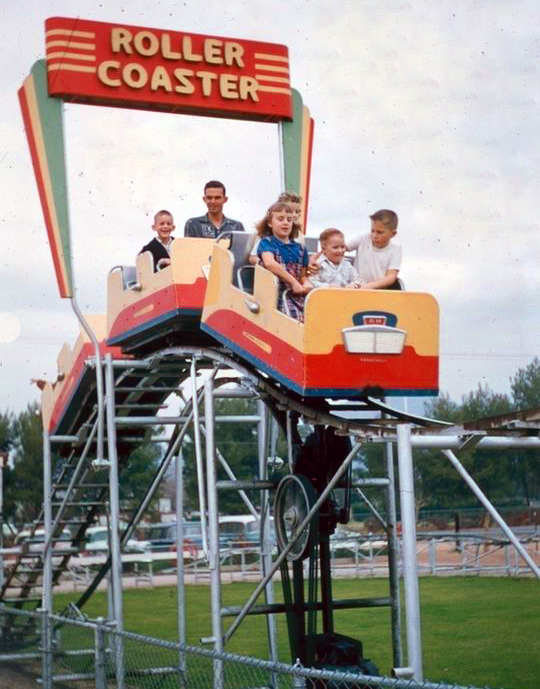
This photo is a visual aid.


The park was opened in 1907 by John R. Highland, a local businessman. Highland Amusement Park quickly became a popular destination for families from all over the region. The park featured a variety of rides and attractions, including a roller coaster, a Ferris wheel, an Allan Herschell carousel, a water slide, and other rides for young children. 

Highland Amusement Park was sold to a new owner, who invested heavily in new rides for young children and attractions in 1929. The park continued to grow in popularity throughout the 1930s and into the early 1940s.

The park's Midway featured a variety of games and food vendors. Some of the games offered included Skee-Ball (popular since the early 1900s), ring toss, and balloon darts, all winning small toys for performance. Some food vendors had a hot dog stand, a popcorn vendor, and a candy shop.

Highland Amusement Park closed in 1949 due to financial problems.


Krape Park, 1122 South Burchard Avenue, Freeport, Illinois, ended up with the Allan Herschell 20-horse carousel, which was completely refurbished and reopened on July 4, 1959, in the park. In 2018, the Carousel was completely disassembled and refurbished again.

Compiled by Dr. Neil Gale, Ph.D.

Kiddyland Amusement Park, East Dundee, Illinois. (1953-1960); Funland Kiddie Park, East Dundee, Illinois. (1961-1972)

Funland Kiddie Park was located in East Dundee. It was south of Santa’s Village, both of which were located on Illinois Route 25. It opened in 1959. 

A lot of people called this place Kiddyland (or Kiddieland). This park was the original local amusement park. It was also inexpensive. The park started on the east side of Route 25. After one season, it was moved to the west side of the road. When the park closed in 1972, the land was used for a Chevrolet dealership.
One of the most popular rides was the hand cars, also known as the pedal cars. It was a grand day when you got the strength to ride one by yourself. Even experienced riders got stuck. There was an employee who would come to the rescue.

The first ride a person saw were the train, a caged Ferris wheel, and a larger Ferris wheel. You would have to cross the train tracks to get to the entrance. The train went around the perimeter and through a shed. It was an open-type train, and a uniformed engineer sat on top. The train was stored in another shed on the property.

Sometimes, people went just for one of the Ferris wheels. Birthday parties were held here too. Others went for the other rides, such as the roller coaster. The Bozo Show’s Sandy the Clown and Ring Master Ned made an appearance too. 

The park closed in 1972.

Compiled by Dr. Neil Gale, Ph.D.

Wednesday, July 5, 2023

Hasting's Bathing Beach and Amusement Park, Fox Lake, Illinois. (1885-1963)

Hasting's Bathing Beach and Amusement Park was a popular summer destination in Fox Lake, Illinois. The park was initially named "Hasting's Grove." It was located on the shores of Fox Lake and offered various attractions, including a swimming beach, a dance hall, a roller coaster, and a Ferris wheel.

The park was founded by John Hastings in 1885. Hastings was a local businessman who owned a lumber mill on the shores of Fox Lake. He saw the potential for a summer resort on the lake and opened Hasting's Bathing Beach in 1885.

The swimming beach was a major draw, and the park also offered a variety of other activities, such as boating, fishing, and picnicking. In the early 1900s, the park added several amusement rides, including a roller coaster, a Ferris wheel, a carousel, and a midway with food concessions and games.
This photo is a visual aid.


Hasting's Bathing Beach and Amusement Park reached its peak popularity in the 1920s and early 1940s. The park was open from Memorial Day to Labor Day each year, attracting visitors from all over Chicagoland.

However, the park began to decline in popularity after World War II. The rise of television and other forms of entertainment led to a decline in attendance at amusement parks. Hasting's Bathing Beach and Amusement Park closed for good in 1963.

The park is now a residential development, but the swimming beach is still open to the public. The beach is a popular spot for swimming, sunbathing, and fishing.

Compiled by Dr. Neil Gale, Ph.D.

Gould Amusement Park, Morris, Illinois. (1903-1967)

Gould Amusement Park was a popular amusement park in Morris, Illinois. The park was located on the banks of the Illinois River and was named after its owner, William Gould.


The park was founded by William Gould, a local businessman. Gould purchased a 60-acre plot of land on the riverfront in 1903 and began the construction of the park the following year. The park opened in 1904, featuring a variety of rides and attractions, including a roller coaster, a carousel, and a petting zoo. There was also a dance hall, a swimming pool, and a hotel with a restaurant on the grounds.

Gould Park was a popular destination for families, and it hosted various events throughout the year, including picnics, dances, concerts, school and day camp field trips, and company picnics. The park also hosted several special events, such as the annual Morris Firemen's Carnival and a few professional wrestling matches.

The park hosted famous entertainers, including Al Jolson, Sophie Tucker, and the Andrews Sisters.

Gould Park's popularity declined rapidly in the 1960s as people began to travel to larger amusement parks. Gould Amusement Park closed in 1967 after 64 years of operation. 

The park sold its rides. Today, the nature park is called Goold Park

Compiled by Dr. Neil Gale, Ph.D.

Henry Amusement Park, Murphysboro, Illinois. (1905-1961)

The park was initially called "Diehl's Park" but was renamed "Henry Amusement Park" in 1912.

Henry Amusement Park was a popular amusement park in Murphysboro, Illinois. The park was located on the banks of the Big Muddy River and was named after its owner, Henry E. Diehl.

Diehl opened the park in 1905 with a few rides and attractions, but it quickly grew in popularity. By the 1920s, Henry Amusement Park was a popular amusement park in Southern Illinois. 

The park featured a variety of rides and attractions. The park's most popular ride was the "Henry Flyer" roller coaster, built in 1922. Other rides included a Ferris wheel, a carousel, and a swimming pool with a water slide. The park also had a dance hall, a restaurant, a beer garden, a roller skating rink, and a midway with games and food vendors.
This photo is a visual aid.
The park also hosted several special events, including concerts, dances, and beauty pageants. Henry Amusement Park was a popular destination for Negroes, who were often excluded from other amusement parks, like Chicago's White City and Riverview Park in Illinois.

The park closed in 1961 after Henry Diehl died. The land was sold, and the park was eventually demolished. 

Compiled by Dr. Neil Gale, Ph.D.

Lincoln Lagoon Amusement Park, Richton Park, Illinois. (1929-1934); Lincoln Lagoon (1935-1984)

Lincoln Lagoon Amusement Park was a 160-acre amusement park at 2611 111th Street in Richton Park, Illinois, known as Lincoln Park. The park was renamed Lincoln Lagoon in 1934.

Lincoln Lagoon was a popular destination for families from Chicago and the surrounding area. The park featured a variety of rides, including a roller coaster, Shoot the Chutes water slide built in 1934, and a Ferris wheel. 
This photo is a visual aid.


There were also games of chance, a petting zoo, and a swimming pool.

Lincoln Lagoon closed in 1984. The park was sold to a developer.

Compiled by Dr. Neil Gale, Ph.D.

Hilltop Amusement Park, Richton Park, Illinois. (1926-1974)

Hilltop Amusement Park was a popular amusement park at 22500 Governors Highway, Richton Park, Illinois, from 1926 to 1974. It was built on the site of the former Hilltop Race Track, which had closed in 1925.

Charles A. Schmidt, who also owned the nearby Lincoln Lagoon Amusement Park, opened the park.
Native Americans at Sauk Trail Pageant, July 1926.


Hilltop Amusement Park featured a variety of rides and attractions, including a wooden roller coaster, a carousel built in 1910 and featured 54 hand-carved animals, a kiddieland for preschoolers, a miniature train, a swimming pool, and a large dance hall. The park also hosted various events, such as concerts, picnics, and festivals.
This photo is a visual aid.


Hilltop Amusement Park was a popular destination for families all over Chicago. The park was trendy during the summer months when it drew crowds of up to 10,000 people daily.

The park closed in 1974 due to financial difficulties. The site of the park is now occupied by a housing development.

Compiled by Dr. Neil Gale, Ph.D.

Hopkins Amusement Park, DeKalb, Illinois. (ca.1920-1968)

Hopkins Park was 32 acres at 1403 Sycamore Road, DeKalb, Illinois. Judge Jacob H. Hopkins donated the parkland to the city in 1893. The park was initially designed as a passive recreation space with walking paths, a bandshell, and a pond. 

In 1915, the park district added a swimming pool to Hopkins Park, a major draw for families during the summer months. In the early 1920s, the park began offering various other attractions, including a carousel, a roller coaster, a Ferris wheel, a miniature train, and an 18-hole miniature golf course.
Hopkins Park Swimming Pool, ca. 1945.


The park also hosted various events, such as concerts, festivals, and corporate and family picnics.

Hopkins Amusement Park reached its peak of popularity in the 1950s. As the popularity of amusement parks began to decline in the 1960s, Hopkins Amusement Park began to fall on hard times.

Hopkins Amusement Park closed in 1968, and the park was eventually turned into a more traditional city park focusing on passive recreation. The rides were ultimately sold off.

However, the park retained some of its amusement park history, including the carousel, the bandshell, and the pond.

In 1989, the DeKalb Park District built a community center in Hopkins Park. The community center includes a swimming pool, a gymnasium, and meeting rooms. The community center is a popular spot for residents of DeKalb and the surrounding area, and it is also used by several local organizations.
Today's Hopkins Park Swimming Pool.


Hopkins Park is a valuable asset to the DeKalb community. The park provides various recreational opportunities for residents of all ages and is also a popular spot for special events. The park's history as an amusement park is a reminder of its rich history, and it is a testament to its ability to adapt to the community's changing needs.

Compiled by Dr. Neil Gale, Ph.D.

Joyland Amusement Park, Urbana, Illinois. (ca 1954-1988)

Joyland Amusement Park was opened in the early 1950s by George Mallow on the Champaign County Fairgrounds, although there were ongoing legal skirmishes between the fair association and Mallow.

It later moved to a site on North U.S. 45. 

In 1960 new owner Frank Stewart, who also owned the two drive-in theaters in Champaign-Urbana, announced that he had purchased Joyland from Mallow and that it would have entertainment "for every member of the family, no matter what the age may be." Instead of just a merry-go-round, train and other rides for small children, there would be a go-kart track, a driving range, a rifle range and an indoor trap shooting range, Stewart said.

Stewart sold the park two miles north of Urbana in 1961 to Mr. and Mrs. B.V. Phelps, who had operated a Joyland Park in Wichita, Kansas. In 1962 they said that hours would be 6 to 10 p.m. on weekdays and 1 p.m. to 10 p.m. Saturdays and Sundays. An adult-sized Ferris wheel was installed, and a boat ride was planned. Kiddie rides cost 5¢ apiece.
This Octopus ride photo is a visual aid. It was not at Joyland Amusement Park, Urbana.
In 1963 a "Tilt-a-Whirl" and an Octopus ride were added to the amusements that included the kiddie train, roller coaster, merry-go-round, ferris wheels and kiddie rides.

By 1964 Phelps proposed moving much of Joyland back to Urbana, this time at Crystal Lake Park. But a few days later, the Urbana Park Board rejected the idea. Ted Brash, president of the park board, said kiddie rides are "not in character with the park." 

The park added the Scrambler, Bumper Cars, a 19-hole miniature golf course, and a variety of food concessions.

Joyland Amusement Park in Urbana, Illinois, closed in 1988. The park cited declining attendance and rising costs as the reasons for the closure. The park's land was sold to a developer, and the rides were auctioned off.

Compiled by Dr. Neil Gale, Ph.D.

Joyland Kiddie Rides, Franklin Park, Illinois. (1952-1956)

Joyland Kiddie Rides in Franklin Park, Illinois, located at 1280 Mannheim Road, Franklin Park. It was open from 1952 to 1956. Joyland Kiddie Rides was owned and operated by George Thompson of Sheboygan, Wisconsin. 
This photo is a visual aid.
The park featured five rides, including a merry-go-round, a Ferris wheel, a tilt-a-whirl, a miniature train, and pony rides. Tickets were 10¢ and 15¢ for the pony rides.

Compiled by Dr. Neil Gale, Ph.D.


Kiddieland Amusement Park, Springfield, Illinois. (1945-1977)

Kiddieland Amusement Park was located on 30 acres at 3833 East Harry Street. It was owned and operated by the Consolver brothers, George, J.L., B.G. (Tex), and N.C., who also owned several other businesses in the area. 
This photo of a 3-across carousel is a visual aid.


The park featured a variety of rides and attractions for young children, including a carousel, a miniature train, a Ferris wheel, a paddle boat pond, a miniature golf course, a driving range, a swimming pool, and a skating rink.

It was a popular destination for families with young children and was used as a venue for day camp, boy/girl scout field trips and other events.

Kiddieland closed in 1977 due to financial difficulties.

Compiled by Dr. Neil Gale, Ph.D.

Tuesday, July 4, 2023

Lindbergh Amusement Park, Upper Alton, Illinois. (1927-1972)

Lindbergh Amusement Park was located in Upper Alton, Illinois, on the banks of the Mississippi River. It opened in 1927 and was named after Charles Lindbergh, who had just completed his historic solo flight across the Atlantic Ocean. The park featured a variety of rides and attractions, including a roller coaster, a carousel, a water slide, and a midway with games and food. It was a popular destination for families and tourists alike.
This photo is a visual aid.


Lindbergh Amusement Park was one of Southern Illinois's largest and most popular amusement parks during its heyday. The park featured a variety of rides and attractions, including a roller coaster, a carousel, a Ferris wheel, and a petting zoo. There were also several restaurants and shops in the park. The park would host concerts, festivals, and other special events.

Lindbergh Amusement Park closed in 1972 after 45 seasons. The park's closure was due to several factors, including declining attendance, competition from other amusement parks, and rising maintenance costs.

Compiled by Dr. Neil Gale, Ph.D.

Monday, July 3, 2023

Midway Kiddieland, Spring Valley, Illinois. (1946-1972)

Midway Kiddieland was a small amusement park located in Spring Valley, Illinois. 

"The Steel Brothers Shows" (Harry and Frank), from the early-1900s to mid-1960s, was a traveling carnival company that opened the "Midway Kiddieland" with carnival rides. Midway Kiddieland became known for its family-friendly rides, such as the 3-across carousel, a Ferris wheel, and a simple kiddie train. The park also had several games of chance, food stands, and an area for parents to wait and watch their children.


More new rides and attractions were added in 1950, including a roller coaster and bumper cars. The park offered a "Kiddieland Club" membership program, which gave members discounts on rides and food.

The park featured a variety of rides and attractions, including a golf putting course, aka miniature golf. It also had several games and food stands. Midway Kiddieland was for preschoolers and young children.

By the 1970s, Midway Kiddieland was beginning to show its age. The park's rides were outdated, and the entire park needed repair and a massive renovation. By 1978, the Steel Brothers Shows decided to close the park and focus on their traveling carnival business.

The demolition of Midway Kiddieland in 1978 marked the end of an era for the Spring Valley community. Small family-oriented amusement parks like Midway Kiddieland began to fail as the neighborhood changed and no longer had many young children.

Compiled by Dr. Neil Gale, Ph.D.

The "Gilbert U-238 Atomic Energy Lab Kit," the Most Dangerous Toy in the World.

Marshall Field & Co. State Street Store sold the U-238, Christmas 1950, as informed by a former Toy Dept. employee.
The U-238 Atomic Energy Laboratory kit for children was produced by Alfred Carlton Gilbert and is still listed as 'the most dangerous toy in the world.' It included three sources of radiation and four uranium ores that are also radioactive. The kit, which first went on sale in 1950, came with an instruction booklet, a pamphlet on how to prospect Uranium, and various tools that enabled children to dive deep into the world of atomic chemistry. 


A little history about Alfred Gilbert. First known as the Mysto Manufacturing Company, the company was founded in 1909 in Westville, Connecticut, by Alfred Carlton Gilbert, a magician, and his friend John Petrie to supply magic shows. 

Gilbert invented the Erector construction toy concept, first released by Mysto Manufacturing Company as the Mysto Erector Structural Steel Builder in 1911.
.
In 1916, the company's name was changed to "A.C. Gilbert Company." 

Beginning in 1922, Gilbert made chemistry sets in various sizes and similar sets for other sciences, adding investigations into radioactivity in the 1950s with a kit featuring a Geiger counter and radioactive samples. 

Gilbert began making microscope kits in 1934. In 1938, Gilbert purchased American Flyer, a struggling manufacturer of toy trains, and Gilbert re-designed the entire product line, producing 1:64 scale trains running on an 'S' gauge track. At the same time, Gilbert introduced a line of 'HO' scale trains, primarily marketed under the brand name Gilbert HO.

After WWI, Gilbert released the Atomic Energy Lab in 1950. The kit allowed children to create and watch nuclear and chemical reactions using radioactive material. A line of inexpensive reflector telescopes followed the Sputnik-inspired science craze in the late 1950s.

"Gilbert U-238 Atomic Energy Lab Kit."
The most dangerous toy in the world.

The set originally sold for $49.50 ($630 today) and contained the following:
  1. Battery-powered Geiger–Müller counter.
  2. Electroscope.
  3. Spinthariscope.
  4. Wilson Cloud Chamber.
  5. Four glass jars containing uranium-bearing ore samples (autunite, torbernite, uraninite, and carnotite from the "Colorado plateau region") served as low-level radiation sources of Alpha particles (Pb-210 and Po-210).
  6. Beta particles (Ru-106).
  7. Gamma rays (possibly Zn-65).
  8. "Nuclear spheres" are used to make a model of an alpha particle.
  9. Gilbert Atomic Energy Manual — a 60-page instruction book.
  10. Learn How Dagwood Split the Atom — comic book introduction to radioactivity.
  11. Prospecting for Uranium — a book.
  12. Three C batteries.
  13. 1951 Gilbert Toys catalog.

  Chicago Tribune, Wednesday, May 17, 1950
Atomic Kits for Kiddies, Latest in Toys.
New Haven, Conn., May 16 [Special] — Now it's a toy for the kiddies ─ atomic energy, that is.

A toy manufacturing company disclosed today the atomic energy commission has sold it a quantity of what the Commission said is harmless, altho radio-active isotopes, for inclusion in an atomic energy kit for budding physicists.

A spokesman for the company said it plans to retail the kit under the name of "U-238 Atomic Energy Laboratory." The outfit will include, in addition to the isotope, a sample of uranium ore, a book of instruction, and working reproductions of such scientific devices as a Geiger counter, a spinthariscope, and a cloud chamber.

MORE FOR TEENAGERS
"This outfit is more for teenagers than for kiddies," the spokesman said. "We expect it to do a great deal to promote the understanding of atomic energy." The same company has manufactured chemistry sets.

A boy owner of an atomic energy laboratory will be able to hide his isotope under a rug and locate it by the Geiger counter, it was said. He can put the isotope in a dark room and, with the aid of a spinthariscope, watch the manifestation of atomic disintegration thru the appearance of sparks.

The spokesman said the AEC and postal authorities have given approval for the manufacturing and distribution of the kits. The company is the A.G. Gilbert Manufacturing Company.

HALF-LIFE ISOTOPES
The AEC said in Washington DC that the isotopes sold to the toy company are known as "Zinc 65" with a "half-life" of 250 days.

The meaning of the term half-life was not explained. The AEC said it understood the company proposes to make toys in which children can watch atomic disintegration.

Compiled by Dr. Neil Gale, Ph.D.

Spring Valley, Illinois & Sha’arei Tzedek Synagogue; A Jewish Connection.

The history of Jewish people in Spring Valley, Illinois, dates back to the late 1800s.

Jews first settled in the Illinois Valley Region, mainly from Lithuania. They came as peddlers, shopkeepers, and skilled tradesmen to serve the mining and farming communities growing in and around Spring Valley.

sidebar
The first known Jewish settler in the Illinois Valley was John Hays, who settled in Cahokia in 1793. Hays was a fur trapper and farmer. John Hays was appointed Sheriff of St. Clair County, 1798-1818.

The first Jewish congregation in Spring Valley was organized in 1890. It was called Congregation B'nai Israel. The congregation built its first Synagogue (Shul [Shoe-el] ─ Yiddish) in 1892 at 112 East First Street, but it was destroyed by fire in 1909.
A Black-and-White photographic postcard of the exterior of Sha'arei Tzedek Synagogue at 231 West Erie Street in Spring Valley, Illinois.


Congregation B'nai Israel built a new Synagogue at 231 West Erie Street in 1909. This Synagogue was more significant than the first one and could accommodate worshipers. The new Synagogue was named Sha'arei Tzedek, which means "Gates of Justice" in Hebrew.

The congregation's membership peaked in the 1920s with more than 100 families.

Sha'arei Tzedek served the Jewish community of Spring Valley for many years. However, as the Jewish population in the town declined in the mid-1960s, the congregation eventually disbanded. The Synagogue building was sold in 1977 and is now used as a furniture store.

The Synagogue closed in 1999 due to declining membership and participation.

Despite the disbandment of the congregation, Sha'arei Tzedek continues to hold High Holiday services in Spring Valley. These services are led by Allan Goodkind, who has been leading services at the Synagogue for over 40 years. 

sidebar
The Jewish High Holidays are a period of ten days that begins with Rosh Hashanah (the Jewish New Year) and ends with Yom Kippur (the Day of Atonement). These holidays are a time for personal reflection, contrition, and reaffirmation.

Rabbi Cantor Goodkind retired to the West Rogers Park neighborhood in Chicago. Goodkind led High Holiday services at Sha'arei Tzedek every year he could after he retired.

The history of Sha'arei Tzedek Synagogue is a testament to the resilience of the Jewish community in Spring Valley. Despite the challenges of a declining population, the congregation has kept its doors open for over 100 years. The Synagogue is a reminder of the rich Jewish history in the Illinois Valley Region.


The Sha'arei Tzedek Preservation Society was formed in 2006 to save the Synagogue. The society raised $1 million to repair the building and reopen it as a museum and cultural center. The Synagogue reopened in 2010 for community events and programs.


Compiled by Dr. Neil Gale, Ph.D.

Sunday, July 2, 2023

Palace Gardens Amusement Park, Peoria, Illinois. (1870-1915)

The Beaumont Institute was founded in 1870 by Dr. William Beaumont, a surgeon best known for his experiments on digestion with Alexis St. Martin. Beaumont built his Institute on the site of his former home, located on the banks of the Illinois River. 

The Beaumont Institute was renamed the Palace Gardens in 1876, paying homage to the Palace of Versailles in France. 

The gardens were designed by Frederick Law Olmsted, also known for creating Central Park in New York City. Olmsted's design featured a variety of plants and flowers from around the world, as well as several gazebos, fountains, and bridges. 
This photo is a visual aid.


The gardens included a zoo with large lions and bears. Visitors enjoyed four bowling lanes and a 'big-enough' dance hall. The gardens featured a variety of plants from around the world, as well as some exotic animals, like tigers. They also included a huge greenhouse, a museum, and a by-appointment private library.

Palace Gardens remained popular into the early 1900s. However, everything began to decline after Beaumont died in 1894 and eventually closed in 1915.

The site of Palace Gardens is now occupied by the Peoria Civic Center. However, a few remnants of the gardens remain, including the greenhouse and the museum. The greenhouse is now used by the Peoria Park District, and the museum is now a part of the Peoria Historical Society.

Compiled by Dr. Neil Gale, Ph.D.

Starlight (Amusement) Park, (1952-1960); Star-Lite (Amusement) Park, (1961-1966), East Moline, Illinois.

STARLIGHT PARK
Starlight Park's first location was at 23rd Avenue and 41st Street, East Moline, from 1952-1959. Spot Mason, the Mason Trailer Sales & Service owner, owned the Starlight (Amusement) Park.
This photo shows the first location of Starlight Park, which was located at 23rd Avenue and 41st Street in East Moline. The amusement park operated for 8 seasons, from 1952 through 1959. The photo was taken from the top of the Ferris wheel.


THE STAR-LITE ERA BEGINS
Michael Fix bought Starlight Park in 1960 and changed the name to Star-Lite Park. The Grand Opening was held on Sunday, May 15, 1960, at a new location, 14th Street and Colona Road, in the Rock Island County Fairgrounds in East Moline.

Star-Lite Park featured a variety of carnival rides (quickly movable) for young children, including a 3-across Merry-Go-Round, a Ferris wheel, and a miniature 8-inch Gauge train. I found several online mentions of people fondly remembering these rides as a cherished part of their childhood.
A Starlight Park Ticket Booth, 1958
The park featured a variety of carnival rides (quickly movable) for young children, including a 3-across Merry-Go-Round, A Ferris wheel, and a miniature 8-inch Gauge train.
An 8-Inch Gauge Track


sidebar
The smallest size trains that amusement parks could use for toddler passengers are those with a track gauge of  5 inches. However, most amusement park trains have a track gauge of 12  to 15 inches.

Unfortunately, Star-Lite Park faced challenges securing a lease renewal with the Rock Island County Fairgrounds. Michael Fix ultimately relocated the amusement park along Illinois Route 2 at Route.92, about two miles from Silvis, for the 1965 season.

Star-Lite Park closed at the end of a slow 1966 season. The changing entertainment preferences of the time contributed to the park's decline. Michael Fix sold what rides he could, with the remaining rides donated to the Rock Island County Historical Society.

THE LEGACY OF STARLIGHT / STAR-LITE
Though the rides have halted and the lights dimmed, Starlight and Star-Lite Amusement Parks continue illuminating our hearts' corners with a warm, nostalgic glow. Through the collective memories shared within our vibrant online community of Defunct Illinois Amusement Parks, these cherished havens of joy live on. They remain a testament to the indelible mark left on countless Illinois kids, teens, and families, a beacon of the laughter and magic that once was.

Compiled by Dr. Neil Gale, Ph.D.