Tuesday, September 13, 2022

Lost Towns of Illinois - Piankashawtown, Illinois.

Piankashawtown was a former Indian village of significance in Edwards County, Illinois.


On the government's 1809 land survey, Piankashawtown was located on section 16, town one south, range ten east, four miles north-northwest of present-day Albion, Illinois. 

It was located immediately on the old Transcontinental Buffalo Trace (trail) that passes through and connects Vincennes, Kaskaskia and St. Louis, Missouri.

sidebar
The trace came up through Kentucky, crossed Indiana and passed through Illinois, to where East St. Louis ends at the Mississippi River. It is, after all, transcontinental, so the trace picks up somewhere on the west bank of the Mississippi. Herds of bison  numbered in the thousands at times.  Chicago as a Hunting Post.

We have the testimony of the earliest settlers that Piankashawtown was a village of considerable importance as late as 1815. At about this time, the Piankashaw Indians were removed thirty or forty miles to the north.

Farmers have plowed up many implements, guns and weapons. Even now (in 1880), one can trace for a considerable distance the old deep-cut trail where buffalo, Indian, explorers, priests, hunters, traders and soldiers tramped for successive generations. 

Compiled by Dr. Neil Gale, Ph.D. 

Lost Towns of Illinois - Parker City, Illinois.

Parker City, aka Parker, was a former settlement in Johnson County, Illinois. 


Parker City was west of New Burnside, south of Creal Springs, and founded at the crossings of the former Cleveland, Cincinnati, Chicago and St. Louis Railway and Marion to Brookport branch of the Illinois Central Railroad. 

The settlement was named after George Washington Parker, a former president of St. Louis, Alton & Terre Haute Railroad, the predecessor to the "Big Four."

sidebar
The Big Four wasn’t four railroad companies, but one — "The Cleveland, Cincinnati, Chicago and St. Louis Railway Company" [CCC&StL], (1889-1930).

At its peak, the village reached a population of nearly 300 but slowly began to decline in the 1920s. At one time, there were two hotels, two stores, a post office, dining rooms, and restaurants, and two barbershops that were always full of men. 

The Parker City Post Office opened on December 28, 1889, and closed on October 31, 1941. 

There were approximately 40 houses in Parker City during its pinnacle.

Compiled by Dr. Neil Gale, Ph.D.

Monday, September 12, 2022

Lost Towns of Illinois - Palmyra, Illinois.

Palmyra was a village two miles north of Mount Carmel in what today is Wabash County. 


First settled in 1814, Palmyra was originally the site of a ferry across the Wabash River. Soon after the town was founded, a road was built between the settlement and the county line of Gallatin County, Illinois. Palmyra was named the first county seat of Edwards County, with meetings being held at a resident's house.

The peak population of the village was claimed to be between 500 and 600, though it is more likely that number would be between 300 to 400. Epidemics of Malaria and Yellow Fever killed a large portion of Palmyra.

By 1821, it was clear that Edwards County's seat had to be moved to a stable community. On April 10, the Illinois General Assembly named Albion, Illinois the new county seat.

Compiled by Dr. Neil Gale, Ph.D.

Lost Towns of Illinois - Milton, Illinois.

Milton was a former settlement in Brown County, Illinois. 


Lewis Gay and William C. Ralls laid out the town on McKee creek, four miles from the Illinois River, near the site of the old Johnson mill, on August 26, 1836. In advertising the sale of town lots, the promoters referred to it as "located at the head of slack water navigation."

Compiled by Dr. Neil Gale, Ph.D.

Lost Towns of Illinois - Mills Prairie, Illinois.

Mills Prairie was a former settlement in Edwards County, Illinois, located 2 miles southeast of West Salem.


Mills Prairie was in the eastern part of Edwards County, Buck Prairie in the southeastern section, and Long Prairie in the western region. All were fertile areas and a center of considerable wealth.

Adam Hedrick, with his wife and five children, David, Joseph, Catharine, Matthias, and Elizabeth, his sister and stepdaughter, arrived in Illinois in 1829 and settled in, then called Mills Prairie. He was a prominent and valuable citizen, being a master of most of the mechanic trades. He held the office of township treasurer and was postmaster at the Mills Prairie post office.

Compiled by Dr. Neil Gale, Ph.D.

Lost Towns of Illinois - Midway, Illinois.

Midway is a ghost town in Fulton County, Illinois, about 2 miles southeast of London Mills.


Midway was a small settlement of about forty inhabitants. In 1835, it contains a general store, blacksmith shop and post office. 

The "Mount Pleasant Methodist Episcopal Church of Midway" was organized in 1836 with 12 members. 

Compiled by Dr. Neil Gale, Ph.D.

Sunday, September 11, 2022

Lost Towns of Illinois - Little Rock, Illinois.


Little Rock was a former settlement in La Salle County, Illinois. It was located on the south banks of the Illinois River, northeast of Oglesby and southeast of LaSalle.

Compiled by Dr. Neil Gale, Ph.D.

Thursday, September 8, 2022

Lost Towns of Illinois - Lexington, Illinois.


Lexington is a former settlement in Edwards County, Illinois, and was 2.5 miles southeast of Bone Gap.


Compiled by Dr. Neil Gale, Ph.D.

Lost Towns of Illinois - Kumler, Illinois.

Kumler is a ghost town on State Highway 54 in West Township, McLean County, Illinois, five miles northeast of Farmer City. 
Kumler townsite on State Highway 54.


Compiled by Dr. Neil Gale, Ph.D.

Lost Towns of Illinois - Jugtown, Illinois.

Jugtown was located in Grundy County, approximately 50 miles southwest of Chicago and one mile southwest of the confluence of the Kankakee and Des Plaines rivers, or six miles east of Morris, Illinois.

The original Goose Lake was drained in the early 1800s, and the surrounding area was rich in clay. Starting as early as the 1820s, the clay was excavated by the settlers. Some of them were trained potters who built a kiln, then fired clay pieces creating earthenware for trade on the frontier, for farm and household needs.

"Jugtown" was the colloquial name given to the unplatted hamlet that developed around William White and Charles Walker's middle nineteenth-century pottery and tile works. Variously known as "Goose Lake Stoneware Manufactory and Tile Works" and "White and Company's Pottery and Tile Works."


The pottery, which was established in 1856 in rural Grundy County near the western edge of what was once Goose Lake, was one of the earliest attempts at industrialized pottery and tile production in Illinois. Unfortunately for its financial backers, this pottery enterprise was unsuccessful and ceased production in 1866.

Today, the abandoned community of Jugtown is represented by two archaeological sites located along the north side of Pine Bluff Road within the "Goose Lake Prairie State Natural Area," including the "Pottery Works Site" and "Tile Works Site." 

Archaeological investigations were conducted at both sites to determine their potential for inclusion on the National Register of Historic Places. To be eligible for the National Register, the sites would have to contribute information relevant to our understanding of nineteenth-century pottery production methods, types of wares produced, and the pottery workers' and families' general living conditions. Based on this work, it was determined that both sites contributed significantly to the understanding of this middle nineteenth-century craft. Thus, both sites have been listed on the National Register of Historic Places for their archaeological significance.

Compiled by Dr. Neil Gale, Ph.D.

Lost Towns of Illinois - Gurney, Illinois.

Not to be confused with Gurnee in Lake County, Illinois. 

Gurney is a ghost town in Cass County, Illinois, and was located in Ashland Township, on Illinois Route 125 between Philadelphia and Ashland. 
The Gurney School - Date Unknown.
The Gurney School was built in 1883 and had a large yard in which many trees should be planted. The school enrolled about fifteen students at the time of this picture.

Compiled by Dr. Neil Gale, Ph.D.

Lost Towns of Illinois - Griffin, Illinois.

Griffin was a former settlement in Wabash Township, Clark County, Illinois, and was located along a railroad line, starting at Marshall   Northeast to Dennison, Illinois; a seven-mile total trip. 


Compiled by Dr. Neil Gale, Ph.D.

Wednesday, September 7, 2022

Lost Towns of Illinois - Fremont, Illinois.

Fremont is a ghost town that was located in St. Rose Township, Clinton County, Illinois. It was eight miles north of Breese.


Compiled by Dr. Neil Gale, Ph.D.

Tuesday, September 6, 2022

Lost Towns of Illinois - Crawfordsville, Illinois.

Crawfordsville was situated on the line between Montgomery and Honey Creek Townships. 


The first record found of this place was when Edward Allison built a water mill in about 1830. Allison sold to a man named Kiger, who in turn sold to H. Martin, a son of John Martin, who came to the county in 1811. 

He built an ox mill and, later, a steam mill. H. Martin kept a blacksmith shop until about 1855. Elijah Nuttalls established a general store and several others had stores during different time periods. 

It was known as Martin's mill during this time, but when a post office was established, it was called Crawfordsville. Samson Taylor was the first postmaster. The post office was moved to Flat Rock when that town was laid out after the railroad came through. A woolen mill was connected with the steam mill about 1870 and operated until 1879 when it permanently closed.

Compiled by Dr. Neil Gale, Ph.D.

Lost Towns of Illinois - Clifford, Illinois.

Clifford was an unincorporated community in northwestern Williamson County, about one mile north of the village of Colp. It is an early 20th-century mining settlement that has disappeared since the closing of local mines in 1923.

A post office was established on January 26, 1905, and it remained in operation until May 1935. Clifford had a large school at its peak around the time of WWI (1914-1918). The population reached over two thousand at one time.

The population in 1958 was 300. The remaining residents moved their houses or sold the structures. Nature took over.

Compiled by Dr. Neil Gale, Ph.D.

Lost Towns of Illinois - Chamness, Illinois.

Chamness, the village in section 4 of Southern township, was established as a post office on January 24, 1889. 
Chamness, Illinois.


The first postmaster, Marshall E. Chamness. The post office was inside the store he had built a few years earlier. Our mail was delivered from Marion twice a week. Chamness was a big, jovial fellow. He was known to his patrons, mostly his relatives, as "Uncle Doc."

Because Marshall was the seventh son, the old wives' tales credit him with the power of healing. Children with the thrash (a fungal infection) were brought to Chamness so he could touch and breathe upon them.

Wiley Berry Chamness (1811-1882) was the father of seven sons whose homes were scattered around Chamness. His widowed mother brought her children to the neighborhood of Chamnesstown School in 1825, but the youngest son made his home south of Crab Orchard Creek when he married Sarah Krantz. He was licensed to preach on June 1, 1839, by the authority of the Crab Orchard Missionary Baptist Church at Chamness but was earlier located farther west and called Grassy Church. The same church ordained him to the eldership in 1857.

The elder sons of Wile B. and Sarah Chamness were George B., who opened the second hotel at Creal Springs and Thomas W. "Wilce" Chamness, who followed his father in the ministry. The latter married a daughter of Benjamin and Elizabeth McIntosh, who opened a farm just east of Chamness store in 1818. Widow Elizabeth McIntosh (1802-1883) entertained the preachers so regularly and sumptuously with such delicacies as dried apple pies that Crab Orchard Church was familiarly known as McIntosh Church during her life.

T.W. and Marshall E. Chamness were among the first trustees when Creal Springs Seminary was chartered as a college. The elder joined Crab Orchard Church in 1853 and retained his membership and home there throughout his pastorate of many churches in the county, beginning at Bainbridge. Mr. and Mrs. Josh Chamness were living on the farm in 1939 that was the home of Mr. Chamess, McIntosh's grandparents, and his parents.

Marshall E. Chamness turned over the store to his sons, Austin and Albert. His daughter became the wife of James H. Felts, a member of the Illinois general assembly. The Chamness sons sold the store to A.B. Bracy, whose wife was a descendant of Joseph Chamness of the Chamnesstown School neighborhood. Mr. Bracy sold the store to Joe Mouser, whose name sticks though Joe Minton was running the Mouser's store in Chamness in 1939. Mail service ended on April 30, 1902.

The first Chamness in America was kidnapped from the London bridge as a ship set sail for the new world. The boy was sold for his passage, and the Quakers bought his services. When his time was out, he remained among that sect in North Carolina and married a relative of William Penn. John Chamness (1749-1825) was a child of that marriage, the first of the name in Illinois. Contact with the Lemen family in St. Clair County probably turned the Chamness religious ideas from Quaker to Baptist. Wiley Berry Chamness retained the broad black hat and the address "thee" throughout his services in the Baptist churches of the county.

Note: The village of Chamness and most of its related homes, churches, schools and cemeteries were all purchased by the government in the mid to latter 1930s for the Crab Orchard Impoundment project, which resulted in the construction of Crab Orchard Lake and then in 1941 for the Illinois Ordnance Plant called Ordill. For a list of Ordill property, acquisitions see the post, Ordnance Plant Property Acquisitions.

Compiled by Dr. Neil Gale, Ph.D.

Lost Towns of Illinois - Bethel, Illinois.

Bethel was a former community in Songer Township, Clay County, Illinois. Bethel was located along a railroad line north of Greendale, Illinois.
Bethel, Illinois.


Compiled by Dr. Neil Gale, Ph.D.

Sunday, September 4, 2022

Lost Towns of Illinois - Appleton, Illinois

Appleton was laid out by J.H. Lewis as a village in the spring of 1888. It was situated on the north side of the Atchison, Topeka and Santa Fe Railway and the station was named after the village. Appleton was prone to flooding. 
A visual aid.


Mills Voris was the surveyor. It contained a freight and express office, two stores, a grain elevator, a blacksmith shop, a carpenter shop, a lumber yard and nine dwellings. E.J. Steffln was the postmaster. Some grain and a large quantity of stock are shipped from here annually. W.H. McElwain shipped more than fifty cars of hogs. Persifer Town Hall cost over $600 ($18,700 today), and held one of the six Sunday schools in Knox County.

The village site is empty, except for several paved streets that served the village. The size of the village dwindled during much of the 20th century. The few houses left in the original village were relocated to higher ground after the Great Flood of 1993.

Compiled by Dr. Neil Gale, Ph.D.

Lost Towns of Illinois - Clayville, Illinois.

Clayville was a roadside hamlet (fewer than 100), inhabited from 1824 into the 1850s, located in Cartwright Township, 14 miles northwest of Springfield, Illinois. 
A visual aid.


The settlement was never very large but was firmly centered on a once-thriving tavern on the main road between Springfield, the state capital, and the Illinois River port of Beardstown. The Broadwell Tavern continues to stand on its original foundation today as a reminder of the once-active frontier settlement.

With its heyday in the 1830s and 40s, life in this town centered around a successful tavern that served stagecoach travelers. The town faltered with the rise of railroads. Even when the roads were paved and became Route 125, things continued to go downhill, and the area was abandoned.

Compiled by Dr. Neil Gale, Ph.D.

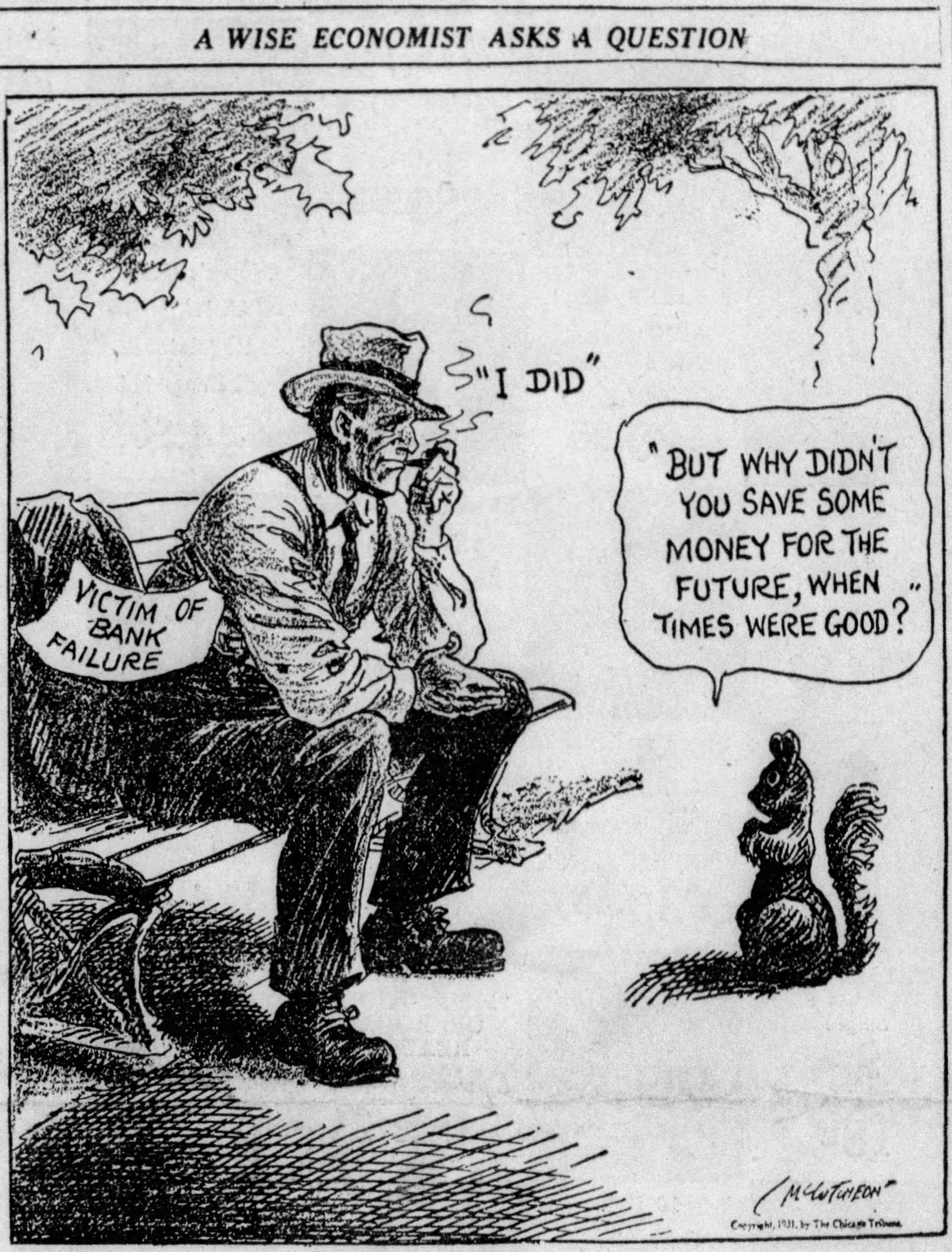
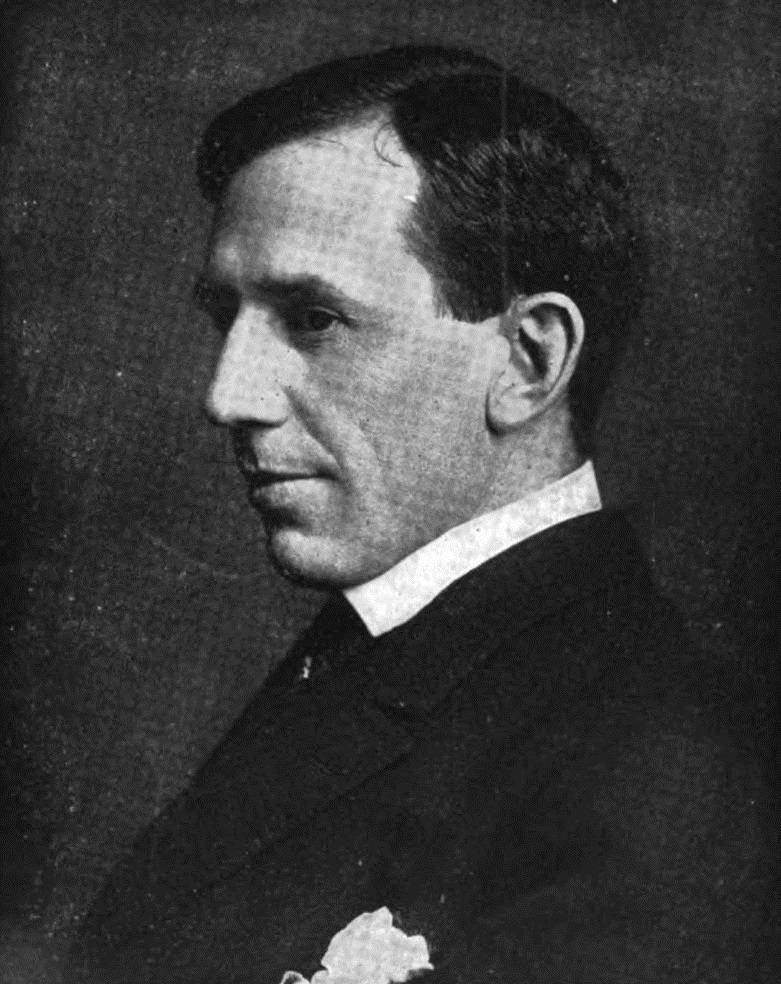
John T. McCutcheon (1870-1949), Newspaper cartoonist, author, war correspondent and combat artist.

John Tinney McCutcheon won a Pulitzer Prize for his 1932 editorial cartoon, "A Wise Economist Asks a Question.
"A Wise Economist Asks a Question." 1932


Among his best-known works is "Injun Summer," considered one of the best in his "boy" series of cartoons.
WALL ART UP TO 40" x 60"
Printing Options: Archival Paper (+Framing Options), Metal, and Acrylic.

John T. McCutcheon
During a trip to Europe in 1914-1916 as a war correspondent, McCutcheon was an eyewitness to the German invasion of Belgium at the beginning of World War I. He also covered the war in England and France before returning to his work as a cartoonist in Chicago.

During his sixty-year career as an artist, McCutcheon became one of the highest-paid cartoonists in the United States. He also supplemented his income with freelance work and publishing numerous books. In addition, McCutcheon was considered the "Dean of American Cartoonists" even before his death in 1949. Although he drew fewer cartoons in his later years, McCutcheon's work appeared on the front page of the Sunday Chicago Tribune until his retirement in 1946. He also continued traveling the world, an activity he had enjoyed throughout his life and took frequent trips to his island home in the Bahamas. McCutcheon also began work on his autobiography, but he died before completing it.

A Sunday Trolley Trip Along The North Shore.


Compiled by Dr. Neil Gale, Ph.D.