Friday, November 11, 2022

Ferrara-Lezza & Co., 2210 West Taylor Street, Chicago, Illinois, History.

Salvatore Ferrara was just 16 years old when he left his home in Nola, Italy, in 1900 and emigrated to the United States. Salvatore Lezza came to America in 1905 with a secret recipe for spumoni ice cream. He shared his plans for a sweet shop with Salvatore Ferrara, eventually leading them to open the first Italian pastry and candy shop, Ferrara-Lezza & Co., in Chicago's Little Italy neighborhood in 1908. 
Salvatore Ferrara, 772 West Taylor Street, (1801 W Taylor, today) Chicago, Illinois.
Tel: MONro-2201 - 1932 Chicago Whitepages.


An instant success, they were recognized throughout the city and suburbs for their fine pastries, wedding cakes and confections.

Salvatore soon met and married Serafina Pagano, and they labored together to provide Chicago with beautiful desserts and candies. They made a lasting name for themselves through hard work and commitment to using quality ingredients. Serafina, a dynamic business personality and philanthropist, was loved by all who knew her. She was known as "The Angel of Halsted Street." She is still remembered today.
Ferrara & Co. Pastries, 2210 West Taylor Street, Chicago, Illinois, 1963.


The third generation of Ferrara proudly carried on the tradition of providing its customers with a wide variety of delicious desserts of the highest quality. Ferrara's Signature Italian Cannoli Cake has become a tradition for thousands, enjoyed through the generations.


Eager to meet new challenges, Salvatore put Serafina in charge of the bakery and concentrated his efforts on expanding the candy business. 

With the help of his two brothers-in-law, Salvatore Buffardi and Agnello Pagano, they launched the Ferrara Pan Candy Company, headquartered at 7301 West Harrison Street, Forest Park, Illinois, today.

Not only did Sal Lezza bring Spumoni from Italy he also brought the knowledge of how to make panned candy. He taught Sal Ferrara the trade. The company split into two because the wives didn't get along and were competing for the bakery business. Ferrara took the candy and Lezza the bakery.
Ferrara & Co., Candy Factory, 7301 West Harrison Street, Forest Park, Illinois.


Owned by the Ferrero Group in 2017, the company now manufactures 100 Grand, Atomic Fireball, Baby Ruth, Boston Baked Beans, Brach's candy, Butterfinger, Chuckles, Chunky, Jujyfruits, Laffy Taffy, Lemonhead, Nerds, Now and Later, Oh Henry!, Raisinets, Red Hots, and Sweetarts to name just a few of the Ferrero candy brands.

Ferrero International S.A., more commonly known as Ferrero Group or simply Ferrero, is an Italian multinational with headquarters in Luxembourg, a manufacturer of branded chocolate and confectionery products, and the second biggest chocolate producer and confectionery company in the world. 

FERRARA CANDY CO. TIMELINE
1891: Farley Candy Company is established.
1936: Sathers Inc. is founded.
1996: Favorite Brands International acquires Farley & Sathers.
1999: Favorite Brands is acquired by Nabisco.
2000: Kraft Foods acquires Nabisco division.
2002: Farley's & Sathers, as an independent company, was formed from assets purchased from Kraft Foods. They bought several Hershey brands that originated with Henry Heide, Inc. 
2007: Brach's Confections was sold to Farley's & Sathers Candy Co.
2012: Farley's & Sathers Candy Company Inc. merges with Ferrara Pan Candy Company.
2017: The Ferrero Group acquired the Ferrara Candy Co.

No retail stores were involved in these deals.

Compiled by Dr. Neil Gale, Ph.D.

Thursday, November 10, 2022

Six of the worst jokes Abraham Lincoln ever told.

Abraham Lincoln was a compulsive teller of stories and jokes, the first president to make laughter a tool of the office. Lincoln had a wicked sense of intellectual humor and used humor to hammer a concept or his point of view home. Lincoln was as clever in using humor as he was resourceful in political management.


COUNT DOWN
6. "I heard a good story while I was up in the country. Judge D was complimenting the landlord on the excellence of his beef. "I am surprised," he said, "that you have such good beef. You must have to kill a whole critter when you want any." "Yes," said the landlord, "we never kill less than a whole critter."

5. After Secretary of War Edwin Stanton replied to a telegram demanding urgent instructions with "all right, go ahead:" "I suppose you meant," said Mr. Lincoln, "that it was all right if it was good for him, and all wrong if it was not. That reminds me," said he, "of a story about a horse that was sold at the cross-roads near where I once lived. The horse was supposed to be fast, and quite a number of people were present at the time appointed for sale. A small boy was employed to ride the horse backward and forward to exhibit his points. One of the would-be buyers followed the boy down the road and asked him confidentially if the horse had a splint." "Well, mister," said the boy, "if it's good for him, he has got it, but if it isn't good for him, he hasn't."

4. "I once knew," Lincoln said, "a good sound churchman, whom we will call Brown, who was in a committee to erect a bridge over a very dangerous and rapid river. Architect after architect failed, and, at last, Brown said, he had a friend named Jones who had built several bridges and could build this. Let us have him in,' said the committee. In came Jones. Can you build this bridge, sir?' Yes," replied Jones. "I could build a bridge to the infernal regions if necessary. The sober committee was horrified. But when Jones retired, Brown thought it but fair to defend his friend. I know Jones so well,' said he, and he is so honest a man, and so good an architect, that if he states, soberly and positively, that he can build a bridge to Hades, why, I believe it. But I have my doubts about the abutment on the infernal side. When politicians said they could harmonize the northern and southern wings of democracy, why do I believe them? But I had my doubt about the abutment on the southern side."

3. The President said, "the Army dwindled on the march like a shovelful of fleas pitched from one place to the other." (John Hay's diary)

2. From February 17, 1864, New York Post, "Several Little Stories by or about President Lincoln:" One of the latest reported is his remark when he found himself attacked by people asking favors. "Well," he said, "when the contagious disease was coming upon him, I've got something I can give to everybody now."

1. Well, there was a party once, not far from here, which was composed of ladies and gentlemen. A fine table was set, and the people were greatly enjoying themselves. Among the crowd was one of those men who had the audacity — was quick-witted, cheeky and self-possessed — never off his guard on any occasion. After the men and women had enjoyed themselves by dancing, promenading, flirting, etc., they were told that the table was set. The man of audacity — quick-witted, self-possessed and equal to all occasions — was put at the head of the table to carve the turkeys, chickens and pigs. The men and women surrounded the table, and the audacious man being chosen carver whetted his great carving knife with the steel and got down to business & commenced carving the turkey, but he expended too much force & let a fart — a loud fart so that all the people heard it distinctly. As a matter of course, it shocked all terribly. A deep silence reigned. However, the audacious man was cool and entirely self-possessed; he was curiously and keenly watched by those who knew him well, and they suspected that he would recover in the end and acquit himself with glory. The man, with a kind of sublime audacity, pulled off his coat, rolled up his sleeves, put his coat deliberately on a chair, spat on his hands, took his position at the head of the table, picked up the carving knife and whetted it again, never cracking a smile nor moving a muscle of his face. It now became a wonder in the minds of all the men and women how the fellow was to get out of his dilemma. He squared himself and said loudly & distinctly: "Now, by God, I'll see if I can't cut up this turkey without farting." (via William Herndon)

I'm confident that I can find more of Lincoln's 'bad' jokes with more research.


Compiled by Dr. Neil Gale, Ph.D.

Hotel Planters, 19 North Clark Street, Chicago, Illinois.


Hotel Planters was at Clark and Madison Streets. Designed by John O. Pridmore in 1910, this nine-story classical structure blends the architectural ideas of both Chicago construction and Beaux-Arts.

Columbia Burlesque theater marquee announces its show, The Flirting Widow. The burlesque house became the Clark movie theater when the hotel was renamed the Harding. Three First National Plaza is located on this site.


The Hotel Planters Restaurant, Merrie Garden, was a classically inspired find-dining room with a small orchestra pit in the early years. 

By 1917, the restaurant was modified. Guests ate in the Merrie Garden and were entertained by cabaret acts. In time, the room was redesigned with a medieval theme.

Compiled by Dr. Neil Gale, Ph.D.

Wednesday, November 9, 2022

The Adolf R. Harseim Merchandise Store, Secor, Illinois, and famous resident Wilhelmina "Minnie" Vautrin.

Secor, Illinois, was named after Charles A. Secor, a partner in the engineering firm that laid out the eastern branch of the Peoria & Oquawka Railroad Company. Secor is 25 miles east of Peoria.


The General Store was established by Rudolph Harseim, born May 8, 1830, an early settler arriving in 1862. The General Store was passed on to his son Adolf R. Harseim in 1910.


Rudolph died on December 21, 1905. His wife, Katharina, lived from 1836 to 1921.

sidebar
Minnie Vautrin
Wilhelmina "Minnie" Vautrin (1886-1941), born in Secor, Illinois, on September 27, 1886. Miss Vautrin, an American missionary to China and known as 金陵女子大学, the "Goddess of Mercy." She was the president of Ginling College, University of Nanking, China. During WWII, Nanjing was invaded by Japanese Imperial troops in December 1937. The invasion aftermath is known as the 'Nanjing Massacre.' 

During the Nanking Massacre aka the Rape of Nanking, the college, led by its acting principal Professor Minnie Vautrin, harbored thousands of women hiding from the Japanese Imperial Army and saved hundreds of children and women from rape and worse.

The city is strangely silent—after all the bombing and shelling. Three dangers are past—that of looting [Chinese] soldiers, bombing from aeroplanes and shelling from big guns, but the fourth is still before us—our fate at the hands of a victorious army. People are very anxious tonight and do not know what to expect . . . Tonight Nanking has no lights, no water, no telephone, no telegraph, no city paper, no radio.”            December 13, 1937, The Diary of Minnie Vautrin. 

Vautrin guarded the college with the motto: "Whoever wants to go through this gate will have to do so over my dead body."

From August 12, 1937, to April 1940, Vautrin kept a daily diary, recording war crimes committed by Japanese troops in Nanjing. She returned back to the United States for medical treatment on May 14, 1940.

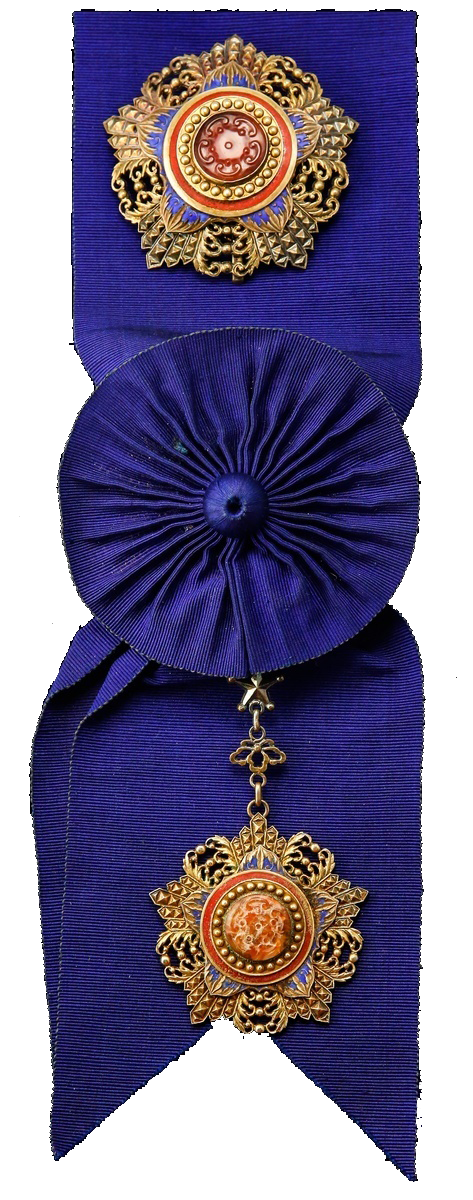
Vautrin is highly honored in China for establishing a sanctuary on the grounds of Ginling college to protect Chinese non-combatants  women  from the six-week massacre and other unspeakably evil things. Minnie was posthumously awarded the "Order of the Brilliant Jade" by the Chinese government for her actions during the massacre. 
Salt River Cemetery, Shepherd, Michigan.
She committed suicide in May 14, 1941 and is buried in Salt River Cemetery, Shepherd, Michigan.
Order of the Brilliant Jade.
Compiled by Dr. Neil Gale, Ph.D.

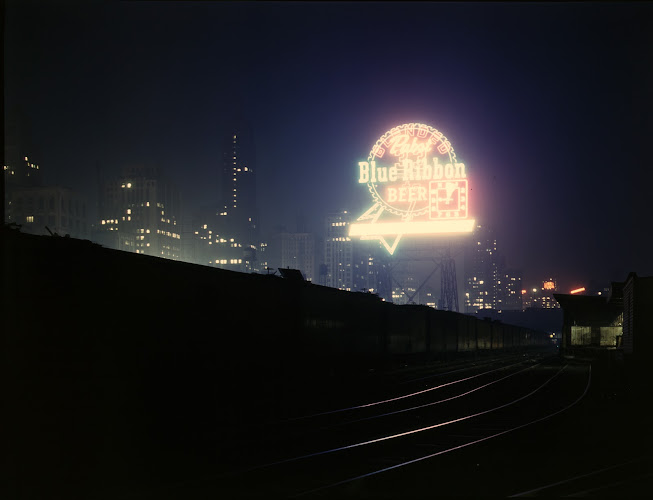
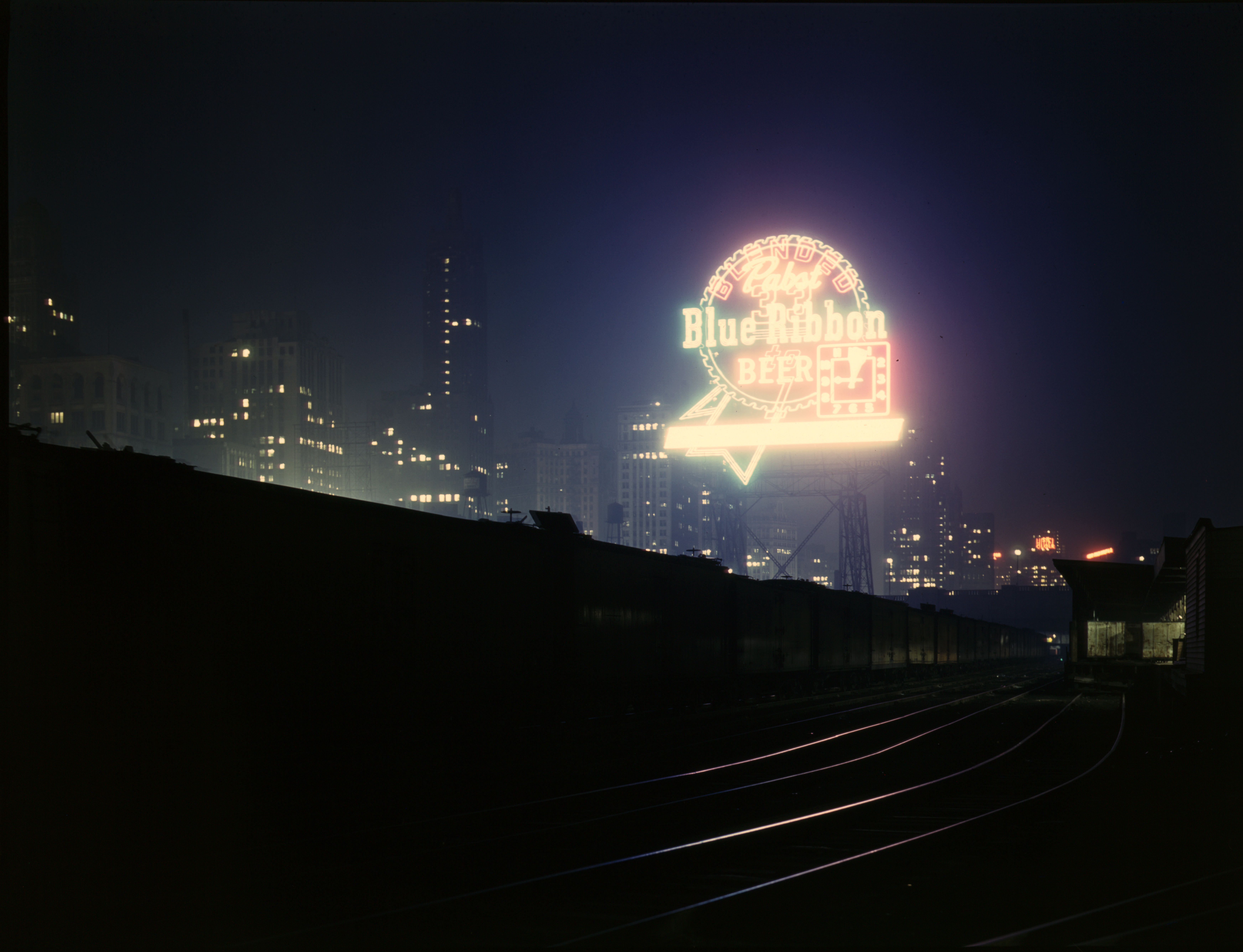
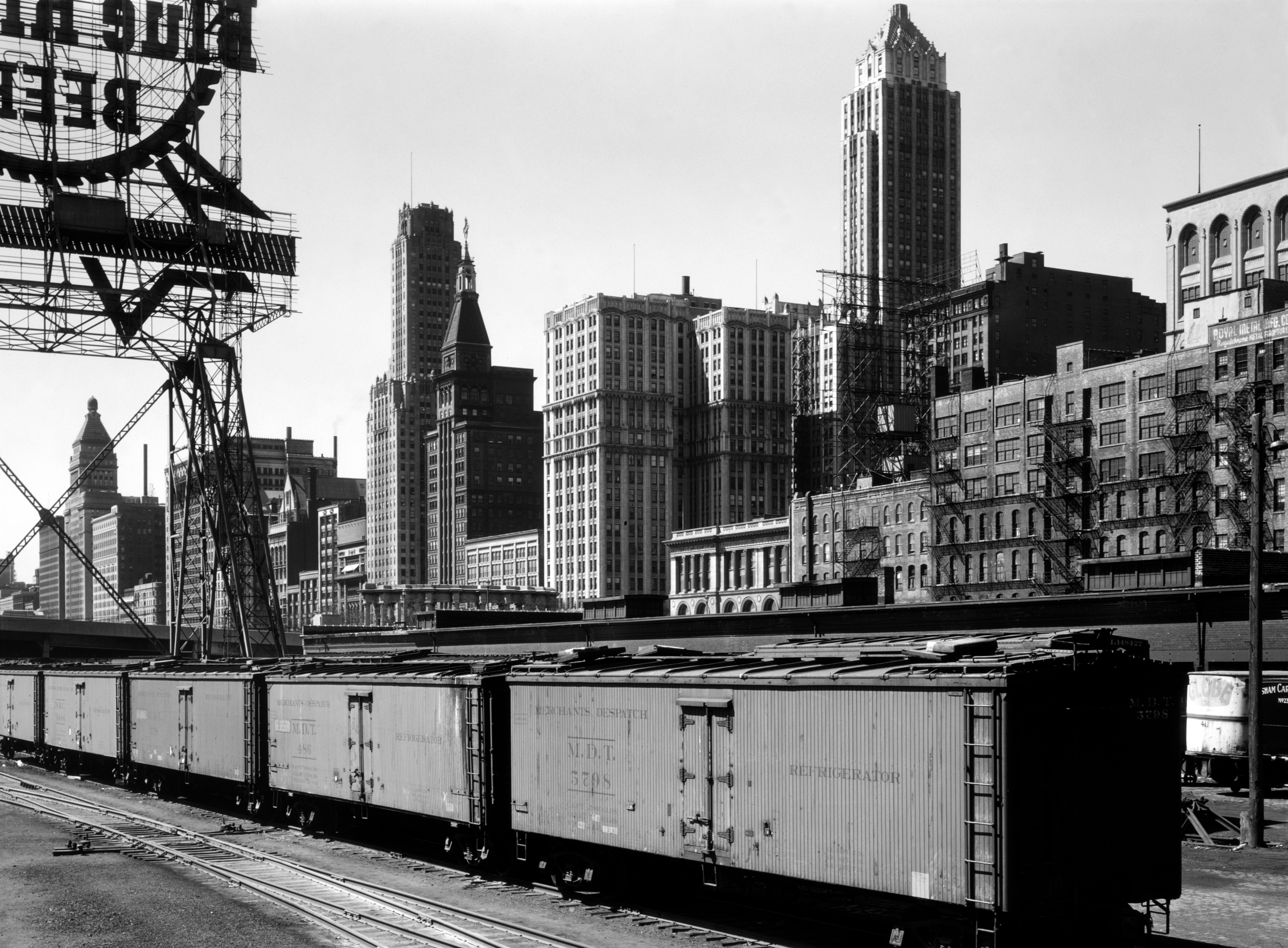
The Pabst Beer advertising sign on South Water Street, Chicago. 1943

Pabst Beer neon sign at South Water Street looking South. 1943
The Pabst Blue Ribbon neon [1] sign looking North at South Water Street, Chicago.


sidebar
Blended 33 to 1 means that 33 vats of beer are blended together to make one batch for consistency.
The Pabst sign was removed before June 1953 for the groundbreaking of the Prudential Insurance building. 
Prudential Plaza, 1964
The Prudential building opened to the public in 1955, replacing the Pabst neon sign.

Compiled by Dr. Neil Gale, Ph.D.


[1] Neon was first unveiled in modern form by Georges Claude, a French engineer, at the Paris Motor Show in December 1910. In 1923, Claude brought neon signage to the United State, selling two signs to a Packard car dealership in Los Angeles, California.