Saturday, October 8, 2022

Hugh Brannum, Mr. Green Jeans on the Captain Kangaroo show.

Hugh Brannum (1910-1987) was an American vocalist, arranger, composer, and actor known for his role as Mr. Green Jeans on the children's television show Captain Kangaroo.

Brannum was born in Sandwich, Illinois, in 1910 to a Methodist minister. He attended Maine East High School in Park Ridge, Illinois, where he played sousaphone in the school's marching band and later learned the bass violin.

Robert James “Bob” KeeshanCaptain Kangaroo, had a recurring role as the Town Clown, a pantomime piece that took place, in and around, the exposed wagon home of a tramp-like circus clown.
Captain Kangaroo as the Town Clown.


The "Kangaroo" part of Keeshan's name came from the oversized pockets on the lower half of his bright red jacket.
Captain Kangaroo Worn Red Jacket. Movie/TV Memorabilia Costumes.


Hugh Brannum (Mr. Green Jeans) and Cosmo Allegretti (Mr. Moose). On the first show of every month, the Captain had a birthday cake for all of the children with birthdays that month. Brannum indicates that the show is celebrating its fifth year on the air. 1960


One of the show's long-running gags was the "Ping-Pong Ball Drop," instigated by the telling of a joke (usually a knock-knock joke) by Mr. Moose, in which the punchline included the words "ping-pong balls." At the mention of those three words, a shower of ping-pong balls was released from above on the Captain.


Especially in later seasons, the show also featured a running gag where on selected episodes, the Captain would try to perform a particular activity three or four times in the episode, only to fail differently on each attempt.
Captain Kangaroo promotional postcard. Shown from the left are Dancing Bear, Bunny Rabbit, Captain Kangaroo, Grandfather Clock, Mister Moose, and Mister Green Jeans (Hugh Brannum). 1961

At the end of each episode, the Captain always encouraged parents watching the show to spend quality time with their children daily, and he often demonstrated various creative ways to do so. In later seasons, that changed to him saying, "Well, what would you like to do today? You know it could be a good day for..." then a song would list many different activities while short film clips of each related activity are presented. The song ended with the singers saying, "There's so much to do. These things are just a few." Then it would cut back to the Captain, who would sign off with, "So whatever you do, have a great day!"
Captain Kangaroo and Dancing Bear. circa 1956


Captain Kangaroo and the Schwinn Bicycle Company
From the late 1950s, the Schwinn Bicycle Company used children's television programming to expand its child and youth bicycle market dominance. The company was an early sponsor (from 1958) of Captain Kangaroo. 


The Captain himself was enlisted to sell Schwinn-brand bicycles to the show's audience, typically six years old and under. At the end of each live Schwinn marketing promotion, Bob Keeshan would intone, "Schwinn bikes—the quality bikes—are best!" and "Prices slightly higher in the South and the West." Schwinn deemed the on-air marketing program successful, and the company increased its market share of child and youth bicycles throughout the 1960s. 
1968 Schwinn Pea Picker Krate in front of a Schwinn advertisement for showrooms. 


The marketing program continued through the 1971 season, when the Federal Trade Commission's Staff Report, Guidelines on Advertising to Children, recommended against Schwinn's on-air marketing practices using the show's host. In response, Schwinn and the show's writers altered the format in 1972. The Captain no longer insisted that his viewers purchase a Schwinn but instead made regular on-air consultations with the new Captain Kangaroo character, Mr. Schwinn Dealer. Brilliant. 
VIDEOS
Opening Theme for the Captain Kangaroo Show.

Captain Kangaroo Episode From 1956

Captain Kangaroo (Bob Keeshan) on 48 Hours (CBS) 1995
Opens with the Ping-Pong Ball Drop.

THE CAST
  • Bob Keeshan as Captain Kangaroo, Mr. Pennywhistle, Mr. Doodle, Wally and the Town Clown.
  • Hugh "Lumpy" Brannum as Mr. Green Jeans, the New Old Folk Singer, Percy, Uncle Backwards, Mr. McGregor, and Mr. Bainter the Painter.
  • Cosmo Allegretti appeared as Mr. Bunny Rabbit and Mr. Moose (both of which he also created), Dennis the Apprentice, Willy, Miss Frog, Mr. Whispers, Dancing Bear, Grandfather Clock, and Uncle Ralph; he was the voice of Aniforms puppet TV Fred (a live-action on-screen puppet that appeared behind the blackboard in the Treasure House), and was the artist behind the Magic Drawing Board.
  • Sam Levine as The Banana Man; the character was created by Adolph Proper.
  • Bill Cosby as himself, the host of the Picture Pages segment (1980–1984).
  • Debbie Weems appeared as Debbie (1973–1978), the voice for the puppet character Baby Duck.
  • James Wall as Mr. Baxter (1968–1978) - was also the stage manager.
  • Carolyn Mignini as Kathy and other female roles (1981–1983).
  • Kevin Clash as the puppet character Artie (1980–1984) and as himself, acting in many of the sketches.
  • John Burstein as Slim Goodbody (1978–1981).
  • Bill McCutcheon as Mr. Homan (1965–1968).
  • Jane Connell as Mrs. Homan (1965–1968).
  • Dr. Joyce Brothers as herself for three seasons.
Compiled by Dr. Neil Gale, Ph.D. 

Wednesday, October 5, 2022

The Fischer Windmill, Mount Emblem Cemetery, Elmhurst, Illinois. 1865

The History of the Mill
Facing Northeast to the entrance of Mount Emblem Cemetery is the Fischer Windmill, the oldest standing custom windmill in Illinois. Now beautifully adorned by planned landscaping—including Lake Emblem, evergreens, and lilac bushes—it is hard to imagine that this was once a thriving farm.  

Johann Frederick L. Fischer owned nearly three hundred acres across DuPage and Cook counties. Before his death, he left his son, Henry Frederick Fischer, with the land in DuPage County. The land was unincorporated, and it wasn't until 1981 that the City of Elmhurst annexed it.  


Henry began mill construction around the end of the Civil War in 1865. As an interesting side note, the Graue Mill was erected by Henry's brothers-in-law, William Asche and Frederick Graue. The mill was not made from local timber; its parts were prefabricated to Henry's specifications and shipped to Elmhurst from Holland in pieces (similar to the method used in constructing De Immigrant in Fulton).  

Asked to aid with the construction of the mill were: Christian Heidemann, whose own mill in Addison would later be based on Fischer's design, and Henry Korthauer, a cabinet maker from Bensenville. It took nearly three years to build because of design changes during construction. 


The hand-crafted mill features cypress beams on a two-story stone and brick foundation. The gears are made of hickory and white oak; the great spur wheel, located on the third floor, took six months to complete. The mill was fitted with white pine sails spanning 74 feet, making it one of the largest in the state. 

Technologically speaking, the mill is very advanced: it features grain elevators; a fly-ball governor to tenter the grinding stones; an auxiliary drive system; "shakers" that tap grain into the stones, the latest wheat-cleaning and corn-shelling machines; and a spiral conveyor. 

The east shipping wing was built into the mill to house the large wheat bolter, which separated fine flour from more coarse bran. During construction or shortly after completion, a north wing with wide double doors was added for receiving wagonloads of grain.


The mill began the grinding process with 'two run-of-stones,' one for wheat and one for corn, by 1867, capable of grinding 40 barrels daily. A west wing was constructed not long after to house a 25-horsepower wood-burning steam engine to drive the machinery on calm days. A small building just south of the east wing was built around 1875 and likely served as an office, but it does not appear in photographs taken after 1886.

In 1877, Henry sold the mill and ten acres to Edward Ehlers for $10,000. Henry moved his family to Oregon, Illinois (est 1833), where, three years later, he sold another 21 acres to Edward. Henry used the money to purchase a water mill capable of 50 barrels per day.

Mount Emblem Cemetery


Edward Ehlers' widow, Caroline (daughter of Henry Korthauer, one of the original builders), sold the farm and windmill to the Mount Emblem Association for $10,000 in 1925 ($170,000 today). Although the windmill and farm buildings were initially scheduled for demolition, the association hired Henry and Franklyn Ehlers, Edward's sons of Ehlers Brothers General Contractors, to preserve the mill as a museum. Ehlers Brothers Construction also built the Elmhurst State Bank Building (now a 5th/3rd Bank) at 105 S York Rd.   

They installed new windows, shingles, and trim; replaced and reinforced the stage and handrails; painted the mill; and built new sails, which were turned into a Saint Andrew's cross ("X" formation), meaning the mill is in a "long rest."  

The cap was turned Northeast toward the cemetery's entrance, but prevailing west winds lifted the mill's cap off the dead curb track. To prevent future damage, the cap was permanently strapped to the tower. The Itasca Electric Store installed flood lights on the roof of the North and East wings to illuminate the mill at night. The west wing was destroyed to construct the parking lot of the administration building, but the iron drive shaft flange is still visible from the exterior of the mill's west wall.  

The cemetery's administration building, along with the entrance gates and bridges, was designed to resemble the English architecture of the 1850s to "match" the styles used when the windmill was built; however, these copper and stone English structures only contrast with the German and Dutch woodwork of the mill.  

It took eleven years for the architects of Simonds, West, & Blair to transform 75 acres (now 160 acres) of flat farmland into a picturesque, tranquil scene with tens of thousands of new trees and shrubs, in addition to the creation of Lake Emblem. Dr. Preston Bradley dedicated the cemetery in June of 1936. For years, the mill could broadcast music on Sundays and holidays from loudspeakers in the third-floor windows.  

The mill became an icon as the subject of artists' paintings and the backdrop for both weddings and funerals. In 1956, the DuPage County Historical Society awarded Mount Emblem for its mill preservation.   

Over the years, west winds continued to cause damage to the mill. The sails lost their wind boards, and three of them broke. The replacement sails, nearly identical to the one remaining original, were a few feet shorter with only 26 sail bars instead of 30. 

During the winter of 1990-91, a severe storm nearly destroyed the mill. Forces against the tail of the cap caused the brake to release and the sails to turn. The wind shaft twisted apart. As the sails fell, the brake wheel rose until its teeth came into contact with the wallower, which, thankfully, held together and prevented the machinery from causing further damage. The aging mill was deemed structurally unsafe and was thus permanently closed to the public. 

New replacement sails were installed for show, built without an angle of weather, and this time with only 19 sail bars each. In 1998, yet another storm tail-winded the cap, snapping the two upper sails. These were replaced, and all four sails were reinforced with extra bolts, clamps, and cables.  

A winter storm in 2004 brought them down again. For the bulk of 2004, the sails and wind shaft sat on the ground to the east of the mill as a gaping hole in the cap exposed the brake wheel. In early 2005 the sails were replaced again, with just 13 widely-spaced sail bars and constructed of lightweight aluminum. 

Wheat grinding likely stopped around 1894 when production moved further West into Kansas and Nebraska. The steam engine in the west wing was removed in 1910, and its space was used for storage. The mill probably stopped grinding corn between 1912 and 1916 when Edward Ehlers died. 

Renovation, but not Restoration
In 2010, the east shipping wing slipped off its foundation, breaking one of the stage's supporting timbers from the stone wall. The blizzard of 2011 caused the stage to fall onto an electrical box near the east wing, and the wind blew open two of the access doors allowing snow to drift in.

As part of the O'Hare Airport runway expansion program, deceased members of the Fischer and Asche families were relocated from St. Johanne's Cemetery to Mount Emblem. Norma Asche Lagerhausen convinced Dignity Memorial, the new owners of Mount Emblem, to keep and restore the mill.

Despite the outcry from the community and millwright Lucas Verbij, general contractors were hired to reinforce the structure but not restore the mill to working condition. Work began in April 2015.

The Fischer Windmill Data
Tower Height: 51 Feet
Sail Span: 74 Feet (Original); 50 Feet (Current)

OWNERS
Henry Frederick Fischer (1867 - 1877)
Edward Ehlers (1877 - 1916)
Caroline Ehlers (1916 - 1925)
Mount Emblem Cemetery (1925 - present)

MILLWRIGHTS
Henry Frederick Fischer (Original)
Christian Heidemann (Original)
Henry Korthauer (Original)
Henry Ehlers (Restoration)
Franklyn Ehlers (Restoration)

CONSTRUCTED
(1865 - 1867) Original
(1925 - 1926) Restoration

USES
(1867 - 1874) Wheat
(1867 - 1916) Corn
(1936 - present) Bell Tower

Compiled by Dr. Neil Gale, Ph.D.

Saturday, October 1, 2022

People's Pure Ice Company, Chicago, Illinois. Founded 1901.

People's Pure Ice Company started in the 1890s and originally consisted of four buildings at 34 Clybourn Place. Today's location would be Cortland Street at Winchester Avenue. 


The plant was built on one floor and was the first plant in the United States to utilize the "closed system" throughout. Nowhere within the buildings or about the plant is any escaping steam visible or is any water to be seen. All the machinery and apparatus, steam condensers, ammonia condensers, reboilers, water filters, etc., are all enclosed, and the steam passes in a continuous course, absolutely unexposed, from the boilers to the cans in the freezing tanks.


The model plant where all this was satisfactorily accomplished was known as the ice factory of the People's Pure Ice Company, Chicago, which was erected in 1901.

The "Ice and Refrigeration" Newsletter,  March 1, 1904 (pdf), an 11-page article, with lots of pictures. 

Compiled by Dr. Neil Gale, Ph.D.

The Association House of Chicago, an early Settlement House.

The Association House of Chicago (AHC) was one of the original Chicago Settlement Houses located at 2150 West North Avenue in today's Wicker Park. AHC has played a significant and historic role in Chicago's westside neighborhoods. Founded in 1899 as a settlement house by Ellen Holt, a student of Jane Addams, AHC served as a "port of entry" for new immigrants for decades. At one time, they boasted the best playgrounds in Chicago. 


As early as 1900, (AHC) began serving women and girls working in nearby factories. The founders laid the cornerstone of the new and expanded Association House building at 2150 West North Avenue in 1905. That year attendance topped 1,000, and more than 4,500 showers were taken at Association House in the summer.
The original settlement house building is on the left. 1905

The reading room and library opened in the new building in 1908, and within two weeks, 500 children had borrowed books.

Early participants included many Scandinavians, Germans, Poles, and later, Russian Jews, reflecting changes in the 1910 census. Leadership welcomed the diversity and provided a place that celebrated all cultures and religions.


With a generous estate gift from fellow founding organizer Susan Poxon, Association House opened Druce Lake Camp in Lake County to provide a summer escape from the city for young girls and boys.

During the depression, funds were scarce, but programs continued, including dental and nutrition services, manual training, and art and music classes. A pilot program providing education for children with developmental disabilities began. The program rapidly grew and catalyzed the formation of 17 other parent groups in Illinois and 350 groups across the country, ultimately helping to deinstitutionalize countless children.


By 1950, multi-cultural participants represented 29 different nationalities, with Latinos representing a significant new population. 

Ellen Holt bequeathed Association House $50,000 ($495,000 today) at her death in 1961.

AHC began services in Child Welfare with a foster care program in 1976. 

The AHC is still going strong at 1116 North Kedzie Avenue in Humboldt Park since 1997. They served thousands of families each year through programs focused on Behavioral Health, Workforce Development, Child Safety, and the Association House High School, a charter school for youth left behind by the traditional school system.

The original building was sold and converted into condos in 1999.

Compiled by Dr. Neil Gale, Ph.D.

Friday, September 30, 2022

International Horseradish Festival, Collinsville, Illinois. (June 5-7, 2015)

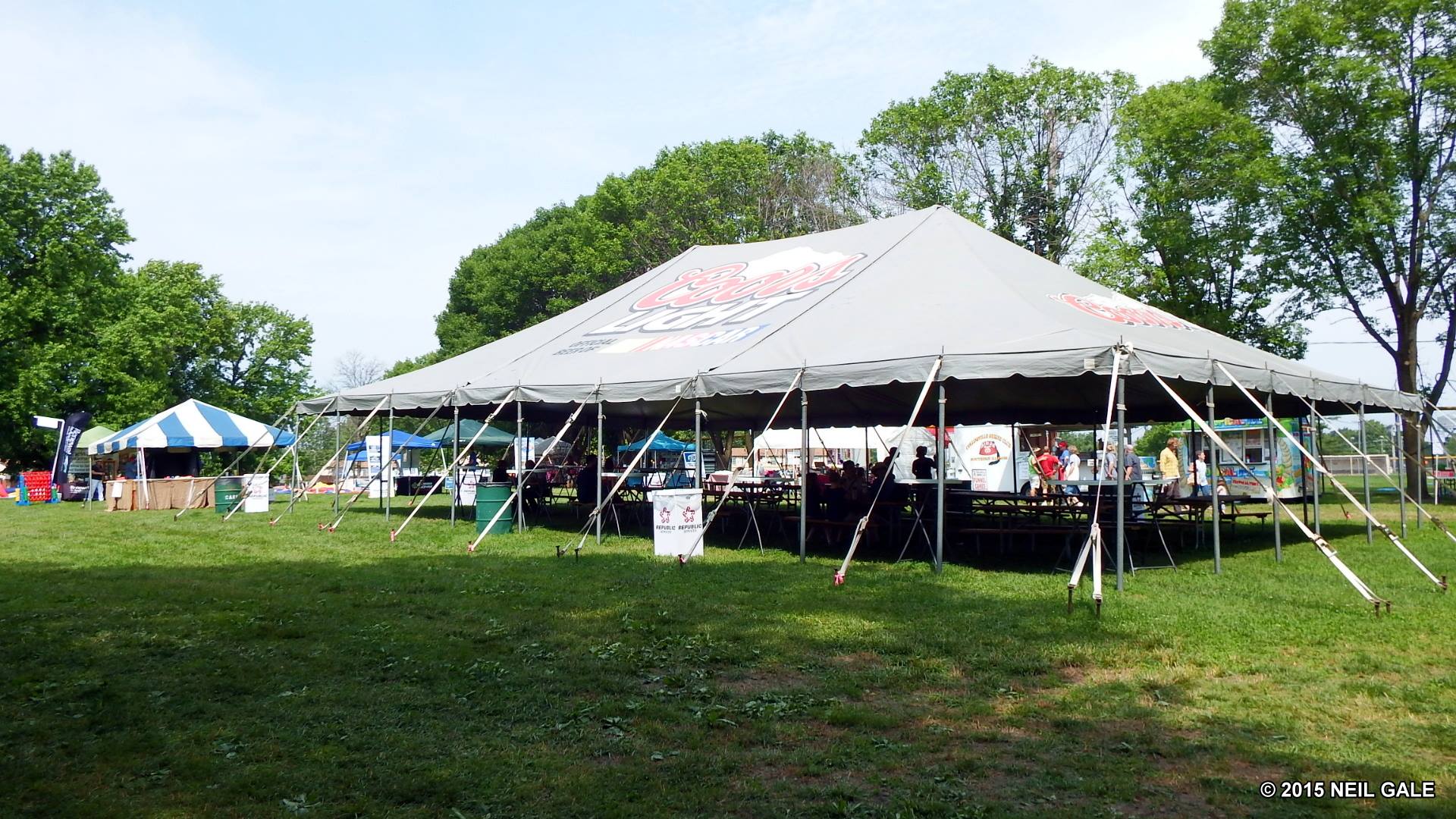
I visited the Festival on the morning of June 7, 2015. It is a small festival with one stage and a dozen or so vendors and artists. There were three different inflatables for kids and a beer vendor for adults.
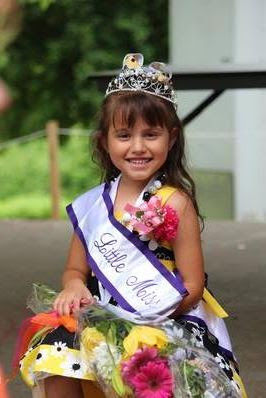
Contests for kids include a Horseradish Root Derby where the kids build a derby vehicle (i.e., Cub Scouts Pinewood Derby). The "Little Miss Horseradish Festival Pageant" where girls between the ages of 4-6 years old participated to win a savings bond, crown, sash, trophy and flowers, and a photograph package.

For adults is the Amateur Recipe Contest, where amateur chefs compete to be named "Master of the Root."

A Root Toss is a throwing contest using a horseradish root. Each participant gets one free toss. Additional chances are $1 each. Prizes will be awarded to men and women in various age categories.

Root Golf, A closest-to-the-pin contest where participants use a golf driver to hit a horseradish root "ball." Prizes are awarded to both men and women each day. A $100 prize goes to the person who hits the first hole-in-one!

Root Sacking Contest put as many horseradish roots into the burlap sack in 30 seconds. The heaviest bag wins. And then there's the Horseradish 5-K Race.

Ahhh... the small-town life.
Article and Photographs, Copyright © 2015, Dr. Neil Gale, Ph.D., All Rights Reserved.