Wednesday, April 20, 2022

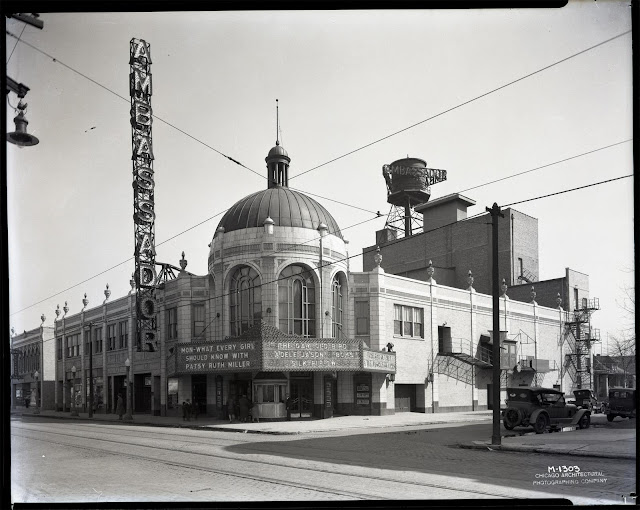
Ambassador Theatre, 5825 West Division Street, Chicago, Illinois.

The Ambassador was built for the M & H Theaters Corporation in 1924 by architect Harold E. Gallup serving the far western Chicago neighborhood of Austin.

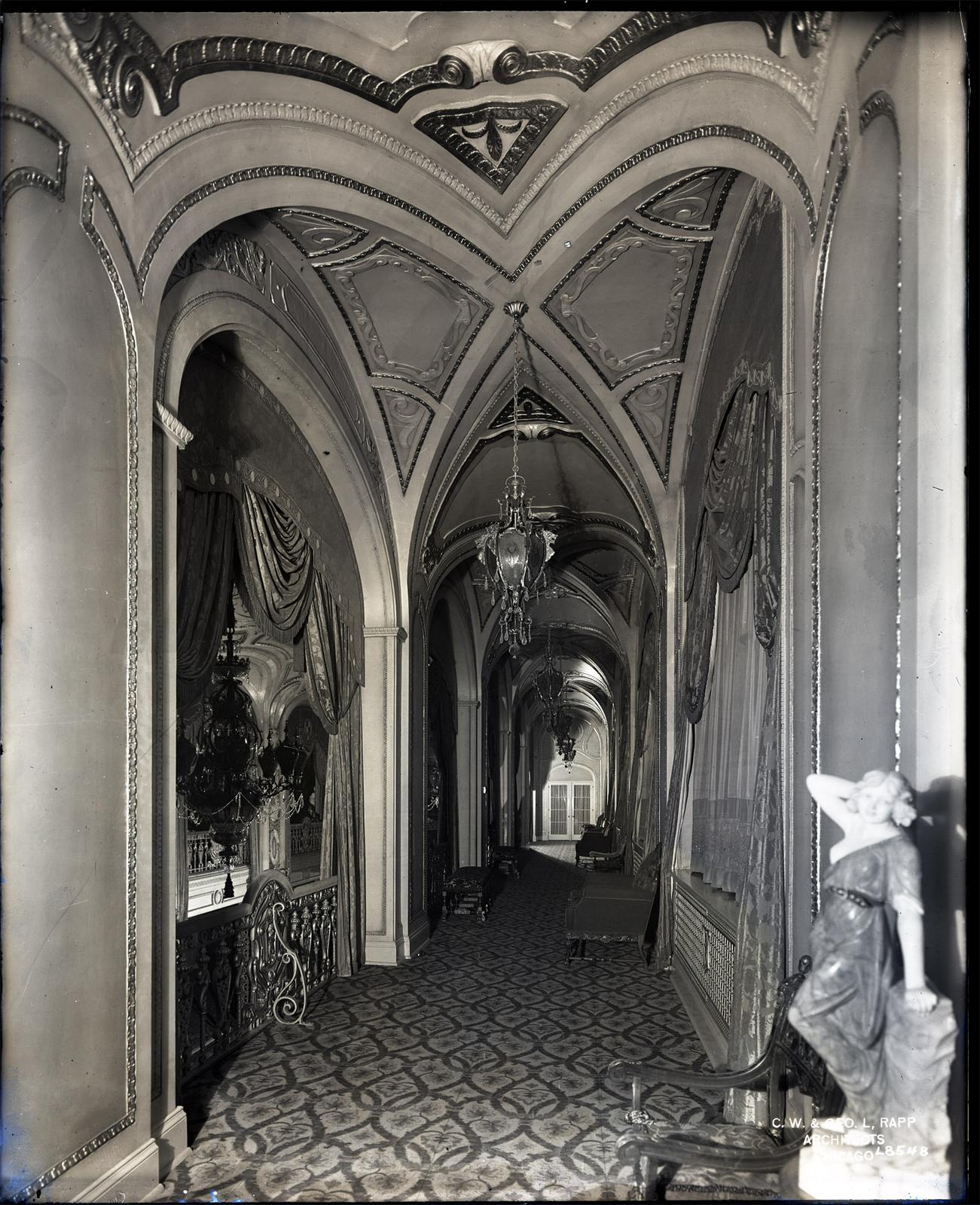
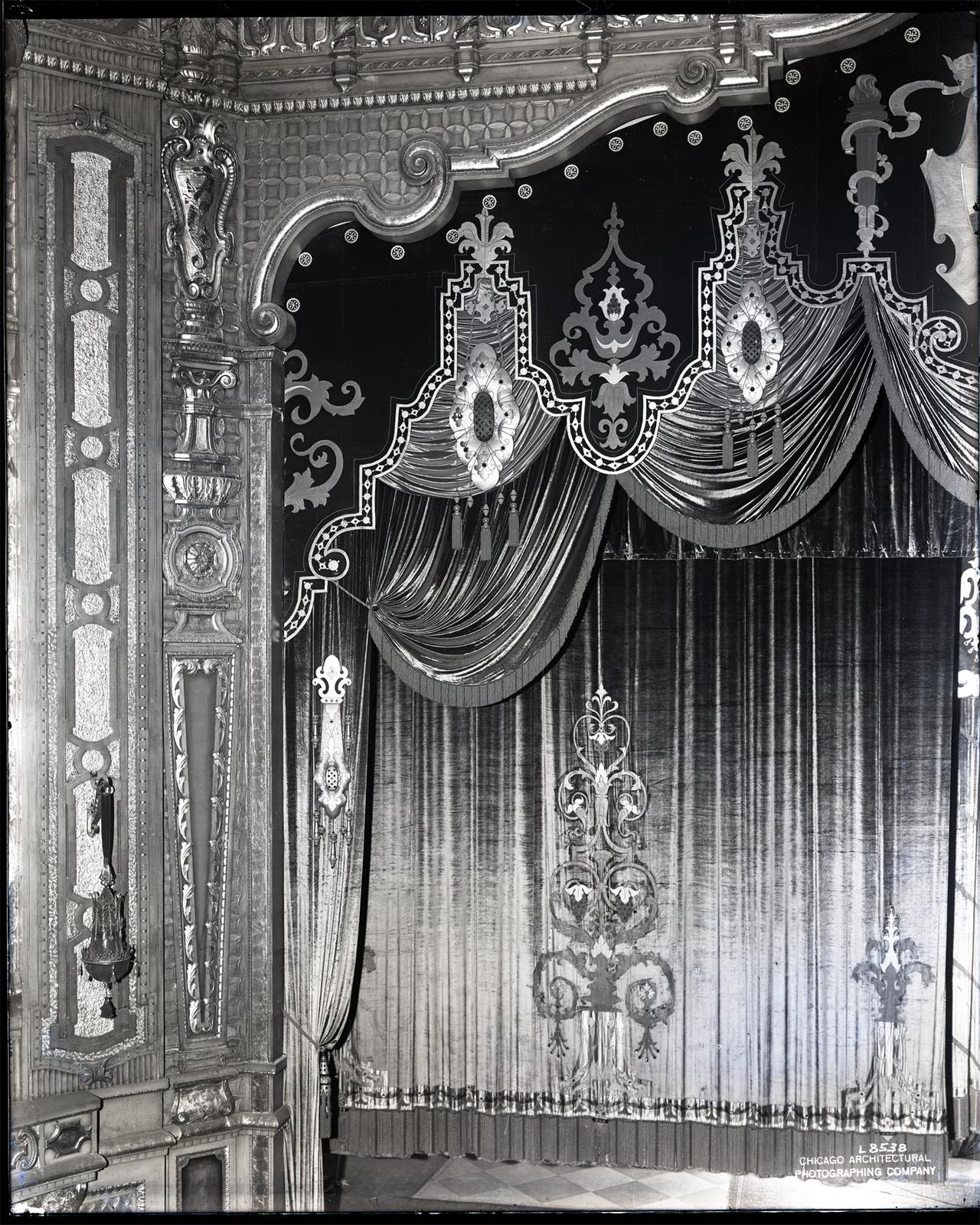
It could seat 2500 in its auditorium and originally hosted stage shows in addition to motion pictures. It was built in the Neo-Classical style and featured a domed lobby that was topped by a cupola.
The marquee was V-shaped and had signage on both Division and Monitor Avenue. Over the marquee were four large arched windows. Terra-cotta decoration covered much of the facade, which was a pale-colored brick.

After the death of Knute Rockne[1] in a plane crash in 1931, the Ambassador Theatre was renamed the Rockne Theater in his honor
Knute Rockne, American football coach. 
The Rockne became an "adult" theater in the 1960s. When neighborhood groups protested the change, the theater's owner agreed to try a change and offered special family films and rates. But the families stayed home and the Rockne reverted back to adult films.

After its days as a movie house ended in the early 1980s, the Rockne began a new life as a church, which it still serves today.

Compiled by Dr. Neil Gale, Ph.D.


[1] Knute Kenneth Rockne (1918-1930) was a Norwegian-American football player and coach, at the University of Notre Dame. Rockne is regarded as one of the greatest coaches in college football history. Rockne died in the crash of TWA Flight #599 in Kansas on March 31, 1931, while en route to participate in the production of the film "The Spirit of Notre Dame," released October 13, 1931.

Henry Frerk Sons Inc, Chicago, Illinois. (est. 1888)

Henry Frerk was born in Prussia in 1848. In the mid-1860s, he immigrated to the United States and eventually settled in Chicago, where he married Albertine Belitz and started a family.
Milwaukee Avenue was the main road into the city from the northwest. It was a planked toll road where all traffic was charged a toll, by type of vehicle, number of horses, and even weight at some tolls, to use the plank road. The local farmers realized quickly that the cost of the tolls, both ways, outweighed the benefit of selling produce in the city. 

Recognizing the farmers’ dilemma and a business opportunity, Henry partnered with Charles Bothfeld. They purchased the two buildings previously owned by Mueller & Hardkopf and became commission merchants.

After installing a scale along Milwaukee Avenue to weigh wagon loads of produce, Henry purchased the small loads and delivered them into the city. The farmers, in turn, purchased their necessary supplies at Henry's store.

In 1884, Henry Frerk purchased property on the 1800 block of Milwaukee Avenue and opened his own hay, grain, and feed store. In 1887, he purchased additional property and expanded his business to the present location at Belmont, Kedzie, and the Chicago Northwestern Railroad.

This area was still largely a farming community known as Avondale and had not yet been annexed into Chicago. Street addresses had not been designated therefore the company address was known as located "Near Belmont Avenue, Cor. N.W. Railroad off Avondale train depot."

Before long, Henry added a lumber, door, and sash business. This larger property, and the proximity of the railroad, enabled Henry to grow his business. He included coal and stocked large quantities of hard building materials such as sand, gravel, cement, and plaster. The aggregate was delivered in railroad gravel cars to the Belmont Avenue yard and each rail car was unloaded by men with shovels.
There was a tremendous building boom in Chicago during this period due to the rebuilding of the city after the Great Chicago Fire in 1871.

The company used 20 teams of draft horses to make its deliveries. The company traveled as far north as Half Day, Illinois, which, as the name implies, took a half-day to reach by horseback, wagon, or carriage from Chicago. It did not. How Half Day, Illinois, got its name. 

A two-story stable with an elevator was built to house the horses. This building, on Fletcher St. near Albany Avenue, was owned by Ascher Brothers and the original stable still stands today. The draft horses were raised on the company farm located in what is now the Barrington Hills area.

The drivers came to work at four o'clock in the morning to groom and harness the horses. Henry Frerk personally inspected each harnessed team, and no one left until they had passed Henry's inspection.

Sometime in the early 1900s, Henry and Charles closed their hay, grain, and feed stores on Milwaukee Avenue, and Henry focused operations on his Belmont Avenue yard. On May 7, 1910, Henry Frerk died at 62 years old.

Henry Frerk was known to describe himself as "a sawed-off and hammered down German."

The company continued under the direction of his two sons, Alfred and Otto. They decided to drop the lumber portion of the business and concentrate on coal and hard building materials. The company name, Henry Frerk, was changed to Henry Frerk Sons, Inc., 3135 West Belmont Avenue, Chicago, which remains in use to this day.
Very early on, the Frerk brothers realized the advantages of automobiles and purchased their first auto truck, a 1911 3.5-ton Kissel Kar. Then, in 1917, the Frerks purchased their first dump truck: a 2-ton Autocar, nicknamed the "hurry-up wagon." By 1921 Henry Frerk Sons' truck fleet grew to eight automobiles including an additional three Mack 7½-ton trucks, a Packard 4½-ton truck, and a steam shovel for unloading rail cars in our yard.

In addition to the battery of trucks, Henry Frerk Sons continued with wagon deliveries pulled by twelve teams of horses.

Then, in 1925, Alfred died, leaving Otto to run the company. Even though the depression hit the building industry very hard, Otto was able to keep the company afloat. In 1946, just after his son, Rodger, returned from the war, Otto Frerk passed away. Rodger became president of Henry Frerk Sons, and in 1951, Rodger married Anne Galbavy. Loren, their daughter, and only child was born in 1955.
In 1966, Henry Frerk Sons entered into the ready mixed concrete industry. In order to be responsive to its customers' needs, the company purchased a mobile concrete truck, an unconventional route to take.

Starting with only one truck was risky business, and having only been introduced in 1964, the concrete mobile truck was still in its infancy, and the standard barrel mixer was familiar and popular in the Chicago area. Rodger saw the potential for the new trucks and invested in what he saw to be both better quality and a better price for his customers. He turned out to be quite right!

In 1978, Loren married Kenn Wolf, who continues to run the business alongside his son, Matthew. Henry Frerk Sons expanded in 1982 to include specialty concrete products.
Today, they are one of the largest mobile concrete companies in the Midwest.

Compiled by Dr. Neil Gale, Ph.D.
contributor Henry Frerk Sons Inc.

Belleville, Illinois, Historic District with lots of photographs.

The city of Belleville was named by George Blair in 1814. Blair was born in 1760 and his father was born in Scotland. Blair donated an acre of his land for the Town Square and an additional 25 acres that adjoined the Square for the new County Seat, causing the county seat to be transferred from the village of Cahokia. 


Belleville was incorporated as a village in 1819 and became a city in 1850. It is said that Blair named the city Belleville (French for "beautiful city") because he believed that a French name would attract new residents. Since major immigration in the mid-19th century occurred following revolutions in Germany, most of the population is of German heritage.

After the failure of the German Revolution in 1848, many of the educated people fled their homeland. Belleville was the center of the first important German settlement in Illinois. By 1870, an estimated 90% of the city's population was either German-born or of German descent.
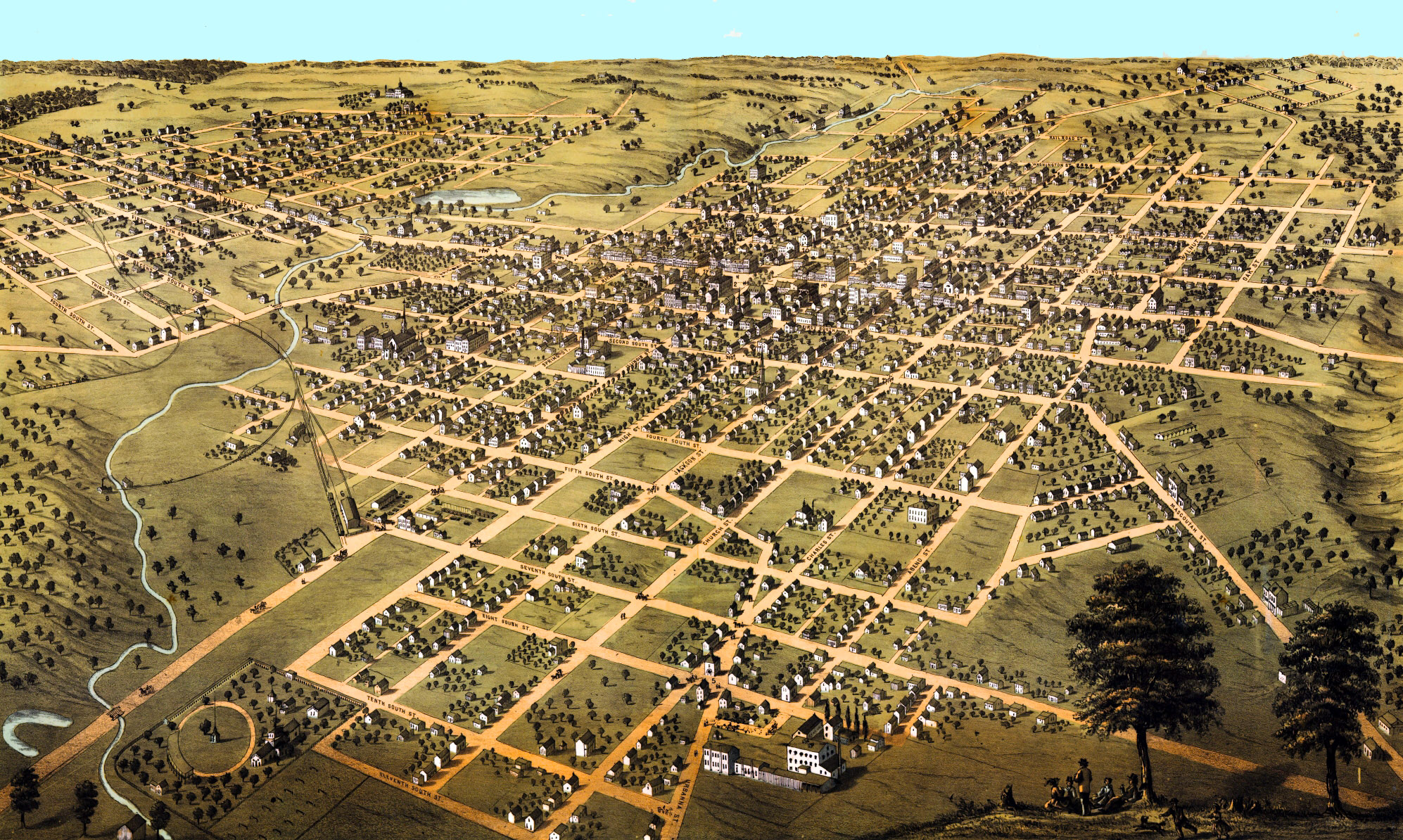
A Bird's Eye View of Belleville, Illinois, in 1867.


After the Civil War (1861-1865), Belleville became a manufacturing center; nails, printing presses, gray iron castings[1], agricultural equipment, and stoves were made there. The number of stoves produced and wealth generated from the stove foundry industry gave Belleville the moniker, "Stove Capital of the World." The State of Illinois’ first and last brewery was established there. Belleville was also Southern Illinois’ leading cigar revenue district. In 1868, Gustav Goelitz founded the company that is known today as "Jelly Belly."

An immense deposit (400,000 acres) of black coal was found in St. Clair County. By 1874, some farmers had become coal miners. One hundred shaft mines were in operation in and around Belleville. The coal brought the steam railroad to town, which allowed for the transport of many tons of coal to be shipped daily from Belleville to St. Louis, Missouri. Later, Belleville would have the first electric trolley in the state.

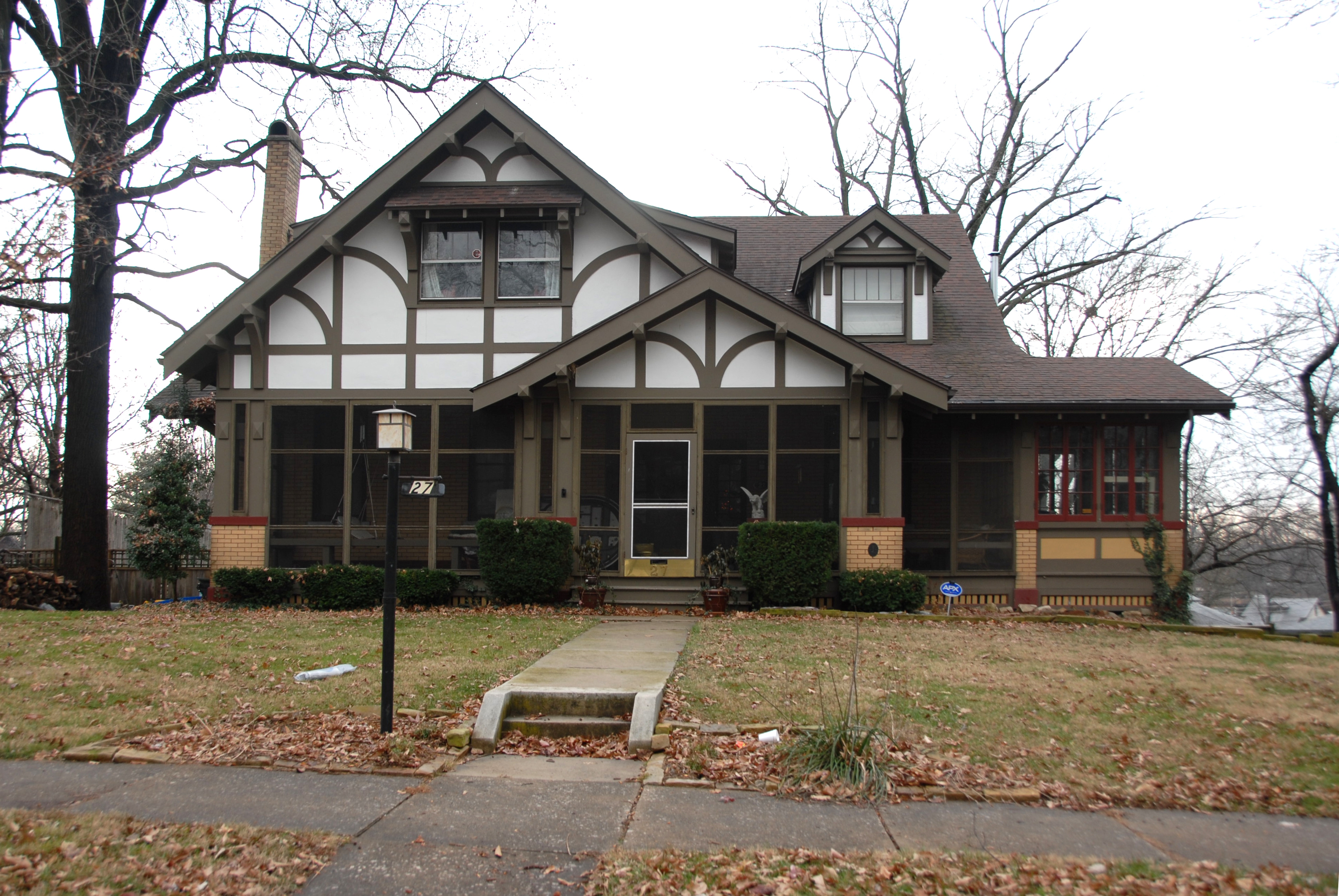
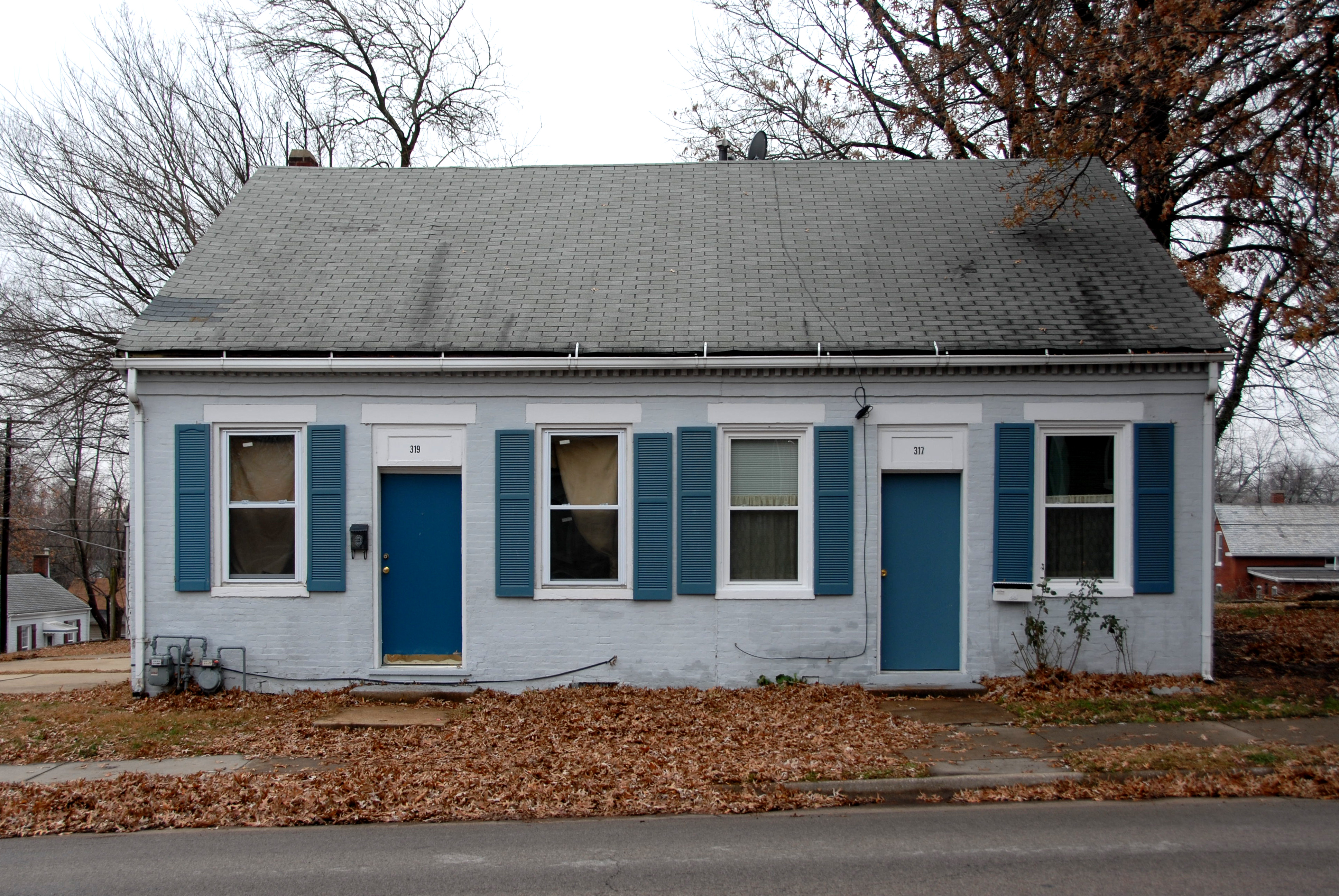
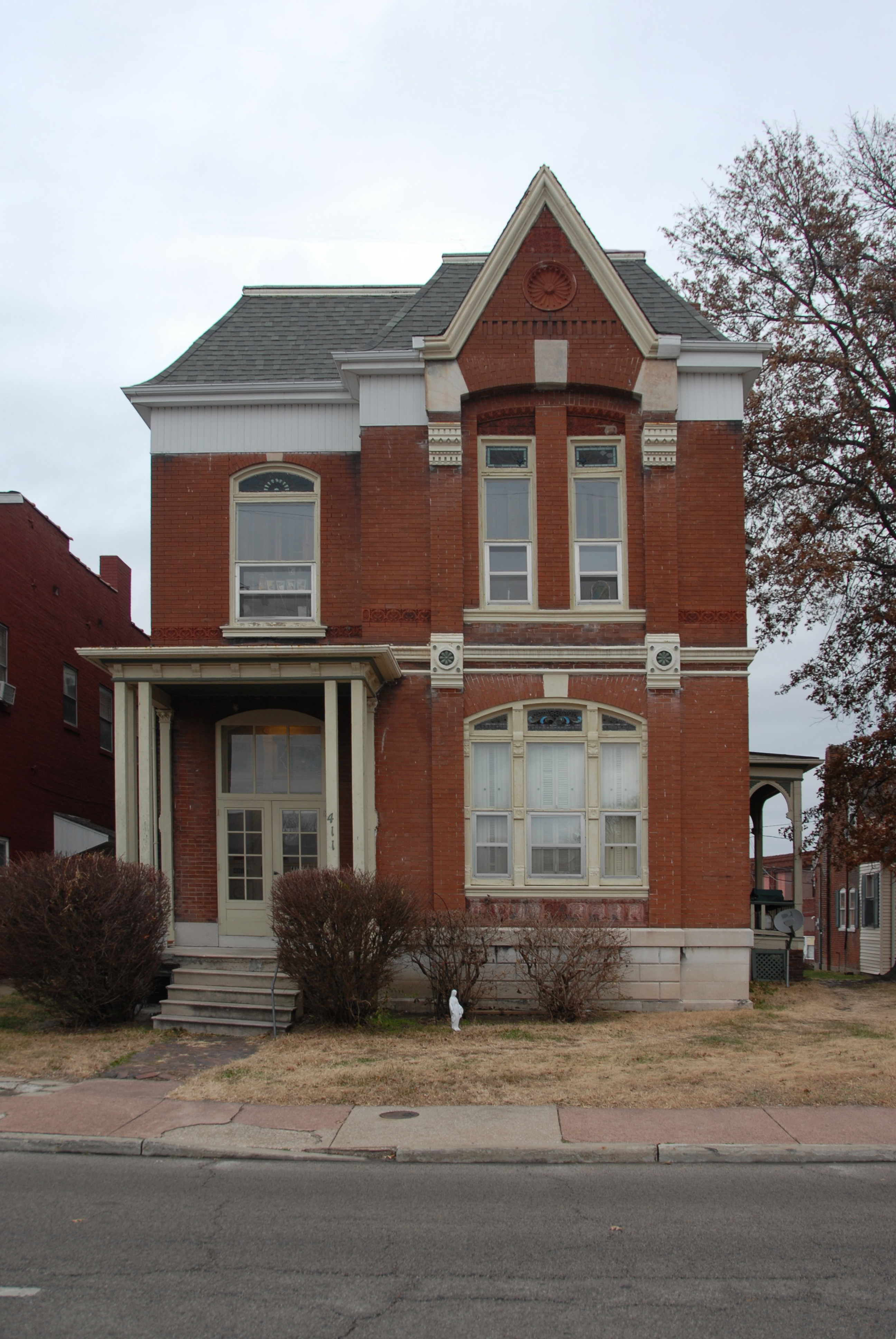
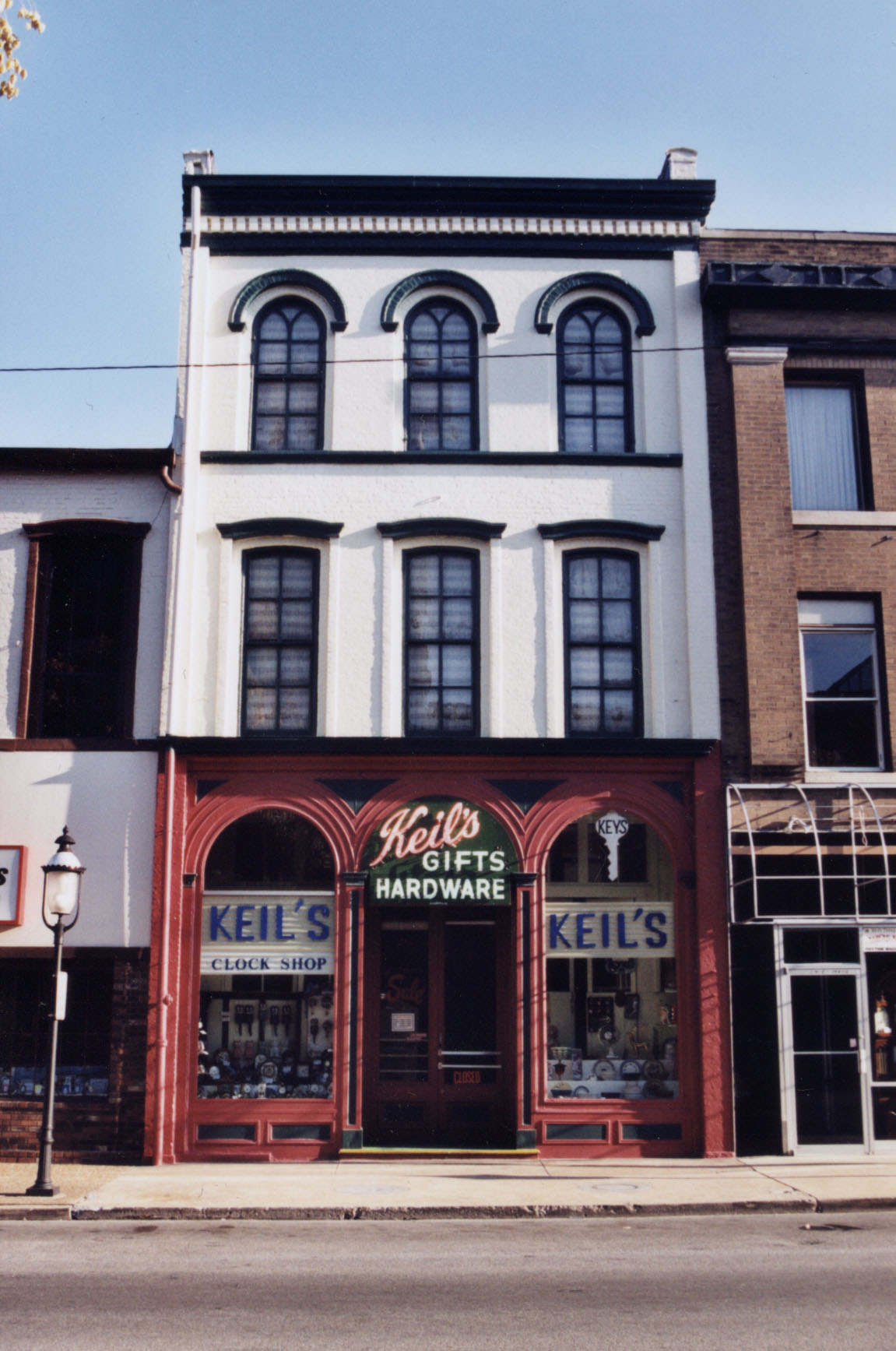
The first style of homes in Belleville was simple brick cottages, known locally as "German street houses" or "row houses." However, there is a great variety of architectural styles with American Foursquare, French Second Empire, Greek Revival, Gothic Revival, Italianate, Queen Anne, and Victorian. Over 700 properties are listed on the Belleville National Register Historic District. The "Old Belleville Historic District" was formed in 1974 and is the city’s first historic district. The city also had two more historic districts: "Hexenbukel" (est. 1991) and "Oakland" (est. 1995).

Belleville’s early German immigrants were scholarly, with most of them having graduated from German universities. They were nicknamed “Latin Farmers” because of this. In 1836, residents established the city’s public library. The Belleville Public Library is the state’s oldest, predating the Illinois State Library by three years. The German settlers also founded choral and dramatic groups as well as literary societies. Belleville was also home to one of the first kindergartens in the country.


Compiled by Dr. Neil Gale, Ph.D.


Belleville, Illinois, Historic District


[1] Gray Iron, or grey iron, is a type of cast iron that has a graphitic microstructure. It is named after the gray color of the fracture it forms, which is due to the presence of graphite. It is the most common cast iron and the most widely used cast material based on weight. It is used for housings where tensile strength is non-critical, such as internal combustion engine cylinder blocks, pump housings, valve bodies, electrical boxes, and decorative castings. Grey cast iron's high thermal conductivity and specific heat capacity are often exploited to make cast iron cookware and disc brake rotors.