Friday, February 18, 2022

One Killed When Blast Flips a Chicago Manhole Cover on Saturday, May 29, 1937.

Fire department officials were investigating the possibility that naphtha[1] or other inflammable materials dumped into the sewers by cleaners in defiance of the law was responsible for this disastrous sewer explosion on Fullerton Avenue.
When a subterranean explosion tossed many manhole covers on Fullerton Avenue into the air, one of the lids was blown high and crashed down the elevator shaft of the Hollander Storage and Moving Company at 2418 North Milwaukee Avenue, killing the elevator operator, Albert C. Day. Two others on the freight elevator were slightly injured. The dotted line shows the manhole covers trajectory.


The blast, which caused panic in the Fullerton and Milwaukee avenues business district, blew seventeen manholes from the Fullerton Avenue sewer over a stretch of a mile between Kedzie and Western avenues. 
The arrow indicates the location of the Hollander Storage and Moving Company at 2418 North Milwaukee Avenue. The map reflects the stretch of Fullerton avenue between Kedzie and Western avenues, where 17 sewer covers were blown off.


One of the 155-pound covers hurled to the top of the five-story Hollander Storage Warehouse building at 2418 North Milwaukee Avenue in Logan Square fell through a skylight and down the elevator shaft, killing an elevator operator. Another cover barely missed a streetcar.
155 Pound Chicago Manhole Cover.
INVESTIGATE GAS POSSIBILITY
While great importance was attached to the theory that waste material from some of the many cleaning establishments in the district caused the explosion, some investigators believed that illuminating gas, seeping in from leaks in the mains, was responsible.

The city has strict regulations against dumping inflammable or explosive materials into the sewer, and they are as rigidly enforced as possible. However, officials said it would be virtually impossible to completely prevent such dumping or detect it immediately.

HEAVY GAS ODOR NOTED
For some days, a gas odor had been detected in the neighborhood. Gas company officials said they had investigated it and found it was caused by naphtha or gasoline. Shortly before the explosion at 10:05 am, the odor was said to have been particularly strong.

Witnesses said they first heard a low rumble, then a clap like that of thunder, that resounded along the avenue. Although there was no fire, a white vapor burst from the sewer as the manhole covers began flying into the air.

The most significant force of the explosion was felt at the intersection of Fullerton and Milwaukee avenues. Near this intersection in the Hollander Storage Warehouse, Albert C. Day was preparing to take his elevator from the first to the third floor.

COVER STRIKES WITH A CRASH
Albert C. Day
Two men who had just loaded the elevator with furniture were with him. Suddenly there was a crash as a manhole cover plunged through the skylight and down the shaft. It struck Day, a man of 57, residing at 5642 West Melrose Street, killing him instantly. The others escaped with slight injuries, although the furniture was knocked down upon them.

At that exact moment, another manhole cover crashed through the roof of the Milwaukee Avenue Motor Sales service building at 3030 West Fullerton Avenue. It fell beside two employees without touching either.

TWO WOMEN INJURED
Mrs. Madeline Kramer, 59, was on the telephone in her apartment at 2953 West Fullerton Avenue when a piece of debris broke her window and struck her arm. In the Dame building, Mrs. Genevieve Christianens was knocked to the floor by another fragment from the blast.

Hoping to prevent a repetition of the explosion, Thomas B. Garry, superintendent of sewers, sent out men to replace the covers with new perforated ones. He said these would allow gas to escape before it could cause serious damage.
A Modern Chicago Sewer Cover.
OTHER INCIDENCES
There were a few reports of similar events in other Chicago neighborhoods over the years, but it’s probably not fair to call it common. In 1920, a “pillar of fire” burst from a manhole in Bronzeville fed by gas from a leaking main. In 1939 in the Austin neighborhood, sewers exploded in flame, severely burning one woman when the catch basin caught fire and shot a sheet of flame through her home, breaking all the windows. And in 1955, a manhole cover in the Irving Park neighborhood blew off of a ComEd manhole due to a short circuit in the electrical cables underneath it. 

It still happens occasionally, particularly in New York City, where there were 32 reported “manhole events” in 2014.

As for Chicago, the most recent manhole event was in 2012, when an explosion in a ComEd vault blew off a manhole cover near Grand and Armitage. Luckily, no one was injured in that event.

Compiled by Dr. Neil Gale, Ph.D.


[1] Naphtha is a flammable oil containing various hydrocarbons obtained by the dry distillation of organic substances such as coal, shale, or petroleum.

Whistler's Family Restaurant, Lincolnwood, Illinois.

Lulu Belle's Restaurant began at 3420 West Devon Avenue in Lincolnwood at Trumbull Avenue. The restaurant was renamed Estelle's. Estelle was Don Carson's mother (Carson's Ribs). It was the first restaurant he managed when he was young. The Carson's were looking to expand their restaurant business by offering reasonably priced, high-quality food.


In 1976, the restaurant became Whistler's, and for the next 40 years, was one of Lincolnwood's only 24-hour restaurants. Whistler's closed in 2016 after 40 years.

We lived very close, so my family frequented Whistler's often for breakfast, lunch, or dinner. Their food was great.


Compiled by Dr. Neil Gale, Ph.D.

Tuesday, February 15, 2022

Levy Wittenberg (1850-1907), Chicago's Matzoh King.

Levy Wittenberg was born in Kolnich, Russia, in February of 1850 to Israel Wittenberg and Sara, nee Cohen. We know that Levy had at least two siblings, Abraham (1865-1934) and Isaac (1880-1937), because they sued Levy for libel in 1903. Levy Wittenberg came to the United States in 1880 and settled first in New York and then finally in Chicago. 

While still living in Russia, Levi Wittenberg married Gitel (Katie) Newman (1850-1940) circa 1870 while both were twenty years old. Katie told the census taker in 1900 that she had seven children, and all seven were still alive.

Louis (1870-1915), born in Russia
Hyman (1873-1911), born in Russia
Leah (1875-1945), born in Russia
Ida (1879-1912), born in New York
Levi "Harry" (1885-1979), born in New York
Moses "Morry" (1888-1975), born in Chicago
Alexander (1889-1941), born in Chicago. Alexander used the surname "Witte"

In later years Levy claimed that he moved to Chicago in 1883, but that may be unlikely unless he to Chicago ahead of his family. Levi was the first matzoh bakery in Chicago and quickly established himself as one of the top Jewish bakers in Chicagoland.
Wittenberg Matzoh Company at 1326 South Jefferson Street, Chicago. Circa 1900.


Levy founded the Wittenberg Matzoh Company at 1326 South Jefferson Street, Chicago, in 1885. Levy Wittenberg became a naturalized US citizen on October 17, 1890.

Wittenberg Matzoh Company's brand name was "Eatmore Matzoh," producing thousands of pounds of Matzoh each year.
Wittenberg Matzoh Company was incorporated in Illinois in October 1901, as L. Wittenberg Company with the capital of $10,000 ($331,000 today), a bakery manufacturing unleavened bread, crackers, and cakes. Officers were Levy Wittenberg, Elijah N. Zoline, and Harris Bisco. 

The Kosher for Passover operation took place in the early years on the bakery's second floor. The ground floor was for retail. When they needed more room, they moved around the corner to Maxwell Street.

Levi was not without controversy. The following article appeared in the Chicago Daily Tribune on June 30, 1903:

TWO BROTHERS SUE A THIRD
Chicago Daily Tribune on June 30, 1903  

Charge Him With Libel in Issuing Circulars Attacking Their Business Integrity.

Three brothers are complainants and defendants in a libel case brought before Justice Richardson yesterday. Abraham and Isaac Wittenberg, bakers at 529 Jefferson street, charging Levy Wittenberg with libel. The trouble started shortly before the Passover feast in April. The matzhos for the feast were bought from Abraham and Isaac Wittenberg, at a reduced price. Then, it is charged, Levy Wittenberg issued circulars of a libelous character, attacking the quality of the food sold by his brothers. One circular stated: 

"Do not buy from them what are called matzohs, while in fact when you open the bundle you find the broken fragments of various food articles."

According to the complainants, the circulars were intended to attack their honesty. Justice Richardson continued the case until July 9, 1903. It is not recorded how the case turned out, but Levy Wittenberg's bakery was still producing and selling Matzoh long after the founder was gone.

Levy Wittenberg died on June 12, 1907, at home, 580 North Canal Street, from Lobar Pneumonia complicated by Diabetes. He is buried at Waldheim Cemetery in Forest Park, Illinois.

Eventually, they closed due to competition from the ever-modernizing Manischewitz Matzoh Bakery.


Compiled by Dr. Neil Gale, Ph.D.
#JewishThemed #JewishLife

Friday, February 11, 2022

The Steamship Globe Explodes on the Chicago River on November 8, 1861.

TERRIBLE CALAMITY. So screamed the headline of the Chicago Tribune on November 9, 1861. 

The Globe was one of the oldest of our lake craft in commission. She came from the stocks as a side-wheel steamboat in 1848. Subsequently, she was altered to a propeller. Her present engines were comparatively new, having taken the place of the old ones, which were condemned about four years prior. She was registered as a B-2 vessel, with a valuation of $17,000 ($538,600 today). She was insured for $5,000, but as marine policies do not cover loss or damage by an explosion, the loss fell entirely upon her owner, Mr. William O. Brown, of Buffalo, N.Y. She was commanded by Captain Amos Pratt, one of the oldest and best of lake navigators.
1860s Chicago River, looking west toward Wells Street from Clark Street.


The steamship Globe, tied up at a Wells Street dock on the Northside of the main branch of the Chicago River that the disaster claimed the lives of 15 people. Captain Pratt had left the boat at about 7:30 am, about two hours before the explosion. His belief was that after the boat docked, water was drawn down in one of the boilers while the other boiler was kept at low pressure for moving the boat and hoisting freight.

On the morning of Thursday, November 8, about nine o'clock, the people in the vicinity of Clark and Wells streets were startled by a tremendous explosion upon the Northside of the river, and at the same instant, the air was filled with a shower of beams, iron, and splinters of every description. Captain Pratt, was found unconscious, lying at Hale's dock along with the remains of the propeller from the Globe.
Terrible Explosion of the Steamer Globe, at Hall's Dock, Chicago, Thursday, November 8, 1961. Sketch by H. Petrie.


The tremendous sound of the explosion reverberated for miles. People rushed to the docks to witness the spectacle. The ship, torn apart for two-thirds of her length, sank almost immediately with about 20 feet of her upper works still visible. It was immediately clear that the death toll would be large.

The Globe had only arrived about five hours earlier that morning from Buffalo, N.Y. with a cargo of apples and other merchandise. She had also brought some passengers, all of whom had left the vessel. The engineers and firemen were in the engine room inspecting a cylinder head. The steam had been blown off from one of the boilers and the fire put out, the other boiler had but little steam in it. While they were thus occupied, the boiler exploded with terrific force, tearing the propeller into atoms, and covering the adjacent parts with the wreck of the ill-fated vessel. The crew numbered twenty-five in all and it is feared that most of them have perished. The force of the shock was terrible. The long block of buildings adjoining the Northside of the river was shaken as if by an earthquake. The windows were all broken and some ceilings were destroyed.
The wreck of the steamer as it appeared after the explosion. Carrying away the dead bodies. Sketch by T. Williams.

Some idea may be formed of the wonderful power concealed in a drop of water from some of the particular effects of the explosion. The iron of the boilers was ripped asunder (into pieces) as if it had only been made of paper. The boilers were literally torn to shreds, and one of them, less torn than the others, was twisted and collapsed like an old felt hat that had been consistently sat upon.

Among the dead were several individuals who were as much a victim of fate as of the explosion of the steamer. 

James R. Hobby, 25-years-old, was assisting a clerk who had gone on board to check on a shipment for his employer. The clerk had returned to the office moments earlier, leaving James to finish the work. 

Mary Golding, 15-years-old, was on the dock with her ten-year-old sister, picking up apples that had fallen from broken barrels, part of the ship’s cargo. Mary died. Her sister, who was less than ten feet away, was uninjured and ran to her parent's home at Franklin and Kinzie, screaming that “somebody had fired a cannon at Mary and killed her.”  

Patrick Donahoe was killed by a large oak beam as he stood in front of a saloon on Wells Street. A father and two daughters who had booked passage on the ship and left it after it docked, returned to pick up their luggage just before the disaster. The father and one of his daughters died. The other daughter survived.

A piece of timber, weighing some two hundred and fifty pounds, was thrown across the river and into the office of Stewart, Youle & Co., in the Board of Trade Building. It entered via the window and landed in the middle of the room. Mr. Stewart had left the room scarcely a minute before the intrusion of the unwelcome projectile.
The rear of the Board of Trade Building shows the hole made by a piece of timber weighing 250 pounds that was blown across the river.


One of the fenders of the boat, weighing two hundred pounds, was blown through the air and hurled into the rear of Larrabee & North's hardware store, over a block from the dock, and cutting out a circular piece, a foot in diameter, from the center of a thick iron shutter.
The hole in an iron shutter in the rear of Larrabee & North's hardware store.


The explosion of the steamer was of such force that huge pieces of the vessel were hurled in all directions, prompting incredible stories of near-misses. 

Nelson Luddington was driving his buggy along Wells Street when a stick of firewood from the Globe completely destroyed the buggy.  A 200-pound piece of chain was hurled through the window of a produce dealer, slamming into a heavy iron safe, which prevented it from traveling through the wall into the adjoining office where several people were at work.

A 200-pound deck beam rocketed through the fourth-floor window of a business on Lake Street, near Wells. A large piece of chain, about five feet long, fell through the roof and ceiling of the Merchants’ Police Station on Wells Street and passed between two men as they lay sleeping after doing night service.

Captain Pratt surmised that the explosion was caused by “carelessness on the part of someone,” most probably by failure to check the system adequately before introducing cold river water into a red-hot boiler that had no water in it. The boilers had passed an inspection by United States officials the previous May in Buffalo, N.Y.

The Globe lay where it sank until April of 1862 as the parties involved in its removal fought over who would pay for the operation. In February of that year, the Chicago City Attorney ruled that the city was most certainly not responsible for cleaning up the wreckage. By March the boat’s owners had hired contractor Martin Quigley to clean up the wreckage, paying him $1,500 and any material that he could salvage. In that process, another crewmember’s body, believed to be the fireman’s, was found on March 18, 1862.

In a short two-sentence blurb on April 3 the Tribune reported that three tugboats were towing the hulk toward Miller & Hook’s dry dock on the north branch of the river. “It is good riddance to our river,” the paper concluded.

The accident, as horrible as it was, could have been a lot worse. “... it was a hair's breadth escape for hundreds,” The Tribune observed, “when with a violence an explosion of gunpowder could scarcely parallel, a boiler is thus blown up in the very heart of a busy city, and sends its fearful missiles whirling hundreds of feet through the air to land at random in our streets. Reviewing the disaster, it's almost miraculous, to see how few lives were lost, and amid all the sorrow, this is an abundant cause for congratulation.” 

Compiled by Dr. Neil Gale, Ph.D.

Sunday, February 6, 2022

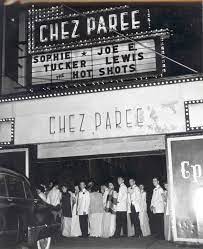
Chez Paree Theater Restaurant and Key Club, Chicago, Illinois.

The Chez Paree was a Chicago Dinner Theater and a Key Club best known for its stellar cuisine and top entertainment.

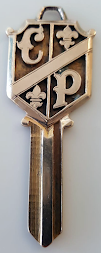
A CLUB KEY
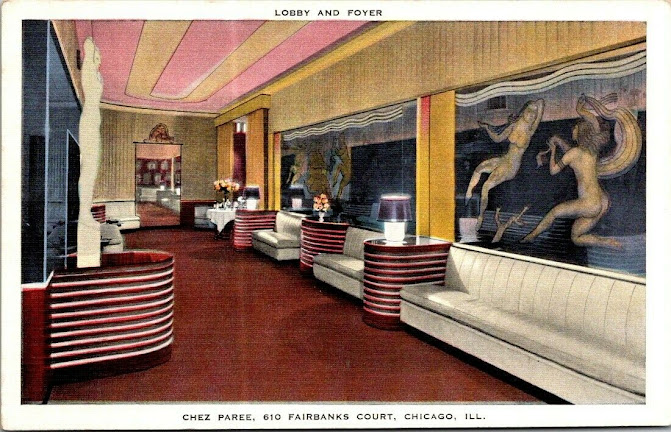
The Chez Paree opened in 1932 at 610 North Fairbanks Court, in The Streeterville neighborhood of Chicago. The fully air-conditioned club was a thriving example of golden age entertainment. They hosted famous musical groups, comedians, big band talent, famous dance bands, and some vaudeville.[1] 

There were casino games played in the Key Club.

Popular entertainers included Jimmy Durante, Martin & Lewis, Sophie Tucker, Tony Martin, Danny Thomas, and Sammy Davis and Sammy Davis Jr. This is where Chicagoans took business people, politicians, and out-of-town family and friends to impress them when showing off our city. 

The floor was crowded with tables. There was a large dance floor in front of the stage. The Cocktail Lounge had a circular and glamourous bar.

The Chez Paree closed in 1960.

A Friday or Saturday night crowd at The Chez Paree.


Chez Paree, Liberace in The Key Club.

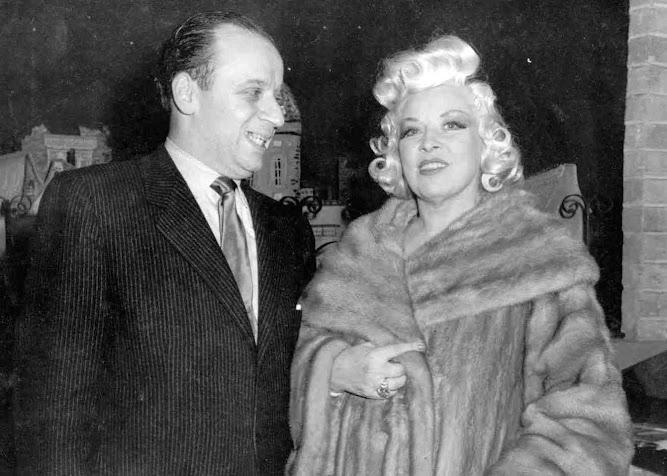
Mae West with Chez Paree co-owner Jay 'Jack' Schatz in the mid-1950s after a night of performances.

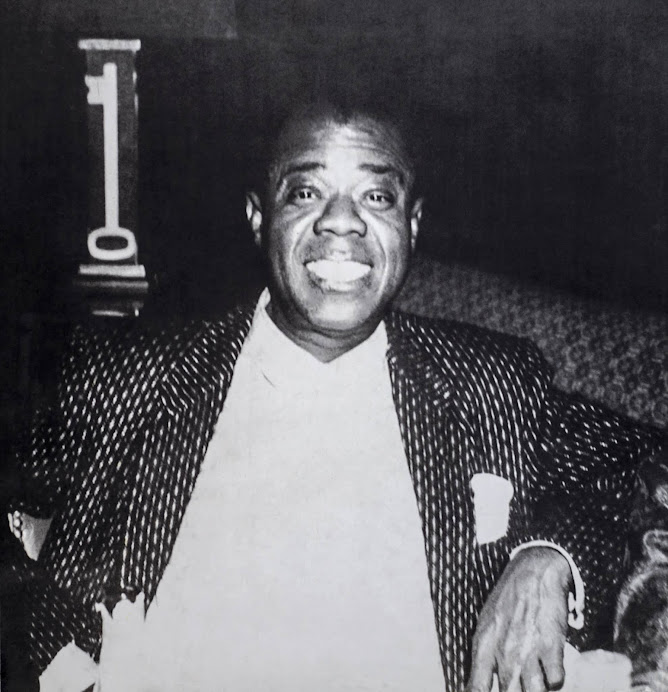
Louis 'Satchmo' Armstrong in The Key Club at The Chez Paree.

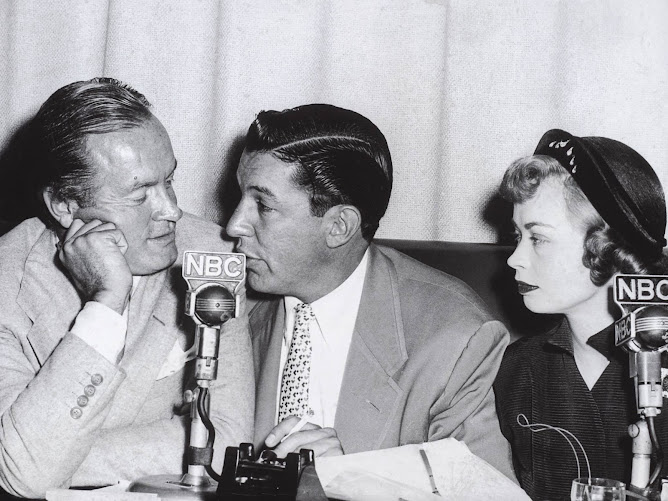
Bob Hope, Mike Wallace, and his wife Buffy broadcast a radio show from The Chez Paree.

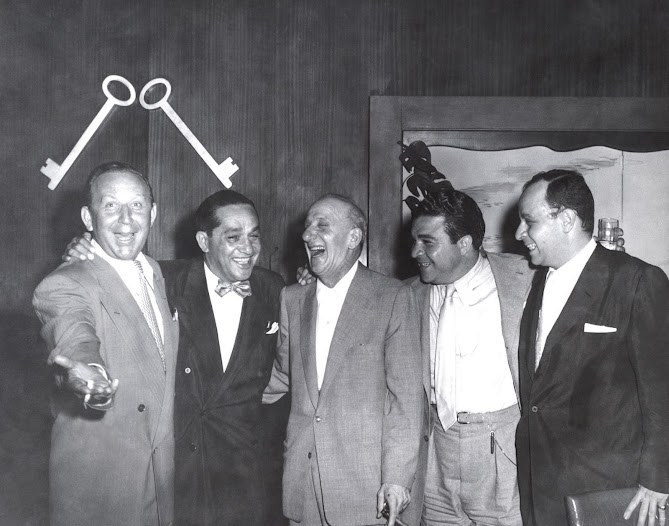
Jimmy Durante with The Chez Paree co-owners Jay 'Jack' Schatz and Donjo Medlevine in The Key Club.

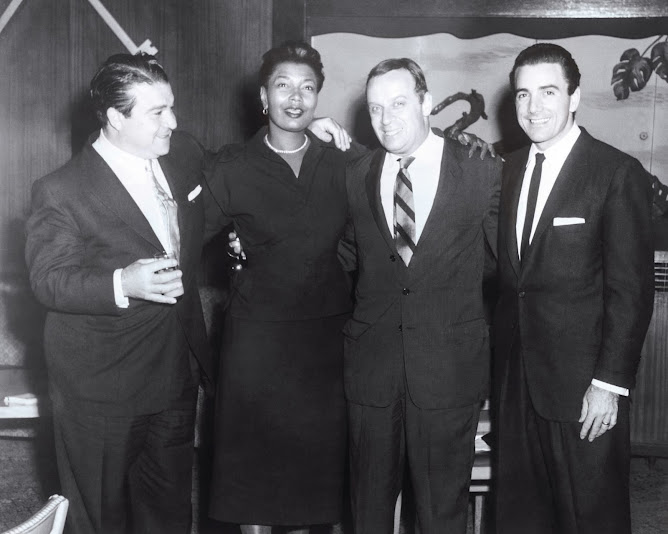
Pearl Bailey and husband Louie Bellson (far right) in The Key Club.

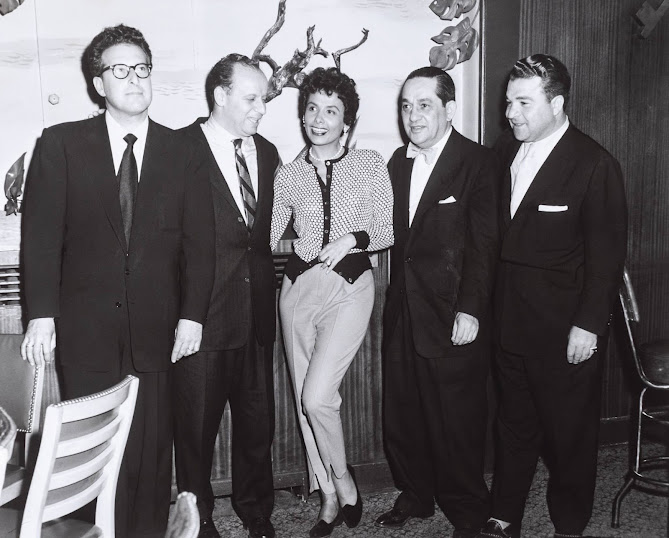
Lena Horne in The Chez Paree Key Club.

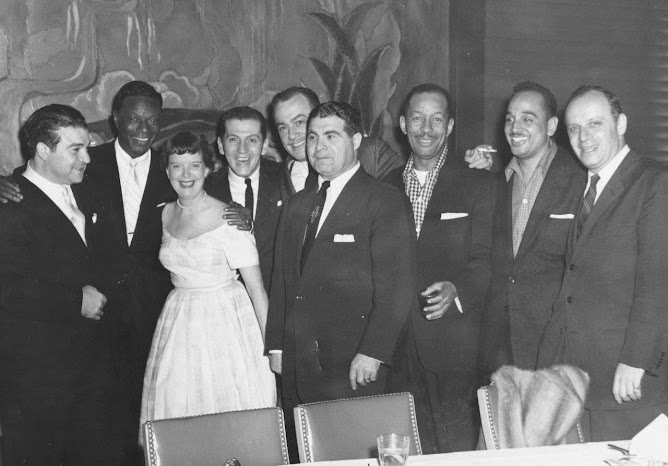
Nat King Cole with co-owners Jay 'Jack' Schatz and Donjo Medlevine in The Key Club at The Chez Paree early-1950s.

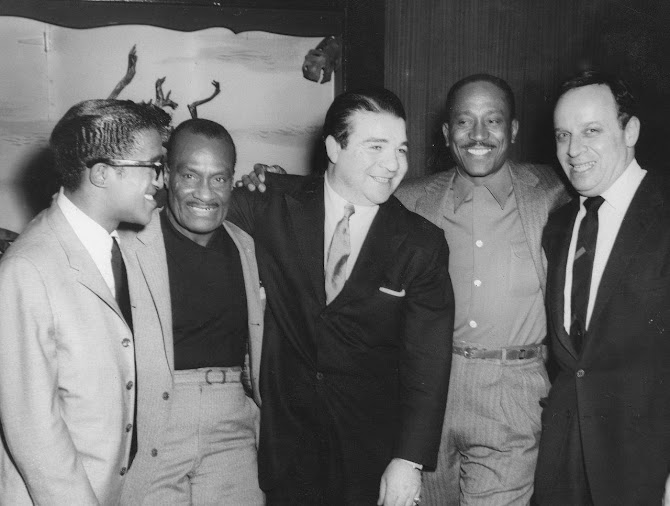
The Will Mastin Trio, comprised of Will Mastin (2nd from left), Sammy Davis Jr (far left), and Sammy Davis Sr. (2nd from right) have some laughs with Chez Paree co-owners Jay "Jack" Schatz and Donjo Medlevine.


Compiled by Dr. Neil Gale, Ph.D.


[1] Vaudeville is a theatrical genre of variety entertainment born in France at the end of the 19th century. In the United States, the term connotes a light entertainment popular in the states from the mid-1890s until the early 1930s. Vaudeville, more so than any other mass entertainment, grew out of the culture of incorporation that defined American life after the Civil War (1861-1865). The development of vaudeville marked the beginning of popular entertainment as big business, dependent on the organizational efforts of a growing number of white-collar workers and an increase in leisure time, spending power, and changing tastes of an urban middle-class audience. Shows usually consisted of 10 to 15 individual, unrelated acts, featuring magicians, acrobats, comedians, trained animals, jugglers, singers, dancers, and other odd acts.