Wednesday, November 9, 2022

The Adolf R. Harseim Merchandise Store, Secor, Illinois, and famous resident Wilhelmina "Minnie" Vautrin.

Secor, Illinois, was named after Charles A. Secor, a partner in the engineering firm that laid out the eastern branch of the Peoria & Oquawka Railroad Company. Secor is 25 miles east of Peoria.


The General Store was established by Rudolph Harseim, born May 8, 1830, an early settler arriving in 1862. The General Store was passed on to his son Adolf R. Harseim in 1910.


Rudolph died on December 21, 1905. His wife, Katharina, lived from 1836 to 1921.

sidebar
Minnie Vautrin
Wilhelmina "Minnie" Vautrin (1886-1941), born in Secor, Illinois, on September 27, 1886. Miss Vautrin, an American missionary to China and known as 金陵女子大学, the "Goddess of Mercy." She was the president of Ginling College, University of Nanking, China. During WWII, Nanjing was invaded by Japanese Imperial troops in December 1937. The invasion aftermath is known as the 'Nanjing Massacre.' 

During the Nanking Massacre aka the Rape of Nanking, the college, led by its acting principal Professor Minnie Vautrin, harbored thousands of women hiding from the Japanese Imperial Army and saved hundreds of children and women from rape and worse.

The city is strangely silent—after all the bombing and shelling. Three dangers are past—that of looting [Chinese] soldiers, bombing from aeroplanes and shelling from big guns, but the fourth is still before us—our fate at the hands of a victorious army. People are very anxious tonight and do not know what to expect . . . Tonight Nanking has no lights, no water, no telephone, no telegraph, no city paper, no radio.”            December 13, 1937, The Diary of Minnie Vautrin. 

Vautrin guarded the college with the motto: "Whoever wants to go through this gate will have to do so over my dead body."

From August 12, 1937, to April 1940, Vautrin kept a daily diary, recording war crimes committed by Japanese troops in Nanjing. She returned back to the United States for medical treatment on May 14, 1940.

Vautrin is highly honored in China for establishing a sanctuary on the grounds of Ginling college to protect Chinese non-combatants  women  from the six-week massacre and other unspeakably evil things. Minnie was posthumously awarded the "Order of the Brilliant Jade" by the Chinese government for her actions during the massacre. 
Salt River Cemetery, Shepherd, Michigan.
She committed suicide in May 14, 1941 and is buried in Salt River Cemetery, Shepherd, Michigan.
Order of the Brilliant Jade.

Compiled by Dr. Neil Gale, Ph.D.

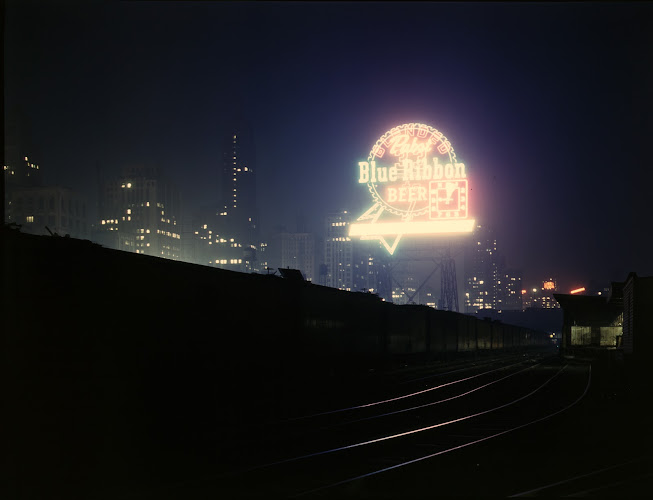
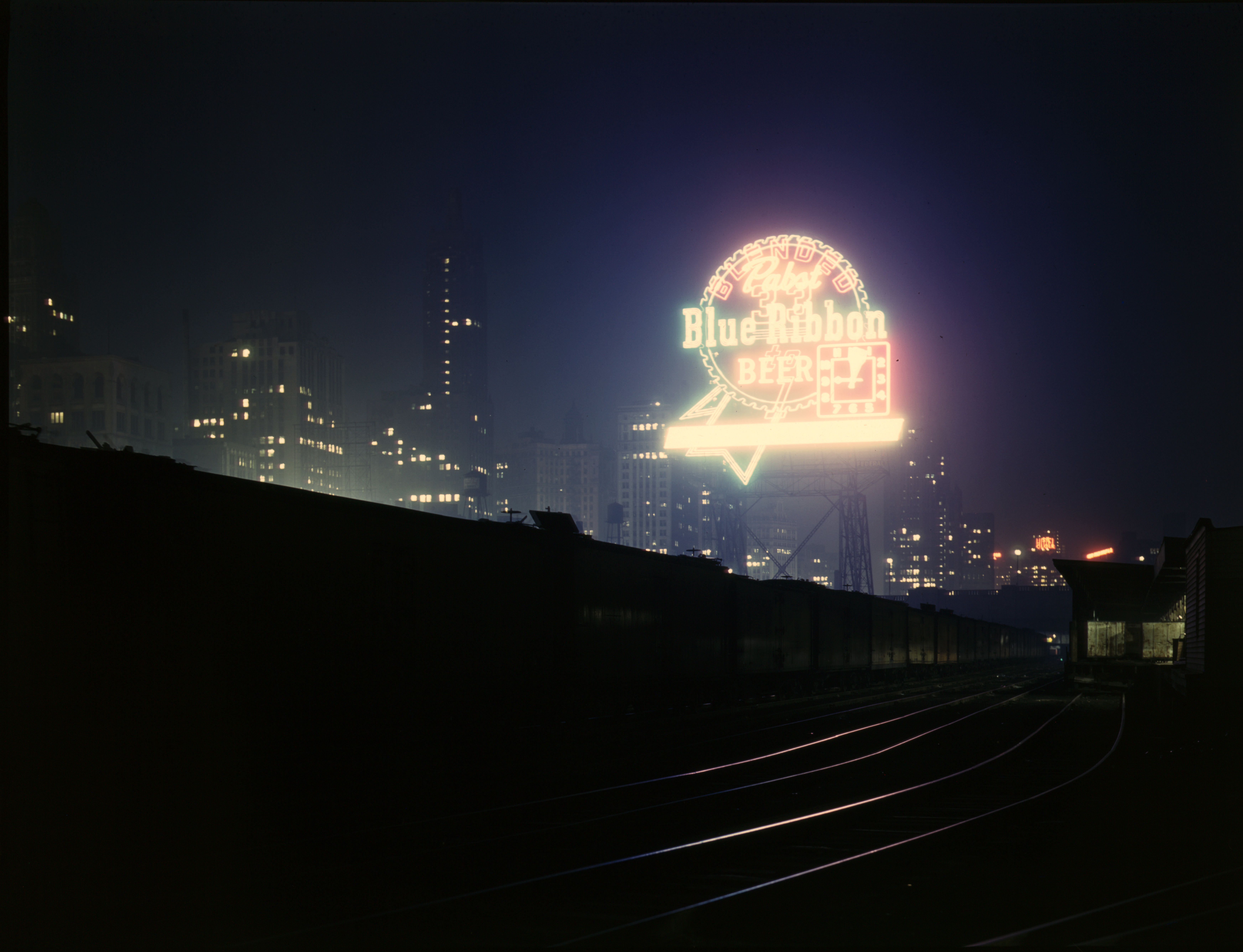
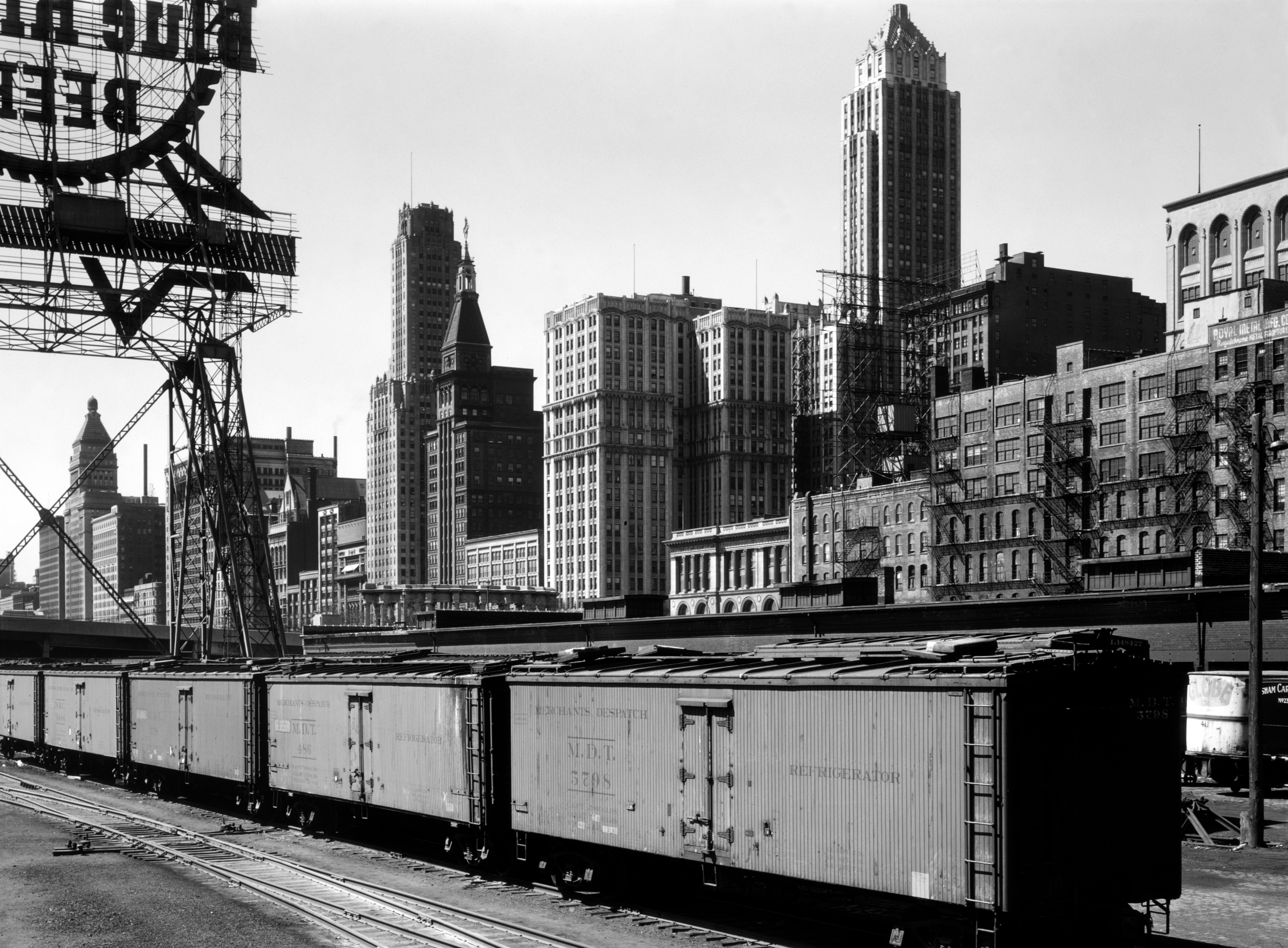
The Pabst Beer advertising sign on South Water Street, Chicago. 1943

Pabst Beer neon sign at South Water Street looking South. 1943
The Pabst Blue Ribbon neon [1] sign looking North at South Water Street, Chicago.


sidebar
Blended 33 to 1 means that 33 vats of beer are blended together to make one batch for consistency.
The Pabst sign was removed before June 1953 for the groundbreaking of the Prudential Insurance building. 
Prudential Plaza, 1964
The Prudential building opened to the public in 1955, replacing the Pabst neon sign.

Compiled by Dr. Neil Gale, Ph.D.


[1] Neon was first unveiled in modern form by Georges Claude, a French engineer, at the Paris Motor Show in December 1910. In 1923, Claude brought neon signage to the United State, selling two signs to a Packard car dealership in Los Angeles, California.

Saturday, November 5, 2022

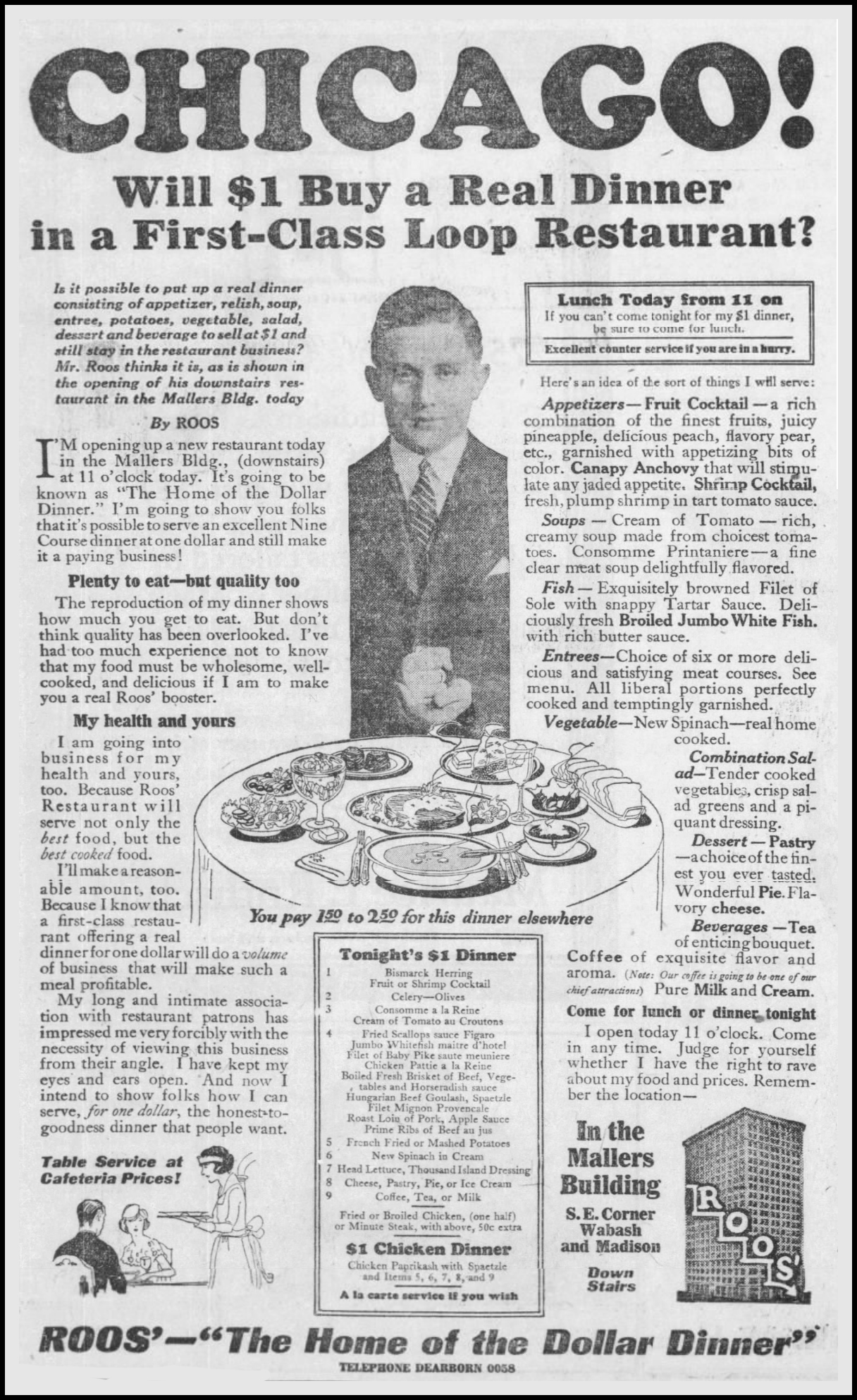
Roos' Restaurant, Home of the $1, Eight Course Dinner, beginning in 1923.

Max W. Roos was the Assistant Manager at the Blackhawk Restaurant at 139 North Wabash, Chicago. The success of the Blackhawk Restaurant and Grill has inspired its former assistant manager, Max, to decide to have a loop restaurant of his own. 

Consequently, he had leased the entire basement of the Mallers Building (constructed in 1918 in an art-deco style), 5 South Wabash at Madison Street, for ten years at a term rental of $110,000 ($917/month) starting on March 1, 1923. 

Max opened the Roos' Restaurant as soon as the extensive alterations were completed, probably around the end of February 1923. 


The new Restaurant was popularly priced along the lines of the Blackhawk Restaurant. The space just rented was formerly occupied by the Illinois Cafeteria.


Roos' Restaurant even offered a $1 Thanksgiving feast and all dinner choices, all the time, which would cost $17.50 today.
A visual aid.


By Roos' third week in business, a half-page Tribune ad on March 7, 1923, "It's here, my 65¢ Lunch." My $1 dinner has been such a tremendous success I know a similar luncheon will be equally as popular. So, Starting today, I will serve between 11 and 3 o'clock for a 65¢ special luncheon which I believe cannot be duplicated for the same price elsewhere. 

I will give a choice of six entrees. With each choice, I will serve potatoes, one extra vegetable, bread and butter, and your choice of pie, pastry, and ice cream, and your choice of tea, coffee, and milk. The portions will be liberal, and the food will be the same first-class quality you get with my famous $1 dinner. In fact, you will get Roos' Quality and Roos' Service in a wonderful table d'hote lunch at  65¢. March 7, 1923.

Roos' Restaurant offered a $1 Thanksgiving feast which would cost $17.50 today.

IN THE END
November 3, 1925, Chicago Tribune, under the heading of "Petitions in Bankruptcy," Roos' Restaurant Co. claimed involuntary bankruptcy[1]. Creditor Beatrice Creamery Co. claims $1,000 ($17,000 today). 

After 2 years and 8 months in business, Max couldn't come up with $1,000. It took some time for the bankruptcy to be discharged. 

Compiled by Dr. Neil Gale, Ph.D.


[1] Involuntary bankruptcy is a legal proceeding through which creditors request that a person or business go bankrupt. Creditors can request involuntary bankruptcy if they think they will not be paid if bankruptcy proceedings don't occur. They must seek a legal requirement to force a debtor to pay their debts. Typically, the debtor is able to pay their debts but chooses not to for some reason. For involuntary bankruptcy to be brought forward, the debtor must have a certain amount of serious debt.