Sunday, March 26, 2023

The History of Grafton, Illinois, with Personal Photos of my day trip on October 18, 2013.

James Mason was born in Grafton, Massachusetts, in July 1783. He was engaged in trade in the West Indies and worked in New York City as a partner in the wholesale grocery business. He came west, settling in Edwardsville, Illinois, where he invested in real estate.

In August 1818, he married Sarah Von Phul, the sister of a prominent St. Louis businessman. James Mason was licensed to operate a ferry across the Mississippi River at Grafton in 1833. He and his friend, Dr. Silas Hamilton and leading St. Louis businessmen envisioned a town where Grafton is now. In 1833, Mason and his partners were incorporated as the "Grafton Manufacturing Company" to establish grist, woolen, and cotton mills and to do general manufacturing, trading and shipping. Mason and Hamilton died in 1834 before their plans became a reality.

On April 15, 1836, James Mason's Brother Paris, and James Mason's widow, Mrs. Sarah Mason, assumed responsibility for surveying, platting and selling lots and incorporating the town. Mrs. Mason named the settlement Grafton in honor of her husband's birthplace. Paris Mason took charge of the Mason enterprises in Grafton until 1840, James and Sarah Mason's daughter married William H. Allen, and he eventually took over and expanded Mason's interests. His activities included mercantile, produce, flour mills and banking. Allen participated in the Illinois Constitutional Convention in 1860 and served as 6th district State Senator in 1871.

According to the Jersey County Democrat, on February 1, 1867, Grafton's business community was comprised of 5 general stores, 2 blacksmith shops, 1 drugstore, 1 wagon shop, 1 butcher shop, 2 shoe shops, 1 harness maker, 1 tin shop, 2 flour/grist mills, 1 watchmaker and silversmith, 1 mill for sawing rock, 3 cooper shops, 2 physicians, but no Hotels.
GODFREY BUILDING - This Greek revival building was erected by Jacob Godfrey in the 1840s of local limestone as a general store. Godfrey was a tailor by trade. He also served as Constable for several terms. In 1858, Godfrey partnered with Henry Eastman to build another general store that served the community with at least 3 other general stores. The Godfrey building was mostly used as a general store but served as the town’s post office for some time.


MASONIC LODGE - The Grafton Stone and Transportation Company built this limestone building with locally quarried stone in 1869. All of the doors latches, hinges, door lintels, desk fixtures, wall sconces, lamp stands and the massive chandeliers were hammered by hand at a forge on the site. The upper story contained “Armory Hall,” a 30’ x 70’ hall used for public purposes. In 1885, the building was purchased by the Grafton Full Moon Masonic Lodge #341. Masonic activities have been held at the site since that time.


BANK - James M. Allen and his son-in-law Edmund A. Pinero established the first bank in Grafton in 1871. They served us as directors with Christopher P. Stafford and Ernst Meysenburg. The bank operated as a private concern until 1873. The door to the vault of their bank can be viewed at the Visitors Center. This building was constructed in 1913 as a bank after the original building that housed a drug store burned. The building constructed by Mr. Meysenburg was considered “fire and burglar proof and modern in every respect.” The building served as Grafton’s Post Office until the mid-1960s.


RUEBEL HOTEL - Michael Ruebel was born in Bavaria in 1834 and came to Grafton in 1863 after serving four months in the army during the Civil War. He worked three years at the cooper’s trade, and then moved to saloon keeping and eventually added the hotel business. In 1884, Ruebel began construction on a three-story brick building with a stone foundation that became the Ruebel Hotel.

It was estimated to cost $7,000 and was the largest hotel in Jersey County. The hotel had 32 rooms and also included a parlor, office, billiard room, store and dining room as well as a large kitchen. The Ruebel family remained in the hotel business for many years. An 1895 advertisement offered a Fourth of July stay for $1.00 to $1.50 in a hotel with all the “Latest Modern Improvements.”

The hotel was destroyed by fire in 1912 and the present structure was built to replace it. The burled walnut bar in the hotel was originally part of the Bavarian Exhibit at the 1904 World’s Fair in St. Louis and was transported to Grafton by steamboat. The bar was saved when numerous patrons and citizens carried it out of the building during floods. The Hotel has changed hands several times. For many years Charles Amburg, descendent of Michael Ruebel operated it.


COUNTRY CORNER


LA MARSH HOUSE OF BEDS AND BLUES
Compiled by Dr. Neil Gale, Ph.D.

The South Side Rapid Transit 'L' Railroad (CTA Green Line), extended for the 1893 World's Fair.


Chicago would start its first elevated 'L' train line in 1888. 


The first 'L' line ran to the south side, known as the "Alley L" because its elevated tracks were squeezed above the alley between State Street and Wabash Avenue downtown, pulled by steam locomotives.


It was extended to reach Jackson Park when Chicago was chosen to host the World's Fair in 1890. 

Jackson Park was a terminal on the Jackson Park Branch of the Chicago 'L.' The station opened on May 12, 1893, and closed on October 31, 1893, with the conclusion of the World's Columbian Exposition.
The 'L' station in Jackson Park, inside the 1893 Columbian Exposition fairgrounds. Architecturally, the station was a simple shed covering the concourse between the stairs and the platforms. The 'L' platforms are behind the shed on the left, while the fair's Intermural Railway and its connection are on the right.


The line was electrified on July 27, 1898.

Only one train station from that 'L' line remains at Garfield Boulevard near the University of Chicago.

Compiled by Dr. Neil Gale, Ph.D. 

Saturday, March 25, 2023

Gipps Brewing Company, Peoria, Illinois. (1881-1954)

Peoria has long since attained a leadership position in brewing and distilling interests, and its output along those lines exceeds any other city of equal size in the country. At the head of its enterprise are men of marked business ability, keen discernment and unfaltering energy — men who recognize the possibilities of trade and utilize each opportunity for its full worth. 


George H. Gipps is a representative of this class, and his position in the business circles of the city is that of general agent for the Terre Haute Brewing Company. He has been identified with the brewing trade since he completed his education. He was born near Morton, Tazewell county, Illinois, on August 3, 1863, on the farm belonging to his father, John Mathuen Gipps. John came from England to the New World in 1845 and traveled to the country's interior, settling upon a tract of land near Morton, Illinois. He successfully engaged in farming there for several years, watching his expenditures carefully. When he had sufficient capital, he embarked on the brewing business in Peoria, engaging in that line of trade in about 1864.
Toth Buffet Serves Gripps Beer.


George was associated with Mr. Howe in the establishment and management of a little ale brewery, which was afterward moved to the foot of Bridge street, where the large plant of the Gipps Brewing Company stood. Gradually he developed a business of extensive proportions. As his trade increased, he enlarged his facilities and, in time, drew his patronage from a vast territory. He was president of the Gipps Brewing Company at the time of his death, November 27, 1881, at sixty-three. His wife, Ellen Dawson, was also a native of England, and they were married in New York City in 1852. They had two children, the elder being Mrs. Bessie Smith, the wife of C.B. Smith of Peoria. The mother passed away in this city in 1898.


George H. Gipps was but six years of age when the family left the farm and took up residency in Peoria so that his education was acquired in the schools of this city, which he attended until he left high school to become an active factor in business life. 

George was offered the opportunity to enter the establishment of the Gipps Brewing Company, and he did so, thoroughly acquainting himself with every part of the trade. He remained there until 1885 when he became associated with the Union Brewing Company, of which he was secretary for 15 years. He then withdrew from that connection to accept the agency and position of manager with the Terre Haute Brewing Company in 1900. He has been connected with this corporation as its general agent, having supervised extending its trade relations. The position is an enormous responsibility and involves the most critical considerations and duties, for which Mr. Gipps's long experience has prepared him well.
In 1888 was celebrated the marriage of Mr. Gipps and Miss Jennie V. Tripp, a daughter of R.H. Tripp. They had two children, Charles M. and Della T. 


Mr. Gipps has advanced to a high position as a Mason. He had served as high priest of Peoria Chapter for three years, as a Knight Templar Mason and was a member of the Mystic Shrine. He also belonged to the Benevolent Protective Order of Elks. He had various other social relations, including a member of the South Side Turners, the Concordia Singing Society and the Creve Coeur Club. His social qualities have made him famous, while his business ability has gained prominence.
The Garden Theatre opened in 1913 at 2139 SW Adams St., Peoria, and closed in 1942.


From 1837 until the 1980s, Peoria played a significant role in beer production.

Compiled by Dr. Neil Gale, Ph.D.

The History of the Illinois Traction System, later, Illinois Terminal Railroad Company. (1901-1982)

Illinois Traction System Service 1901-1937
Before our paved highways connected places in Illinois, we went by train. The reason was simple. Dirt roads were the standard of intercity travel as the 18th century ended. Champaign businessman William B. McKinley (no relation to the President) had a better idea: Connect areas of Central Illinois by railroad. The solution he finally arrived at was a railroad powered by electricity. So, the region entered the era of electric interurbans in 1901.

Petersburg native McKinley was a University of Illinois graduate who made a considerable fortune in local banking and investments. By 1902, he was already a generous benefactor of the University and a Trustee. He also was a major player in getting the Illinois Power and Light Company up and running. That company perfectly blended McKinley's vision for a railroad linking Central Illinois communities by electric rail.

It started in Danville in 1901 when Danville and Westville were linked by electric rail. McKinley's first great line was completed in 1903, and Champaign-Urbana was connected by electric rail to Danville.
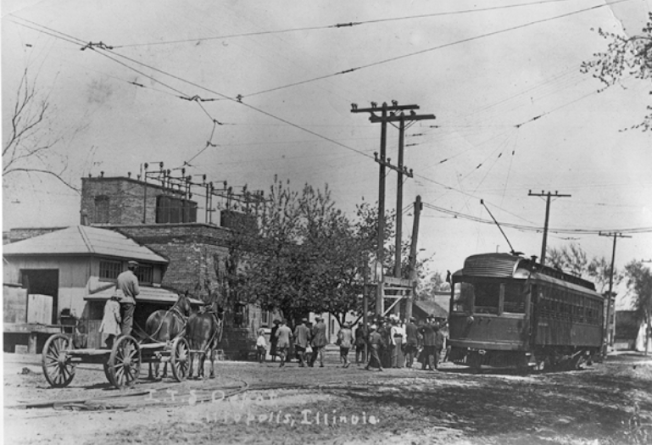
Eastbound № 221 stations stop at the Village of Illiopolis (Springfield Metro) depot, 1907.
The Illinois Traction System was incorporated in 1904, which consolidated many small power companies with the electric railroad. 

But McKinley had other interests; they were political. By 1905, he held a seat in the House of Representatives; by 1921, he was one of Illinois' Senators. He slowly turned the management of the railroad over to professionals.

McKinley left a legacy as his life phased into Republican politics. In 1910, he built the still-used and still-named McKinley Bridge across the Mississippi to bring his electric cars into St. Louis.
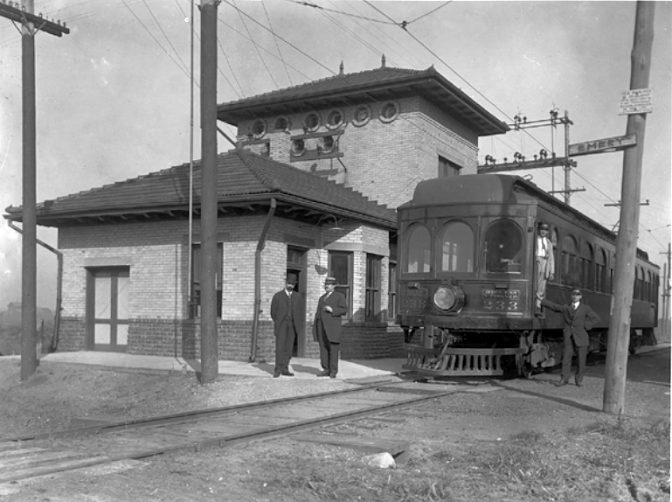
Business Car № 233 inspects the Emery Substation (7 miles north of Decatur) 1910.


The early days of the Illinois Traction System were so profitable they attracted investors like Clement Studebaker of the South Bend automobile family and Chicago utility giant Samuel Insull. 

In the 1920s, The Illinois Traction System was thriving. Its many routes offered service all over Central and Southern Illinois.
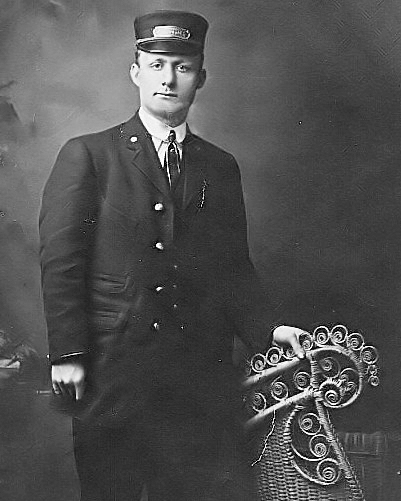
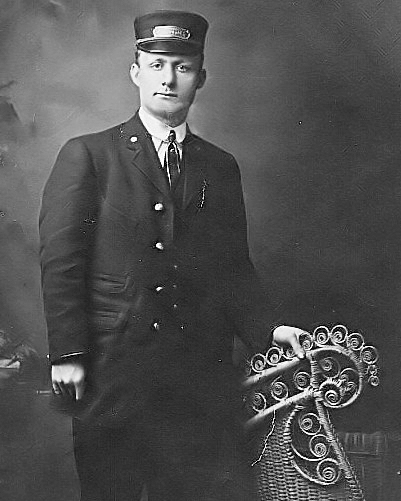
An Illinois Traction Conductor. c.1912
In 1923, the railroad was made an Illinois Power and Light Company subsidiary. The following decades saw massive growth of this railroad that would eventually sprawl over 400 miles of track in Illinois, connecting Danville with St. Louis. 

By 1926, these two influential businessmen essentially owned the Illinois Traction System. Why was a Central Illinois electric railroad attractive to big-money people like Studebaker and Insull?

It was very profitable and ran many routes not covered by the steam locomotive system. For years, the route from Peoria to St. Louis was a monopoly of the Illinois Traction System. Better yet, these electric trains carried freight, which enhanced profits. In areas where the Illinois Traction System did compete with steam railroads, it made arrangements to pick up freight and promoted its passenger service so successfully that many potential rail passengers preferred the electric smoothness of this flourishing interurban.
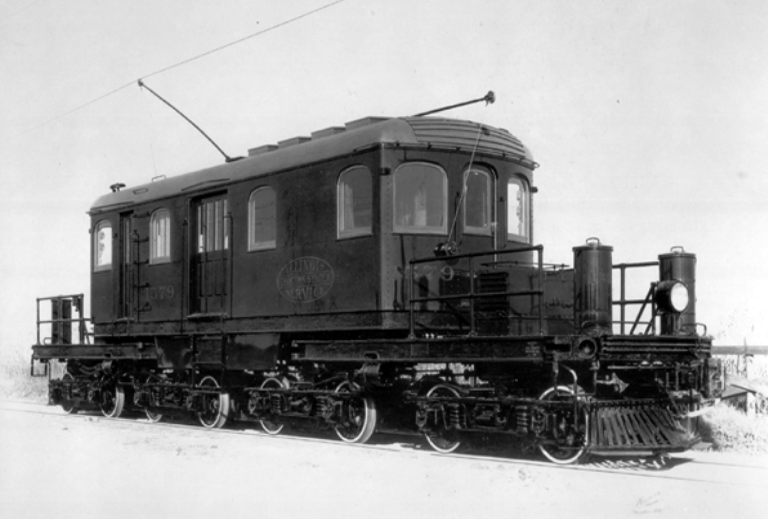
The new Class "C" № 1579 was released from the Decaur Shop on October 27, 1924.


It carried factory workers to Decatur and Peoria plants and weekend excursions to Homer Lake on a branch line from Ogden from 1904 to 1929. Its freight cars carried coal, grain and later petroleum, and the profits were exceptional.
The following two decades would see a very different pattern from the steady growth of the 1920s. Starting with the Depression in 1929, many shorter and less profitable routes were cut. Investments were made to pump up the volume of the profitable freight traffic by constructing bypasses around those city street car lines that so often served the railroad, including in Urbana and Champaign. It also gave up many city streetcar lines it owned and cut its formal ownership connection with The Illinois Power Company.

Illinois Terminal Railroad Service 1937-1982 
They reorganized in 1937 under the name of the Illinois Terminal Railroad. Those moves enabled the newly minted Illinois Terminal Railroad to limp through the Depression.

The 1940s were a very different story. As the economy began to improve, so did the profit margins of the Illinois Terminal Railroad. World War II provided boom years, bringing factory workers to their jobs, especially from Decatur and Springfield to the ordinance plants in Illiopolis. Fifty-six additional coaches were purchased during World War II, and by 1945, The Illinois Terminal Railroad was carrying 8.6 million passengers a year. The future looked promising, and significant investments were made in new rolling stock for freight and passenger divisions.

These were good years for The Illinois Terminal Railroad. Many traditional steam lines were added around the St. Louis area for increased freight traffic, as that area was a flourishing industrial area. Former Urbana Junior High School teacher, Tina Ekstrom, remembers using the Illinois Terminal Railroad trains to commute between her University of Illinois semesters and her home of Springfield: "Those trains were wonderfully convenient, smooth and cheap. I loved them, and I miss them."

sidebar
The Illinois Traction System, at its height, provided electric passenger rail service to 550 miles of tracks in central and southern Illinois. 

But, as the 1950s progressed, so did highway construction. Quality paved highways were great for automobile travelers and truck haulers but often devastating to railroads. Even new and better rolling stock could not stop the bleeding of passenger profits to the highways. In 1956, The Illinois Terminal Railroad ended all passenger service. Some freight service survived after being dieselized and was sold to the Norfolk Southern System in 1981.
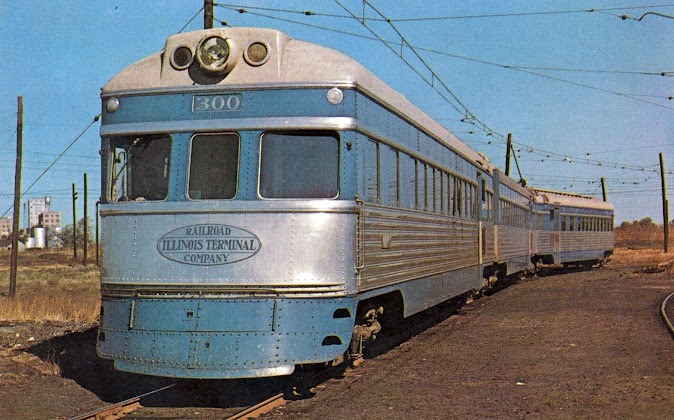
Illinois Terminal Railroad Company Streamliner engine and cars in the early 1950s.


Its legacy is more than memories. Sections remain as bicycle and hiking trails. Many of its buildings have been transferred to other uses. McKinley's generosity provided his alma mater with the McKinley Health Center. The wealth he spread around Central and Southern Illinois has other remnants, like the McKinley Presbyterian Church and Foundation campus.

Its longevity is the greatest testimonial to the Illinois Traction System and the Illinois Terminal Railroad. In their comprehensive book, "The Electric Interurban Railways in America," Dr. George Hilton and John Due computed that the average life of passenger service on an electric interurban was 28.3 years. Hilton and Due noted that the Illinois Terminal Railroad blossomed into the country's largest, end-to-end traction system, with a network of 462 route miles by 1950. The passenger service here lasted 55 years.
Illinois Terminal express car № 1202 at the station in Decatur, Illinois, circa 1950.


The electric interurban still survives in Northern and Southern Illinois. The South Shore Line runs from Millennium Station in Chicago to South Bend Airport daily. The St. Louis Metrolink system runs efficiently from St. Louis' Lambert Field to Metro St. Louis' Belleville, Illinois.

The ownership of the Illinois Terminal Railroad was acquired by a consortium of eleven St. Louis area railroads on June 15, 1956. The Illinois Terminal Railroad would begin a downward spiral until 1968 when it would be in a state of undeclared bankruptcy.
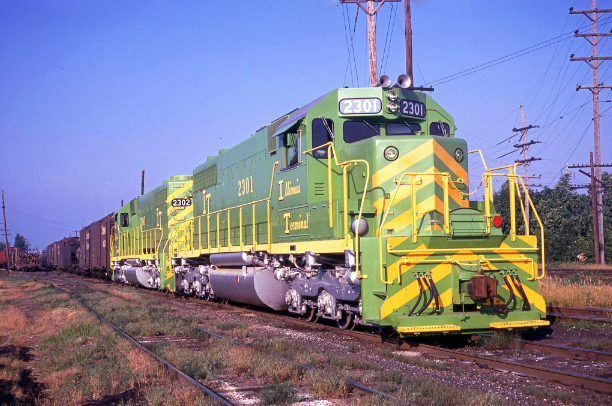
A pair of the Illinois Terminal's recently delivered SD39 engines, the biggest power the interurban ever owned, sparkle in the sun at Springfield, Illinois. 1969
In a remarkable undertaking of recovery, just as the railroad was about to wither away, Mr. E. B. Wilson would be appointed President. He would actually breathe new life into the floundering railroad. The railroad would literally take on a new identity as the "Road of Personalized Services," with new SD39s, SW1500s and a nationwide fleet of the new yellow and red rolling stock. The company's growth was astronomical, and the Illinois Terminal Railroad became a leader in the industry during high inflation and an oil crisis that crippled the nation. In addition to new equipment, new mileage was added to the system with the acquisition of a new route between Peoria and Decatur and the introduction of welded rail on the corridor between East. St. Louis and Alton. 

Unfortunately, the railroad would lose its leader to poor health, and the face of the railroad industry would change. Bankruptcies and mega-mergers meant the Illinois Terminal Railroad, a railroad without tracks, could not survive. On May 8, 1982, at 12:01 am, the Illinois Terminal Railroad Company ceased to exist, as ownership by the Norfolk & Western Railway went into effect. 

             System Map included.

Illinois Terminal № 1605, preserved in operating condition at Illinois Railway Museum.


What's Become of the Illinois Terminal Railroad?
The McKinley Bridge across the Mississippi River, originally built in 1910 to carry the Illinois Traction System's trolley cars over the river to St. Louis, survives today. 

Some sections of the Illinois Terminal Railroad and its affiliated lines have become 'rail trails,' such as the Interurban Trail south of Springfield.

The Illinois Traction System's generating plants selling electricity to customers in many towns and cities serviced by the electric railroad. In the 1930s, the railroad and its electrical utility separated. The formerly-affiliated electrical utility was spun off to form the Illinois Power and Light Company. Illinois Power provided electrical service to much of central and southern Illinois before its acquisition by Ameren. Consolidation into the parent firm occurred in 2004.

Compiled by Dr. Neil Gale, Ph.D.

Friday, March 24, 2023

Majestic Theatre, New Paxton Theater, Paxtonian Theater, Paxton Theater, and Finally the Majestic Paxton Theater in Paxton, Illinois. (1913-2007)


The Majestic Theatre in Paxton, Illinois (just North of Champaign) was the largest and most impressive theater when it opened in 1913, with a seating capacity of just over 350. It was designed by the firm of Mesar, Hunt and Sullivan for A.B. McCollum, who owned a handful of area theaters then.


The Majestic Building contained not only the theater but storefronts as well. Some of its interior plaster styles and metalwork were based on what the architects saw in a downtown Chicago theater. The theatre initially presented both vaudeville and concerts on its tiny stage, in addition to movies. The last vaudeville act at the Majestic was in 1929. 

In 1930, the theatre was wired for sound after being closed for about a year for remodeling. 

When the theater reopened, it had a new name, the New Paxton Theater (the original choice was the New Wonder Theater, but it was changed at the last minute). A new marquee was also put up around this time.

Not long after the name change, another name change occured, this time as the Paxtonian Theater. In 1935, air-conditioning was installed, and by this time, the theater was simply called the Paxton Theater, the name it would continue to be known for nearly five decades.

In the 50s, Cinemascope and Vistavision films played on Paxton's screen. By the end of the 70s, however, business was falling off at the theater, despite blockbusters like "Rocky" and "Star Wars" having successful runs there.

Its new owner in 1983 attempted to lure in new patrons by remodeling the aging theater, installing new seating and restoring the marquee, but the Paxton was closed within a year.

Four years later, Scott Graham and the newly formed Majestic Paxton Theater Group reopened the theater. The group, besides renaming the theater once again, the Majestic Paxton, further restored the theater, and seating was reduced to 219.


The Majestic Paxton hosted dinner theater, live performances, children's theater, and film screenings for many years but was closed in 2005.

A word from Scott Graham, who remodeled and reopened the Majestic Paxton theater in the fall of 1983.
Hello. My name is Scott Graham. I am the one who kept a promise to my community, Paxton, remodeled and reopened the long-time closed Majestic Paxton theater in the fall of 1983. I wish to clarify that business at the Majestic Paxton theater was very, very good. 

I keep reading articles that I closed the theater because it could just not make it. This is totally untrue. The theater was shut down by the then real estate owner for perceived frivolous reasons, against my will. Had this unfortunate event not happened, I guarantee that the Majestic Paxton theater would still be open, thriving, and continuing to serve the Paxton community and area. 

I understand this Grand Lady is again abandoned and in disrepair, bringing sorrow to my heart. I pray someone will again fall in love with Her and give Her the attention she deserves. Paxton, you have a real jewel under your noses. Please don't lose Her forever this time!                                                                                        February 14, 2007   

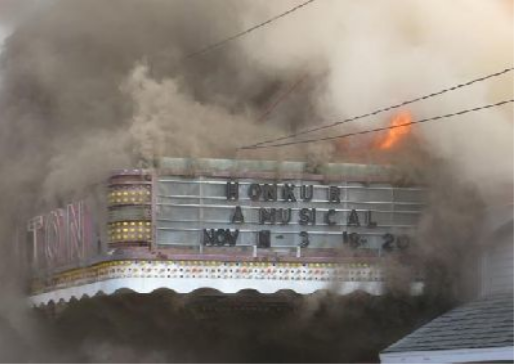
The Historic Majestic Paxton Theatre was Destroyed by Fire on November 13, 2007.
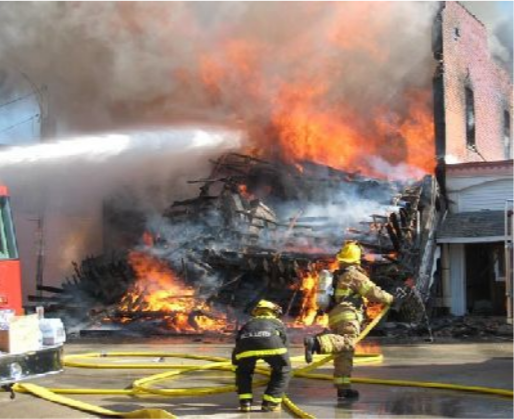
PAXTON, IL — A fire Tuesday morning completely destroyed the historic Paxton Majestic Theatre building, which included the theater space and apartments on the upper floor. Firefighters from six area departments fought the blaze and saved nearby buildings from destruction. No one was injured in the fire. By Tuesday afternoon, firefighters were still on the scene, as the remains of the theater continued to smoke. The cause of the fire is still under investigation, according to the State of Illinois fire marshal's office.

The Paxton Majestic, also known as the New Paxton, Paxtonian and Majestic Theatre, originally opened in 1913 in a building dating to the 19th century. It was last used in 2005 for live theatrical stage productions.

Paxtonians are shocked and mourning the loss of a Paxton landmark. Rhonda Blackford, who works across the street from the theater building at a florist shop, says, "It was just so sad to see something so historical go up so fast."

The Paxton Majestic burned to the ground in a blaze on Tuesday, November 13, 2007.
Compiled by Dr. Neil Gale, Ph.D.

Thursday, March 23, 2023

Hamburger University, from the World Renowned, McDonald's Corporation, Chicago, Illinois.

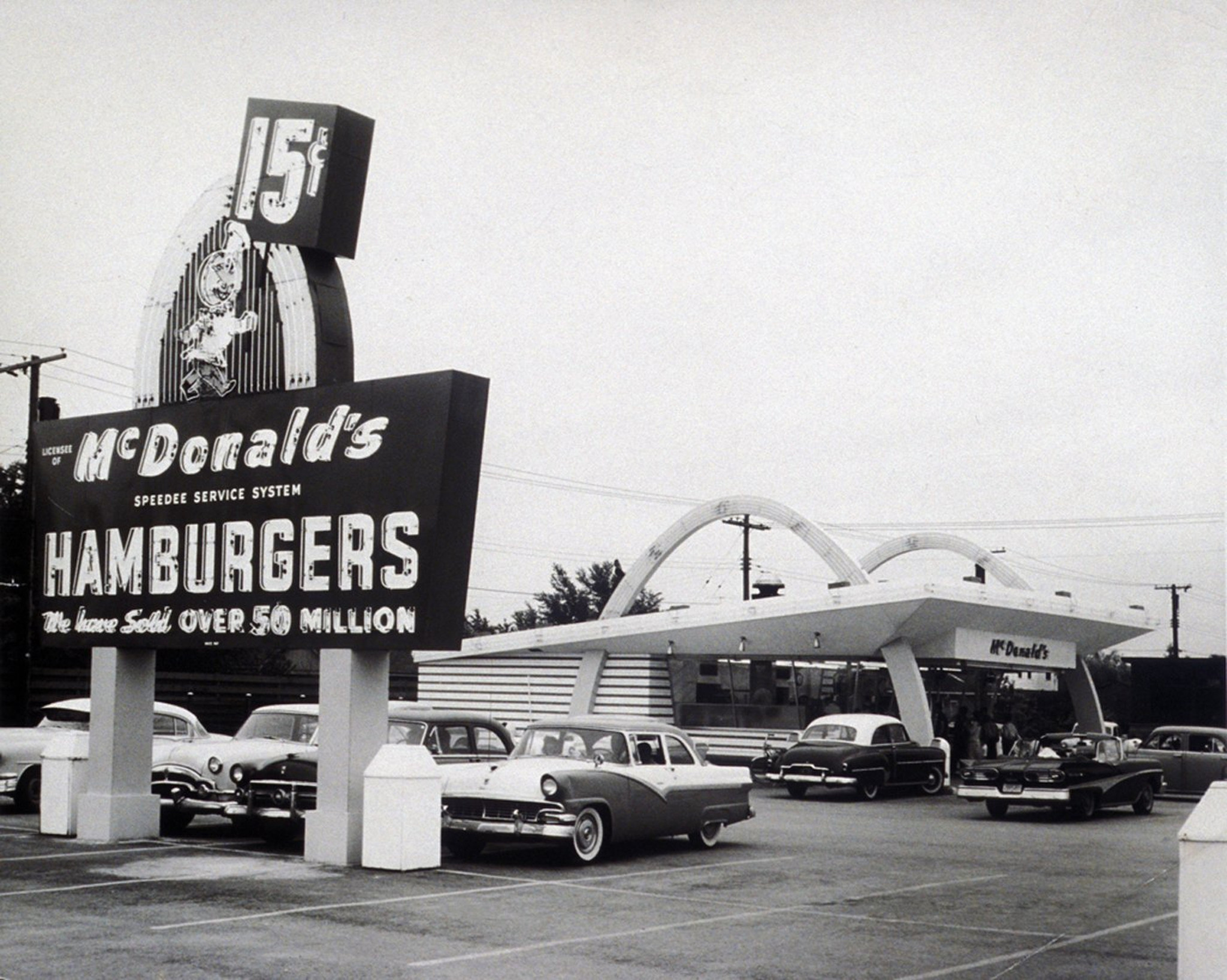
The McDonald's chain was famously born when an ambitious milkshake mixer salesman named Ray Kroc partnered with and eventually bought out Maurice and Richard McDonald, two brothers with a small but popular chain of hamburger restaurants. Kroc opened his first new location in Des Plaines, Illinois 1955, naming it McDonald's.
The McDonald's № 1 Store Museum (1955-2017) in Des Plaines, Illinois, was a replica of the first McDonald's restaurant in Des Plaines, opened by Ray Kroc in April 1955. The company usually refers to this as The Original McDonald's, although it is not the first McDonald's restaurant but the ninth; the first was opened by Richard and Maurice McDonald in San Bernardino, California, in 1940, while the oldest McDonald's still in operation is the third one built, in Downey, California, which opened in 1953. However, the Des Plaines restaurant marked the beginning of future CEO Kroc's involvement with the firm. It opened under the aegis of his franchising company McDonald's Systems, Inc., which became McDonald's Corporation after Kroc purchased the McDonald brothers' stake.


The third McDonald's restaurant opened on August 18, 1953, at 10207 Lakewood Boulevard, Downey, California. It was also the second restaurant franchised by Richard and Maurice McDonald before the involvement of Ray Kroc in the company. The original building is a museum, while the red roof in the background is a modern McDonald's serving food and kid's toys.


Hamburger University started in 1961 with a class of 15 people and was held in the basement of a McDonald's restaurant in Elk Grove Village, Illinois. Fred L. Turner, a grill cook, developed and operated the educational program. Soon, Turner's McDonlad's corporate education and training programs became the pioneering concept for other businesses. 

Fred Turner became McDonald's CEO in 1973 and replaced Kroc as Chairman in 1977, later named Senior Chairman upon Kroc's death. Under Turner, McDonald's expanded its operations to 118 countries, with over 31,000 outlets and over a billion hamburgers sold. Fred retired in 2004, serving as Honorary Chairman until he died in 2013.

sidebar
Those who attended Hamburger University in its earliest days received hands-on instruction from Fred Turner and Ray Kroc.

Hamburger University was designed exclusively to instruct personnel employed by McDonald's Corporation or by McDonald's Independent Franchisees in the various aspects of the business and operations of McDonald's.

sidebar
The first "Corporate College" was created by General Electric (GE) as a place for Nationwide management employees to learn in conjunction with the company's business plans and development goals. GE Crotonville, Ossining, New York, started in the mid-1950s. Today, it's called the GE Management Development Institute.

This makes Hamburger University one of the first corporate education programs of its kind. McDonald's retains more rising stars by developing talent and leadership at Hamburger University.

McDonald's Global Headquarters was located on an 80-acre campus in Oak Brook, Illinois, from its founding until 2018, when the McDonald's headquarters moved to Chicago's West Loop into a new complex built on the former site of Oprah Winfrey's Harpo Studios.

Managers in McDonald's restaurants graduated from Hamburger University, eventually moving to a 130,000-square-foot, state-of-the-art facility on the McDonald's Home Office Campus in Oak Brook, Illinois.

sidebar
2022 - TOP 5 CORPORATE UNIVERSITIES
       1) Google; Googleplex
       2) McDonald's Hamburger University
       3) Apple University
       4) Disney University
       5) Intel Network Builders University

Students at McDonald's Hamburger University, for example, at the restaurant ownership level, learn to successfully run a restaurant and report and analyze the books. Further education is necessary to become an executive to support the franchises and help them develop business skills and focus on leadership skills. With a degree, the graduate is confident and ready to support McDonald's employees, restaurant owners, and sales growth.

Hamburger University is a fundamental degree-granting institution, so much so that credits earned can be applied toward an associate's or bachelor's degree at other colleges and universities.

McDonald's Home Office Campus and Hamburger University moved to 1045 West Randolph Street, Chicago, and opened in its new home in June 2018. 
1045 West Randolph Street, Chicago, Illinois.


McDonald's office space, including Hamburger University, occupies 490,000 square feet of the building.

They have grown from the old main campus in Oak Brook, Illinois, to the addition of seven satellite campuses worldwide at one time: Tokyo, London, Sydney, Munich, São Paulo, Shanghai, and Moscow. A faculty of 30 resident professors teach and communicate in 22 languages with the help of translators and technology. 

sidebar
McDonald's has reopened its doors under a new name in Russia after the fast food giant pulled out of the country over its invasion of Ukraine. Fifteen McDonald's restaurants in and around Moscow reopened with their new name, "Vkusno & Tochka," which translates as "Tasty and that's it." Businessman Alexander Govor, who already owns 25 restaurants in Siberia, agreed to buy all 847 Russian McDonald's outlets after the chain boycotted the country in early March. He vowed to keep all their 62,000 employees on equivalent terms for at least two years.

To date, Hamburger University has produced around 330,000 degree holders worldwide.

Compiled by Dr. Neil Gale, Ph.D.

Tuesday, March 21, 2023

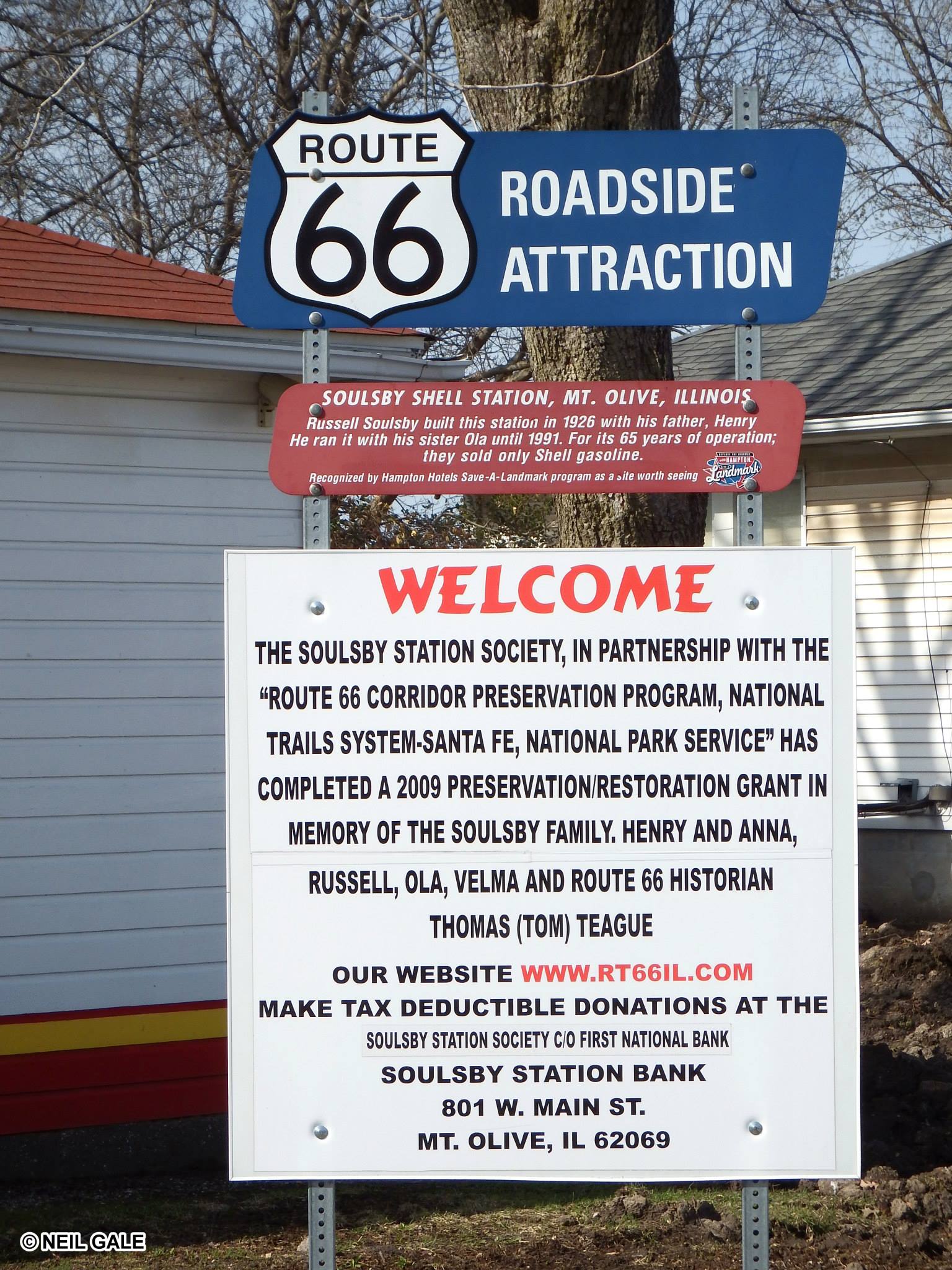
Soulsby Shell Service Station, Mount Olive, Illinois, on Route 66.

The advent of the national road system in 1926 ushered in a golden age for mom-and-pop entrepreneurs. For Henry Soulsby of Mount Olive, it happened just in time. Mr. Soulsby followed his Irish immigrant father into mining, but in the mid-1920s, an injury forced him above ground. Understanding that a national highway would soon pass through Mount Olive, he invested most of his life savings in two lots at the corner of 1st Street, now called Old Route 66. With the balance, he built an automotive service station.
The Soulsby Station is an excellent example of a house with a canopy form. By the time Mr. Soulsby built his station in 1926, the leading oil companies had been hiring architects to design stations that would blend well with neighborhoods to minimize local opposition to the crudeness often associated with gas stations. Mr. Soulsby designed the building himself, considering these trends and blending well with the surrounding area.
Although the Great Depression soon began, the station thrived. America was broke, but it was still traveling. As Will Rogers would say, "We might be the first nation to drive to the poorhouse in an automobile."
When Henry Soulsby retired, his children Russell and Ola Soulsby took over the station, a partnership that would endure until Ola died in 1996. Each was as adept as the other at pumping gas, checking the oil, and looking under the hood or chassis to detect and fix problems. Russell always had an eye for technology. During World War II, he was a communications technician in the Pacific theater. He turned his experience into a radio and television repair business shortly after coming home. He used the antenna on the station's roof to test his work.
Route 66 was a great agent of progress and development, but its success helped spell its doom. In the late 1950s, Interstate 55 began supplanting it in Illinois, and the Soulsby Station ended up a mile from the new thoroughfare in Mount Olive. In 1991, the Soulsby Station stopped pumping gas but continued to check oil, sell soda pop ("pop" in northern Illinois), and greet the ever-growing legion of Route 66 tourists. Sending everyone off with a wink and a wave, Russell and Ola closed the doors for good in 1993 and sold the station in 1997 to a neighbor, Mike Dragovich. When Russell Soulsby died in 1999, his funeral procession took him under the canopy one last time; this time, it was his friends' turn to wink and wave.
The current owner, Mr. Dragovich, and the Soulsby Preservation Society began preservation efforts in 2003, removing vinyl siding, restoring the original doors and windows, and repainting the exterior. In 2004, the National Park Service provided grant support for restoration efforts. Today, the station looks essentially the same as it did during its post-World War II heyday. It was listed in the National Register of Historic Places in 2004.
People worldwide drive by to imagine what Old Route 66 would have been like in its heyday.

Compiled by Dr. Neil Gale, Ph.D.
Photos Copyright © 2014, Neil Gale.

Baltimore & Ohio Railroad Co. (B&O) Depot in the City of Flora, Illinois.

The Flora B&O Depot has been critical to the town’s history. In 1872, the first depot was built, and this building was funded by selling bonds to businesses and citizens. This depot was destroyed by a fire in 1916. 


When a new depot was completed in 1917, it contained three floors. The main floor was used for passengers, and it had a large waiting room with a baggage room and restrooms. The Western Union office, yard office, mailroom and ticket office were also located on this floor.

The second floor held the offices of essential depot members. Men who occupied these offices included the chief clerk, division engineer, superintendents, dispatchers, carpenters, signal supervisors, train masters and road foremen, railroad law enforcement officers, and the district’s physician.


The third floor contained large offices. Later, these offices became one social room. There, railroad employees and their families held potluck dinners and socials. Not only was the depot a hub of transportation and commerce, but it was also a center for much of the social life in the community.

The depot building was an enormous part of the economic life of the community during the early years of the 20th Century. In the 1920s, the railroad employed half the wage earners in Flora, and in 1924, three hundred employees worked at the local station.

In the 1950s, cars became the chief means of transportation as roads improved. Travelers no longer looked to trains as the primary source of transportation. The depot quickly became less important to the community. The days of 12-passenger trains stopping at Flora daily turned into a fond memory. 
In 1998, the Flora B&O Depot was named one of three sites in Clay County on the National Register of Historic Places. With this recognition and the interest of many community citizens, the Flora Community Development Corporation (FCDC) purchased the depot from CSX Railroad Company.

FCDC successfully obtained three federal grants to restore the building, matched by local donations from citizens. Today, the University of Illinois Extension Service rents the third floor, and the second floor is a rented community room for meetings and various activities. The first floor houses the Flora Chamber of Commerce office, a museum containing city and county historical artifacts and two unfinished rooms available for occupancy.

Flora Depot
Edited by Dr. Neil Gale, Ph.D.