Thursday, March 30, 2023

ILLINOIS TOWNS NAMED FOR INDIAN CHIEFS

The original inhabitants of the area that became the State of Illinois in 1818 included the Chickasaw, Dakota Sioux, Winnebago (also known as the Ho-Chunk), and Shawnee tribes. 

The indigenous tribes of the Chicago area included the Potawatomi, Ojibwe, and Odawa (Ottawa) Nations, as well as the Miami, Winnebago (Ho-Chunk), Menominee, Sauk (Sac), Meskwaki (Fox), Kickapoo, and the Illinois Confederacy. 

The Illinois, aka Illiniwek and Illini [the Illinois is pronounced as plural: Illinois'], was a Confederacy of Indian tribes consisting of the Kaskaskia, Cahokia, Peoria, Tamarais (aka Tamaroa, Tamarois), Moingwena, Mitchigamie (aka Michigamea), Chepoussa, Chinkoa, Coiracoentanon, Espeminkia, Maroa, and Tapouara tribes that were in the Algonquin Indian family. The Illinois called themselves "Ireniouaki" (the French word was Ilinwe).

MIDWESTERN INDIAN CHIEFS, 1865.


The original inhabitants of the area that became the State of Illinois in 1818 included the Chickasaw tribe, the Dakota Sioux tribe, the Winnebago (also known as the Ho-Chunk), and the Shawnee tribe. 

The indigenous tribes of the Chicago area included the Potawatomi, Ojibwe, and Odawa (Ottawa) Nations, as well as the Miami, Winnebago (Ho-Chunk), Menominee, Sauk (Sac), Meskwaki (Fox), Kickapoo, and the Illinois Confederacy. 

The Illinois, aka Illiniwek and Illini [the Illinois is pronounced as plural: Illinois'], was a Confederacy of Indian tribes consisting of the Kaskaskia, Cahokia, Peoria, Tamarais (aka Tamaroa, Tamarois), Moingwena, Mitchigamie (aka Michigamea), Chepoussa, Chinkoa, Coiracoentanon, Espeminkia, Maroa, and Tapouara tribes that were in the Algonquin Indian family. The Illinois called themselves "Ireniouaki" (the French word was Ilinwe). 

Algonquin, Illinois – Winnebago (Ho-Chunk) - Named after the Algonquin people, a large linguistic group encompassing numerous tribes.

Annawan, Illinois  Derived from the Kickapoo word "Aniwa," meaning "thunder." Named for Chief Annawan.

Aptakisic, Illinois  Potawatomi

Ashkum, Illinois  Named for Chief Ashkum of the Potawatomi tribe.

Aptotakin, Illinois – Named for Chief Optagushick of the Potawatomi tribe.

Big Foot, Illinois  Potawatomi

Cahokia, Illinois – Named after the Cahokia Mounds, a major pre-Columbian Mississippian culture city. While not directly named after a chief, it honors the community's historical leaders.

Chebanse, Illinois  This name originates from the Potawatomi word "Zhishibéns," meaning "the little duck." Possibly named after Chief Chebanse of the Potawatomi tribe.

Channahon, Illinois  Named for Chief Channahon, a Potawatomi leader. Possibly name for Chief Shabbona.

Chenoa Township, Illinois – From the Ojibwe word "Shenowa," meaning "big." Potentially named after Chief Chenoa of the Peoria tribe.

Du Quoin, Illinois  Kaskaskia

Half Day, Illinois  Potawatomi

Kankakee, Illinois – This name originates from the Potawatomi word "Kankakee," meaning "cornfield."

Kaskaskia, Illinois – Named after the Kaskaskia tribe, part of the historic Illiniwek confederacy.

Kewanee, Illinois  Named after Chief Kewanee, a Peoria leader.

Lake Ka-ho, Illinois  "Ka-Ho" translates to "big water" in Potawatomi, referencing a nearby lake and possibly honoring tribal leaders associated with the area.

LaSalle Township, Illinois  Named for René-Robert Cavelier, Sieur de La Salle, who had strong ties with Native American tribes.

Loami, Illinois – Possibly from the Miami word "loam," meaning "earth."

Mackinaw, Illinois – Derived from the Ojibwe word "mikinaak," meaning "turtle."

Mahomet, Illinois – Named after the Prophet Muhammad, likely due to a local legend about a Muslim traveler.

Makanda, Illinois  Possibly named after Chief Makandocle of the Kaskaskia tribe, though historical records lack clarity.

Marseilles Township, Illinois  Named for Chief Marseilles, a Potawatomi leader in the 1810s.

Mascoutah, Illinois – Derived from the Mascouten tribe, an Algonquian people.

Matteson, Illinois ─ Named after Chief Matteson, a Potawatomi leader.

Mendota, Illinois – From the Dakota word "Mendota," meaning "junction of two trails."

Menominee, Illinois  Named after the Menominee people, an Algonquian tribe. Historically present in Wisconsin but with cultural ties to Illinois.

Metamora, Illinois – Potawatomi

Mettawa, Illinois – Potawatomi

Minooka, Illinois – Named for Chief Minooka, a Potawatomi leader.

Momence, Illinois ─ Named after Chief Momence, a Potawatomi leader.

Monee Township, Illinois – Possibly named after Chief Monee of the Potawatomi tribe, though this connection lacks definitive proof.

Moosomin Township, Illinois – Possibly derived from the Ojibwe word "moozomin," meaning "moose," but could also be a reference to a chief.

Moweaqua, Illinois – Possibly from the Kickapoo word "Moweaqua," meaning "place of the turtle."

Neponset, Illinois – Possibly named for Chief Neponset, a Massachusett leader.

Niantic, Illinois – Named for the Niantic tribe and their chief, Ninigret. Possibly from the Narragansett word "Niantic," meaning "island."

Niota, Illinois – The name "Niota" was based on the name of a fictional character in a dime novel[1], a Native American chief named "Nee-o-tah." (Algonquian Tribe?)

Oconee, Illinois –  Possibly from the Muscogee word "Oconee," meaning "river."

Okawville, Illinois ─ Potentially named after Chief Okaw of the Kaskaskia tribe. The Kaskaskia word "okahwa" means "big water."

Onarga, Illinois – Comes from the Potawatomi word "Onagan," meaning "white oak."

Oneco, Illinois – Potawatomi

Optakisic, Illinois ─ Named after Chief Optagushick of the Potawatomi tribe.

Oquawka, Illinois – Named for Chief Oquawka, a Sauk leader.

Orland Park, Illinois ─ Potentially derived from Chief Orland, a Potawatomi leader.

Oswego, Illinois ─ Named after Chief Oswego, possibly a Fox or Sauk leader.

Owaneco, Illinois – Possibly from the Oto word "owanec," meaning "big river."

Pana, Illinois ─ Possibly named after Pana, a chief from the Cahokia tribe. Possibly named after Pana, a Chief from the Cahokia tribe.

Patna, Illinois ─ Kickapoo

Paw Paw Township, Illinois – Believed to be derived from the Miami word "Pawapaw," meaning "fruit of the pawpaw tree." While not referencing a chief, it honors the indigenous culture and environment. Possibly from the Pawnee word "pápa," meaning "head."

Pocahontas, Illinois – Originally known as Hickory Grove and then Amity. In 1850, the name was changed to Pocohontas (with an "o"). In 1855, the current spelling with an "a" was established. Pocahontas was incorporated as a village in 1847. The town was named after Pocahontas Coal.

Pecatonica, Illinois – Derived from the Winnebago word "pekatoniká," meaning "river of the painted feather."

Pekin, Illinois – Named after Chief Pekin, a Peoria leader who signed treaties in the 1810s.

Peoria, Illinois ─ Named after the Peoria tribe and their principal village.

Pesotum, Illinois  The village was named after Pesotum, a Kickapoo warrior in the Battle of Fort Dearborn.

Pontiac, Illinois  Named after Chief Pontiac, an Odawa (Ottawa) leader during the French and Indian War.

Sauk Village, Illinois – Named after the Sauk people, an Algonquian tribe.

Saukenuk, Illinois ─ Named for the Sauk tribes, though not after specific chiefs. (Black Hawk was born in 1767 in Saukenuk, Illinois.)

Saunemin, Illinois – Kickapoo

Seneca, Illinois – Named after the Seneca people, one of the Six Nations of the Iroquois Confederacy, it acknowledges their influence and historical connections to the region.

Shabbona Grove, Illinois – Named after Chief Shabbona, a Potawatomi Chief, honoring his role in local history.

Shawneetown, Illinois – Named for the Shawnee people, who lived in the area before being forced to move west. Named after the Shawnee people, an Algonquian tribe.

Shobonier, Illinois – Potawatomi

Tampico, Illinois – Named for Chief Tampico, a Potawatomi or Kaskaskia tribe leader.

Tolono, Illinois – Possibly from the Illiniwek word "Tolowane," meaning "black walnut."

Tonica, Illinois – Possibly from the French word "tonique," meaning "bracing" or "refreshing," influenced by Indigenous names.

Wapella, Illinois – Meskwaki (Fox)

Waukegan, Illinois  Named for Chief Waukegan, a Potawatomi leader.

Wauponsee, Illinois – Potawatomi
Wauponsee is an unincorporated community in Vienna Township, Grundy County, in North East Illinois. Wauponsee is located on Verona Road, 7 miles south-southwest of Morris.                                                          Google Mapped: 41°16′28″N 88°29′40″W

The Potawatomi were a major tribe in the Great Lakes region, and they had a significant presence in Wauponsee Township in the early 19th century. The township was named after Potawatomi Chief Waubonsie, whose tribe were residents. Wauponsee Grove, today a state park, was named for Chief Waubonsie.

Wyanet, Illinois – Derived from the Wyandot tribe, an Iroquoian people.

Compiled by Dr. Neil Gale, Ph.D.


[1] DIME NOVEL - Any cheaply produced popular fiction published in the United States between 1860 and 1930 might be called a dime novel, provided it was published on paper covers (paperback) and issued in a series (chapter books).

EXAMPLE OF A DIME NOVEL
"Malaeska, the Indian Wife of the white hunter" is a groundbreaking novel, considered the first true dime novel. It sparked controversy, particularly given that it was written by a female author, featured a sympathetic portrayal of an Indian woman, and presented a strong, independent heroine. Malaeska tackled themes of race, gender, and frontier life. 

"Malaeska, the Indian Wife of the White Hunter"—published in 1860 as the very first of Beadle’s Dime Novels—was a runaway success. It reportedly sold over 65,000 copies in its first few months. Some sources even suggest that it eventually reached 300,000 copies, placing it among the best-selling novels of the mid-19th century.

That’s a staggering number for the time, especially considering it was sold for 10¢. It helped launch a publishing phenomenon that would dominate popular fiction for decades, paving the way for pulp magazines, comic books, and mass-market paperbacks.

sidebar
Pulp magazines were inexpensive fiction publications that emerged in the late 19th century and were popular until the mid-20th century. They were printed on cheap wood pulp paper, which is how they got their name, and typically featured genres such as detective fiction, romance, westerns, and science fiction. A typical pulp magazine measured 6 by 9 inches and sold for 10¢ to 25¢.

Malaeska is the Indian wife of the white hunter, by Ann S. Stephens. pub:1860.
This entire series is in one (PDF) file. [From my private file server- Download-Virus Free] 


International Museum of Surgical Science, 1524 North Lake Shore Drive, Chicago.

Dr. Max Thorek founded the International College of Surgeons (ICS) in 1935 to promote the exchange of surgical knowledge and foster understanding and goodwill worldwide. He had an equally noble goal in establishing the International Museum of Surgical Science ─ to enrich people's lives.
Dr. Max Thorek
Beginning in 1950, through the efforts of Dr. Thorek, the Museum received donations of objects and artwork from many of the national sections of the ICS, individual surgeons and collectors, and other institutions. Shipments of artifacts, paintings, sculptures, and books arrived, and the Museum began to take shape. A historic lakeside mansion was acquired to house the Museum adjacent to the ICS headquarters.


The Museum opened to the public on September 9, 1954. One of the first exhibits to be installed was the Hall of Immortals, containing twelve large stone statues of significant figures in medicine and the allied sciences. In further reverence to great scientists, surgeons and discoveries of the past, a Hall of Murals was created with a series of large paintings depicting the development of surgical science through the ages.


In 1959, the Museum marked the dedication of galleries devoted to France, Mexico, Spain and the Netherlands, with many more national rooms inaugurated over the years. The founding leaders of the Museum hoped to make the collection meaningful to the public by organizing exhibits by nation. Each room, hallway, and stair landing was devoted to one nation or region's historical collection to trace a particular nation's contribution to surgery.

In 1990, new exhibits were developed based on historical themes and surgical disciplines. This type of exhibit provides a more appropriate historical context for the collections. The "Anatomy in the Gallery" exhibition program, developed in 1998 to introduce a contemporary art element into the historical Museum, presents work by contemporary artists dealing with various medically related themes. The exhibitions include work of a challenging and innovative nature about anatomy, death, disease/wellness, disability, and other medical issues.

Over the past decade, the International Museum of Surgical Science has significantly strengthened its educational programs and exhibits and conserved its noteworthy collections and historic landmark building. The Museum looks forward to continuing this progress and to a future of bringing the international aspects of science, history and art to an increasing audience from the entire world.

The historic lakeside mansion at 1524 N. Lake Shore Drive in Chicago, which is now the International Museum of Surgical Science, was constructed in 1917 under the direction of Eleanor Robinson Countiss to house her family. Her father, an executive of the Diamond Match Company, generously provided the funds to build the home.

The elegant structure was designed to follow the historical lines of Le Petit Trianon, a French chateau on the grounds of Versailles completed in 1770 for Louis XVI and Marie Antoinette. The noted Chicago architect Howard Van Doren Shaw was hired to design the Countiss mansion with modifications, including a fourth floor added to the original design, adding a door on the side street, and opening up the northernmost bay for a carriage drive.

Original interior finishes of Italian marble and cut stone; decorative plasterwork, metal fixtures and hardware; eight marble fireplaces; and a gilded metal grand staircase are among the features which have been preserved.

The Countiss family was the sole owner of the building until 1950 when it was acquired by Dr. Max Thorek and the International College of Surgeons. After several years of renovating the building and forming the Museum collection, the Museum opened its doors to the public for the first time in 1954 under the direction of Dr. Max Thorek.

One of the few remaining lakefront mansions, and the only one open to the public, the building received historic status in 1988, is listed in the National Register and the Illinois Register of Historic Places and is a City of Chicago Landmark.

COLLECTIONS


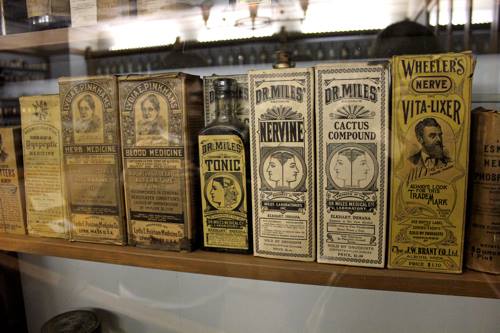
The Museum's four floors are filled with extraordinary artifacts paintings, and sculptures that interpret the primitive and modern healing practices of Eastern and Western civilizations. The Museum's collections and exhibits portray the mysteries and milestones that have shaped modern surgical science.
Amputation─Trephine set (a saw used to remove a circle of tissue or bone. (circa 1860)


Medical artifacts, apparatus and instruments comprise most of the material in the Museum's collections. Over 7,000 medical artifacts spanning centuries of worldwide medical history, from acupuncture to X-ray therapy, are represented in the collections. Among the exceptional artifacts is an Austrian amputation saw with a reversible blade (c.1500); original X-rays taken by radiology pioneer Emil Grubbé (c.1910); the Lindbergh perfusion pump, which enabled doctors to keep organs functioning outside the body, invented by the renowned aviator Charles Lindbergh and Nobel Prize-winning surgeon Alexis Carrel (1935); and a unique collection of heart valves donated by Dr. Juro Wada (c.1960-80).
Fluoroscope
Fine art is featured in the collections through over 600 paintings, prints and sculptures, primarily portraits of individuals and historical depictions of specific procedures or events. Highlights include a portrait of Dr. Edward Jenner by John Russell (1790) and the original plaster cast of the death mask of Napoleon (1821). Significant artworks were commissioned by the Museum for the collections in 1950-53, including the Hall of Immortals and the Hall of Murals.
An Iron Lung


The Museum Library contains over 5,000 books and bound journals, including extremely rare early medical books from the 16th to 18th centuries.


The manuscript collection contains over 650 letters and papers from prominent figures in medical history, extending over four centuries, donated by Dr. Max Thorek in 1954. This collection includes documents from Edward Jenner, Florence Nightingale, Thomas Guy, Laennec, Langenback, Bergmann, Billroth, Malpighi, Rush, Wistar, and others.

Compiled by Dr. Neil Gale, Ph.D.

Wednesday, March 29, 2023

Macoupin County Courthouse, in Carlinville, Illinois. (1870-In Use)


The first courthouse was built of logs on the property. Now City Square and Seth Hodges won the contract for the structure. The record shows that construction costs totaled $128.66.

Ten years later, the county had outgrown this 18' x 24' log structure and planned a larger one on the same site. The new brick building measured 50' x 50' and - costing roughly $15,000 - was considerably more expensive than the first. The contractors were Harbird Weatherford and Jefferson Weatherford.


Abraham Lincoln frequently represented his clients in this courthouse. In fact, when the State Preservation Agency examined the Courthouse records in the 1990s, they found over 3,000 documents with the signature of A. Lincoln. Those original documents are now in Springfield, but copies are on file in the Macoupin County Courthouse.
The courthouse that Lincoln practiced in no longer stands in the center of town because shortly after the end of the Civil War in 1867, elected officials decided that the prosperous county needed an even larger structure.


Four prominent citizens were commissioned to erect a new courthouse: A McKim Dubois, George H. Holliday, T.L. Loomis and Isham J. Peebles. They selected E.E. Meyers as the architect and determined that the construction not begin until there were sufficient funds in the county treasury.

The court also ordered that a property tax of 50¢ per $100 is assessed in Macoupin County and that the monies be used for county purposes, i.e., a new courthouse.


Bonds totaling $50,000 were issued for ten-year terms and bore interest at 10%. Over $13,000 had been spent by September, and the cornerstone was set in place in October. The cost escalated dramatically from then on. By January 1869, nearly $500,000 had been paid, and the building was still incomplete. The great dome and roof would cost an additional $125,115. More bonds were issued, and by the time the courthouse was officially completed in 1870, the project had cost a staggering $1,342,000. Thus evolved the nickname, the "Million Dollar Courthouse."

The courthouse was an exorbitant expense to the taxpayers, and rumors of a scandal involving misused appropriations also tarnished the project. Initially, the blame was laid on Judge Thaddeus Loomis, and George H. Holliday, county clerk, and Judge Loomis were apparently innocent of any wrongdoing. However, we may never know the truth about Mr. Holliday because one night in 1870, he boarded a train out of town and simply disappeared.


Upon completion, this courthouse became the largest county courthouse in the United States, with the possible exception of one in New York City. It was even larger than the Illinois Statehouse. While the courthouse still serves as the seat of county government, it has also become a showplace that attracts tourists, architects and artists from across the country and overseas.


Despite the scandal and the expense, citizens supported this project with amazing dedication. In 1910, a mere 40 years after the cornerstone had been set in place, the last bond was burned, and the debt retired. To mark the occasion, 20,000 people gathered in Carlinville for a memorable two-day celebration on July 20 and 21. At a pre-determined hour, all mine whistles, church bells, alarms and anything else that could make a loud noise raised quite a ruckus. However, the noise wasn't limited to one mighty blast because history records that athletic contests, balloon rides and even airplane rides gave the citizens plenty to cheer about. A parade of cars stretched over a mile also entertained the crowds. That seems like a minor event today, but it was impressive at a time when so few people owned cars.

Compiled by Dr. Neil Gale, Ph.D.

Lorraine Theater, 324 East Main Street, Hoopeston, Illinois, (1922-2012).

Originally opened in 1922, but was rebuilt in the Art Deco style in 1937, when it received its current appearance. This included the addition of a balcony, bringing the seating capacity to 725, and an elegant Art Deco-style marquee.
In 1998, a state-of-the-art sound system was added. It is one of the few theaters in Illinois (outside Chicago) with such a high-tech sound system.

The theater closed in September 2012.

The Lorraine is not to be confused with the newer Lorraine II Theaters.

Compiled by Dr. Neil Gale, Ph.D.

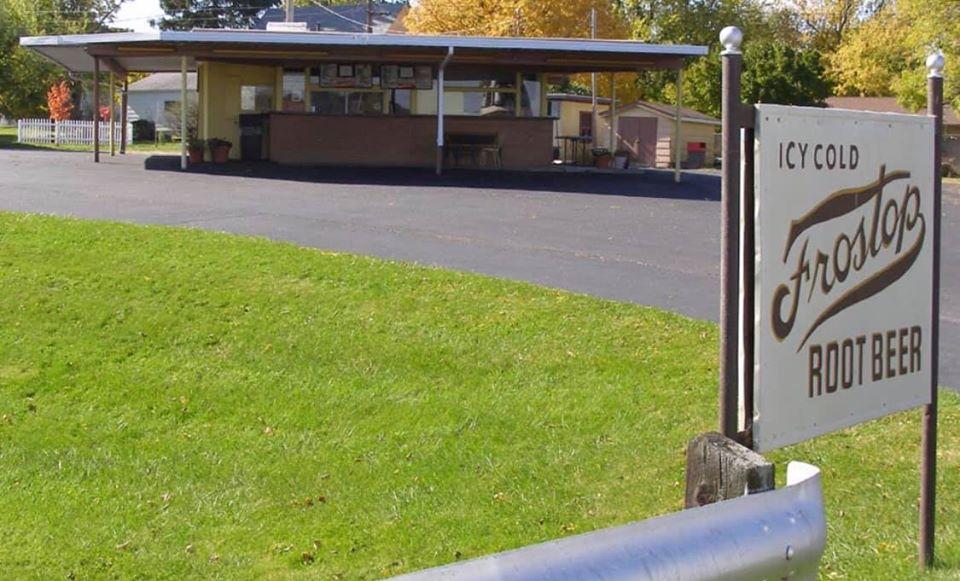
Riggen's Frostop Root Beer Stand, Chrisman, Illinois.

The Frostop in Chrisman, Illinois, was built in 1954 by E.O. Tate. Rena Riggen started working for Mr. Tate in 1955. In 1956, Rena and her husband, Robert (Bob) Riggen, began leasing the Frostop from Mr. Tate. They leased the restaurant for three years, but in 1959, Mr. Tate sold the Frostop to Luther Vandevander. Rena stayed on and worked for him. Two years later, Rena and Bob bought the Frostop. Since 1961, the Frostop in Chrisman has been run by the Riggen family.
In the early 1990s, Rena & Bob's children took over the restaurant. Their children, Sue & Dave, now run the restaurant.

Riggen's Frostop still uses car hops and does not have indoor seating.


The restaurant offers service to cars, picnic tables, and to-go orders. The menu consists of hamburgers, hot dogs, BBQ sandwiches, catfish dinners, Italian beef dinners, pizza, ice cream, and of course, the famous root beer in a frosty mug.

The Frostop is seasonal and is open from mid-March until mid-October due to the cold Midwestern winters. The Riggen's Frostop has been Chrisman's local landmark and hangout since it was built.
Frostop in Chrisman, Illinois.


Frostop is a name that, at its zenith, was most familiar to millions of thirsty Americans. In 1926, Mr. L. S. Harvey opened his first Frostop Root Beer stand in Springfield, Ohio. It was so successful that word quickly spread about his operation and its delicious, creamy root beer.

Soon, Frostop stands spread throughout the nation until the onset of World War II. During the war, expansion was curtailed due to shortages of building materials and equipment, as well as the flavors and sweetening agents so necessary in the manufacture of Frostop Root Beer.
After the war, Mr. Harvey, who was convinced that Frostop was the finest root beer ever made, resumed the expansion of the chain. Under new aggressive ownership in the 1950s, Frostop experienced tremendous growth during the post-war boom years of the drive-in era. The signature brown and yellow, neon-lit stands, with their gigantic, revolving root beer mug on top, dotted the countryside and became a favorite place to rest and enjoy an icy cold frosted mug of Frostop.

Frostop Neon Sign Rotating

Compiled by Dr. Neil Gale, Ph.D.