Friday, May 6, 2022

The Truth About Al Capone's Soup Kitchen at 935 South State Street, Chicago, Illinois.


In historical writing and analysis, PRESENTISM introduces present-day ideas and perspectives into depictions or interpretations of the past. Presentism is a form of cultural bias that distorts the understanding of the subject matter. Reading modern notions of morality into the past is committing the error of presentism. Historical accounts, written by people, can be slanted, so I strive to present fact-based and well-researched articles.

Facts don't require one's approval or acceptance.

I present [PG-13] articles without regard to race, color, political party, or religious beliefs, including Atheism, national origin, citizenship status, gender, LGBTQ+ status, disability, military status, or educational level. What I present are facts — NOT Alternative Facts — about the subject. You won't find articles or readers' comments that spread rumors, lies, hateful statements, or people instigating arguments or fights.

FOR HISTORICAL CLARITY
When I write about the INDIGENOUS PEOPLE, I follow this historical terminology:
  • The use of old, commonly used terms that are now considered disrespectful, such as REDMAN or REDMEN, SAVAGES, and HALF-BREED, is explained in this article.
Writing about AFRICAN-AMERICAN history, I follow these racial terms:
  • "NEGRO" was the term used until the mid-1960s.
  • "BLACK" started being used in the mid-1960s.
  • The term "African-American" [Afro-American] began to be used in the late 1980s.

— PLEASE PRACTICE HISTORICISM 
THE INTERPRETATION OF THE PAST IN ITS OWN CONTEXT.
 
___________________________________________________________________________

Google AI Mode Reviewed, Aug. 8, 2024
Overall, your article on Al Capone's soup kitchen is a well-written and informative piece that successfully brings a complex and often sensationalized historical event to life. It offers a valuable perspective on the intersection of crime, charity, and public perception during a pivotal moment in American history.
___________________________________________________________________________
 
Chicago shivered through a particularly bleak October in 1930. As the U.S. economy plummeted into the Great Depression, thousands of Chicago's jobless huddled thrice daily in a long line snaking away from a newly opened soup kitchen. With cold hands stuffed into overcoat pockets as empty as their stomachs, the needy shuffled toward the big banner that declared "Free Soup, Coffee & Doughnuts for the Unemployed."
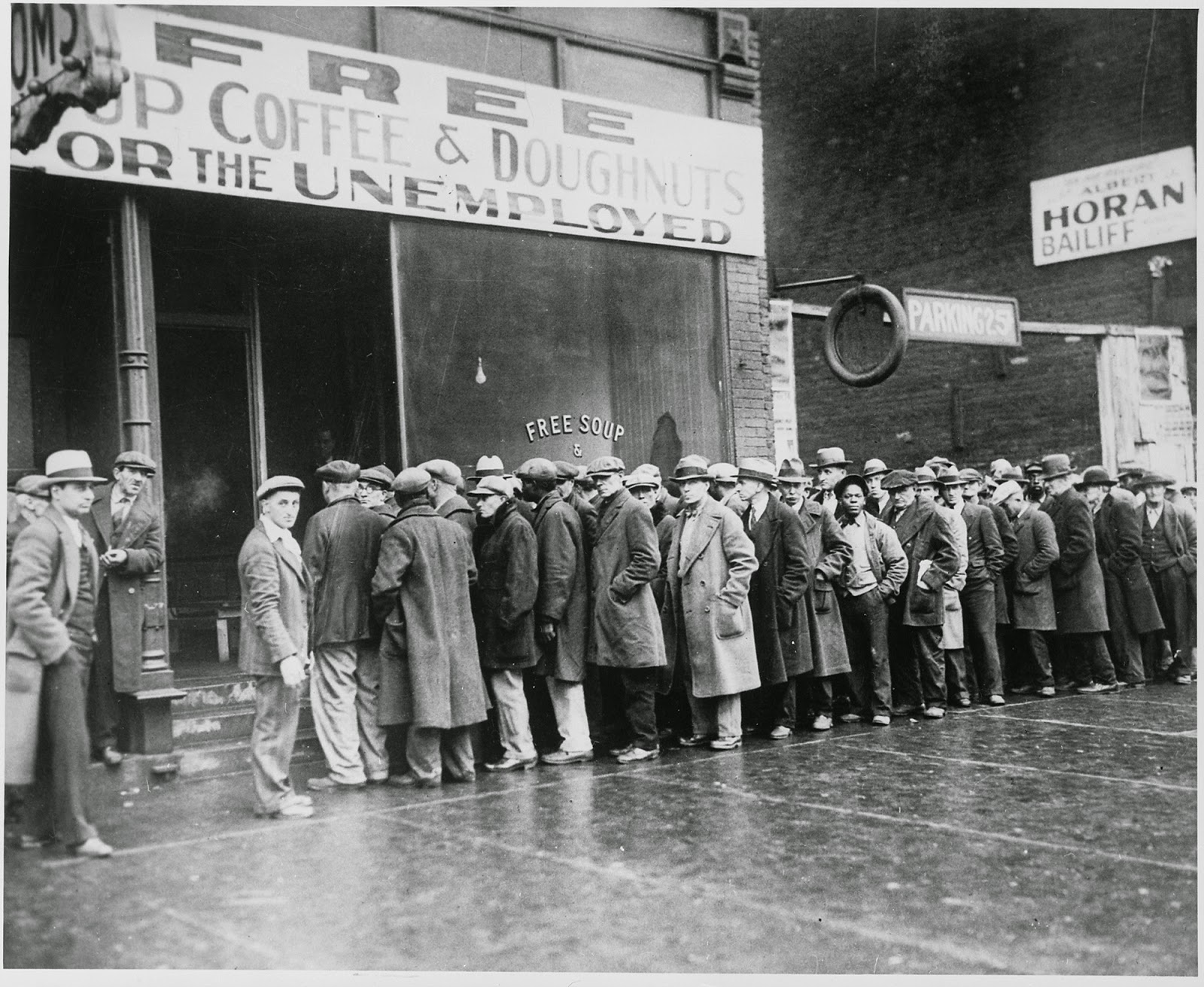
Original caption: "Unemployed men queued outside a depression soup kitchen opened in Chicago by Al Capone."


The kind-hearted philanthropist who had come to their aid was "Public Enemy Number One," Al Capone.

Capone certainly made for an unlikely humanitarian. Chicago's most notorious gangster had built his multi-million-dollar bootlegging, prostitution, and gambling operation upon a foundation of extortion, bribes, and murders.

It culminated with the 1929 St. Valentine's Day Massacre, the murder of seven Irish members and associates of Chicago's "North Side Gang." The men were gathered at a Chicago Lincoln Park garage on the morning of February 14, 1929. They were lined up against a wall and shot by four unknown assailants, two dressed as police officers. The incident stemmed from the struggle to control organized crime in the city during Prohibition between the Irish North Side Gang, led by George "Bugs" Moran, and their Italian Chicago Outfit rivals, led by Al Capone. The triggermen have never been conclusively identified, but former members of Egan's Rats gang working for Capone are suspected of a role, as are members of the Chicago Police Department who allegedly wanted revenge for killing a police officer's son.

Many Chicagoans, however, had more pressing concerns than organized crime in the year following the 1929 Stock Market Crash. Long lines on American sidewalks had become all-too-familiar sights as jittery investors made runs on banks and the unemployed waited for free meals.
Capone's Soup Kitchen at 935 South State Street, Chicago, Illinois.
In early November 1930, more than 75,000 jobless Chicagoans lined up to register their names for unemployment benefits. Nearly a third required immediate relief. "The Madison Street hobo type was conspicuously absent from these lines of men," reported the Chicago Tribune, which noted that many of the unemployed were well-dressed.

A week later, the Chicago Tribune reported that the mysterious benefactor who had recently rented out a storefront and opened a soup kitchen at 935 South State Street was the city's king of booze, beer, and vice. Capone's soup kitchen served breakfast, lunch, and dinner to an average of 2,200 Chicagoans daily (The NY Times reported the Soup kitchen fed 3,000 daily).

In the soup kitchen, smiling women in white aprons served coffee and sweet rolls for breakfast, soup and bread for lunch, and soup, coffee, and bread for dinner. No second helpings were denied, no questions were asked, and no one was asked to prove their need. 

You had to eat your meal there. A few exceptions were made, allowing food to be taken home if the unemployed man had a family to support.
Interior of Al Capone's Soup Kitchen at 935 South State Street, Chicago, Illinois.

On Thanksgiving in 1930, Capone's soup kitchen served holiday helpings to 5,000 Chicagoans. Reportedly, Capone had planned a traditional Thanksgiving meal for the jobless until he had heard of a local heist of 1,000 turkeys. Although "Scarface" had not been responsible for the theft, he feared he would be blamed for the caper and made a last-minute menu change from turkey and cranberry sauce to beef stew.

The soup kitchen added to Capone's Robin Hood reputation with a segment of Americans who saw him as a hero for the common man. They pointed to the newspaper reports of his handouts to widows and orphans. When the government prohibited the sale of beer and alcohol during Prohibition, Capone supplied it to them. The crime boss provided them with food when the government failed to feed them during their desperate days. Hunger trumped principles for anyone who felt conflicted about taking charity from a gangster. The Bismarck Tribune noted, "A hungry man is just as glad to get soup and coffee from Al Capone as from anyone else."
Interior of Al Capone's Soup Kitchen at 935 South State Street, Chicago, Illinois.
In Harper's Magazine, Mary Borden called Capone "an ambidextrous giant who kills with one hand and feeds with the other." She noted the irony that the line of jobless people waiting for a handout from Chicago's most-wanted man often stretched past the door of the city's police headquarters, which held the evidence of the violent crimes carried out at Capone's behest.

Every day, the soup kitchen served 350 loaves of bread, 100 dozen rolls, 50 pounds of sugar, and 30 pounds of coffee, costing approximately $300 a day ($5,175 in today's dollars). It was a sum that Capone could easily afford, as on the same day that news of his soup kitchen broke, Capone's bookkeeper, Fred Ries, testified in court that the profits from Capone's most lucrative gambling houses cleared $25,000 a month.

One night, Lou Barelli, a former gangster and enemy of Capone's syndicate, walked into the soup kitchen, unaware of the owner. A gang member saw Barelli and decided to make a special bowl of soup for him. It's unknown what was done to make a poisonous spoon, but shortly after leaving the soup kitchen, Lou Barelli died; an autopsy revealed he’d been poisoned.
A spoon from Al Capone's Soup Kitchen that makes any edible
food item it touches poisonous. The person gets increasingly
sicker over several hours, then... lights out!
The press never spotted Capone in the soup kitchen, newspapers ate up the soup kitchen story. Some such as the Daily Independent of Murphysboro, Illinois, Daily Independent of Murphysboro, Illinois, expressed displeasure at the adulation bestowed upon its operator. “If anything were needed to make the farce of Gangland complete, it is the Al Capone soup kitchen,” it editorialized. “It would be rather terrifying to see Capone run for mayor of Chicago. We are afraid he would get a tremendous vote. It is even conceivable that he might be elected after a few more stunts like his soup kitchens.”

Although he was one of the wealthiest men in America, Capone may not have paid a dime for the soup kitchen, relying instead on his criminal activities to stockpile goods for his charitable endeavor through extortion and bribery. 

During the 1932 trial of Capone ally State Senator Daniel Serritella, it was claimed that ducks donated by a chain grocery store for Serritella's holiday drive ended up being served in Capone's soup kitchen.

sidebar 
The original soup kitchen idea really had nothing to do with Capone. The idea was originally thought up by Daniel Serritella who later suggested it to Capone. On November 2, 1930, there was a gathering in Nick Circella's apartment in Berwyn. Capone had been hiding there often during of the investigation into the murders of reporter Jake Lingle, Jack Zuta and Joe Aiello. 

Capone, Circella, and Read were discussing the general elections coming up on November 4th. Capone had deals going with candidates on both parties. Dan Serritella had just arrived at the apartment. Capone turned to Dan and said "By the way, Dan, I don't want that woman beaten badly in the First Ward. Keep your eye on that!" Capone winked at Read. "That's insurance! I told the top men she'd lead the Republicans in the First Ward and so she'd better." He turned again towards Dan. "What about that spot on State Street?" He asked. "It's going to take about a C note ($100) a day to run, any way we figure it.' said Serritella. "That's okay!" said Capone "I don't want to be cheap about it."

"Opening a new place?" Harry Read asked. "Sure! Now I got a soup kitchen!" exclaimed Capone. "A soup kitchen?" echoed Read in astonishment.

"That's right!" affirmed Capone. "There are so many people hungry in the First Ward because of the depression that Dan asked me to back a free handout joint. He's got more starving people down there than he can handle—all the bums that land in Chicago go to the First Ward. That makes it tough for the people who live there and so we figured if we could feed the drifters it would lighten the load for the regular charity rackets."

Read being the city editor told Capone that it would make a great story! Capone frowned and immediately retorted "Nothing doing! Nix on that! No story! I'd only be panned for doing it!" Serritella departed.

Capone was confident that Dan Serritella his protege, would have no difficulty getting elected State Senator from the First District. The fix was in. Dan Serritella became State Senator just as Capone had predicted. He had been City Sealer [1] for the William Hale Thompson administration.

Irregularities during his City Sealer days were later coming back to bite him. By this time, Capone was carted off to prison for hs income tax evasion. Serritella and his one time Deputy City Sealer (Harry Hochstein) were convicted of fixing the weight of food through grocers. Meaning that the public was short changed whenever they bought anything by weight. This resulted in a monopoly of millions of dollars received through bribes, extortion and defrauding the public. These are the same charges that were brought fourth against Hochstein and Serritella.

Just before Christmas 1930, several trucks from major food store chains pulled up to a warehouse on the Southside of Chicago. Serritella had presented these stores a list of provisions they were to "Donate" to the cause. In exchange, Serritella would have their short change the public charges dismissed.

Deputy City Inspector Herman Levin that Serritella's secretary had directed him to go to 3022 South Wells (Santa Lucia Church) to direct the packing of Christmas baskets for the needy. December 23, 1930, during the whole day, trucks upon trucks arrived leaving goods to be used for the Christmas basket preparations.

A south side market chain brought chickens and ducks. The National Tea company truck brought a 1000 cans of corn, tea, half pound bags of sugar, and candy. A Novak truck brought a couple of barrel of hams. The General Markets truck brought a couple of barrels of raw hams. Twenty to thirty men who were precinct captains in Serritella's ward were there packing the xmas baskets. Al Tallinger, who was Dan Serritella's secretary had given the strict order to take the ducks that were delivered and hand them over to Capone bodyguard Phil D'Andrea. The ducks, instead of being used for Christmas baskets, would be diverted to the soup kitchen at 935 South State street.

Once the word was out the crowds multiplied. Once Capone's name was tied to it the authorities were mortified. While whether or not partly a ploy for public sympathy by Capone just before went to trial, the soup kitchens he opened were still very appreciated by the hungry jobless men in photo who visited daily. In a sense ploy or not, Al did more than the government ever did at that time for the needy.  It did personally cost Capone about a c-note ($100) per day to operate. This was beside the "Donated" food.  Newspaperman Harry Read stated that he was in Nick Circella's Berwyn apartment with Capone and Serritella when the soup kitchen was planned.

In the end, the reality was the soup kitchen had been primarily state senator Daniel Serritella's idea, and not Al Capone's at all! Serritella ran with the venture in order to garner votes from his constituents for Mayor William Hale Thompson's re-election bid. Once he saw that Thompson's chances were fading the soup kitchen was promptly closed!

In May 1932, Daniel Serritella and Harry Hochstein were given each a year in jail and a $2,000 fine for their grocers extortion role. Daniel had been a well known friend of Al Capone and Harry Hochstein himself had even gone to see the gang chief off  to prison at the Dearborn train station.

On April 10, 1931, the soup kitchen closed. The reasons mentioned were that the economy had picked up and new jobs were available, making the hungry line less abundant.

However, prison, not politics, would be in Capone's future. No good publicity could save Capone from the judgment of a jury that found him guilty of income tax evasion in November 1931. 
Upon hearing of Capone's death in 1947, only the poverty-stricken
remembered Al Capone's kindness
.


Compiled by Dr. Neil Gale, Ph.D.


[1] City Sealer. 
A city with a population of 25,000 people or more may have a city manager or a city administrator, not a city sealer. A sealer can certify commercially used weighing and measuring devices via the Department of Agriculture - Weights and Measures. A city sealer performs device inspections for vehicles, railroads, retail motor fuel dispensers, and other equipment. This job provided many opportunities to skim funds.

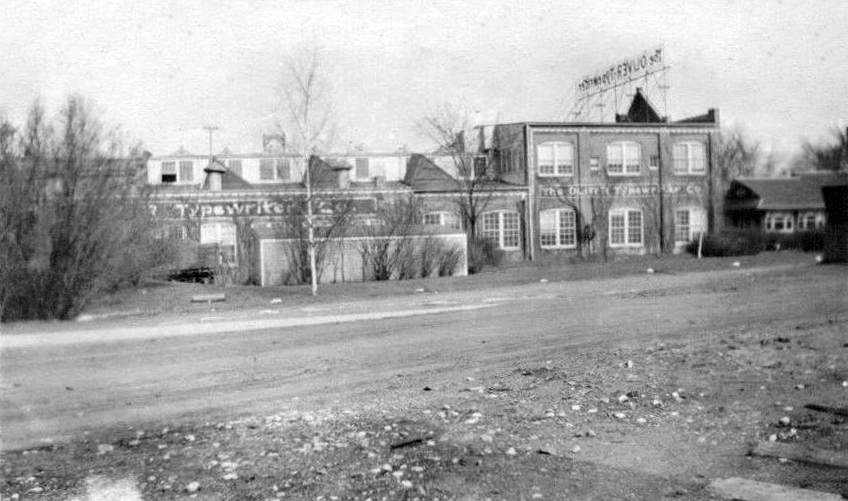
Oliver Typewriter Factory, Woodstock, Illinois. (1895-1959)

The Oliver Typewriter is the invention of Reverend Thomas Oliver. Thomas Oliver was born in Woodstock, Ontario, Canada, on August 1, 1852. At an early age, he became interested in mechanics. After moving to Iowa in 1888, Reverend Thomas Oliver began to create a typing machine out of strips cut from tin cans and rubber. It was claimed he had never seen a typewriter of any kind before. 
After patenting several designs in the early 1890s, Reverend Oliver was able to find investors interested in his machines. With the help of investors, a brick building was leased to Oliver to manufacture his typewriter. While visiting Chicago to promote his machine, Oliver encountered a businessman who became interested in the typewriter and bought the stock held by the initial investors. Oliver received a 65% interest in the company and set out to continue the development of his typewriter.

The Oliver Typewriter Company officially opened in 1895, with headquarters in only two rooms on the ninth floor of a building in Chicago. In December 1896, manufacturing was moved from Dubuque, Iowa, to a factory on a 12-acre lot in Woodstock, Illinois. Since the Oliver Typewriter Company outgrew its office space six times in ten years, construction of a new office building began. From 1907 to 1926, 159 North Dearborn Street in Chicago served as the world headquarters for the Oliver Typewriter Company.


A minor recession from 1921 to 1922 caused a large number of customers to default on their payments resulting in the repossession of their Oliver typewriters. The board of directors voted to liquidate the Oliver Typewriter Company in 1926. 

In 1928, The Oliver Typewriter Company was sold to investors who formed the Oliver Typewriter Manufacturing Company Ltd. in Croydon, England. Around this time, the British company started selling licensed rebranded machines produced by various European nations. In 1958, the Byron Typewriter Company (formerly the Barlock Typewriter Company) of Nottingham, England, was purchased by the British Oliver Company. The licensing ventures were ultimately unsuccessful, and in May 1959, production of all Oliver typewriters ended.

Compiled by Dr. Neil Gale, Ph.D.

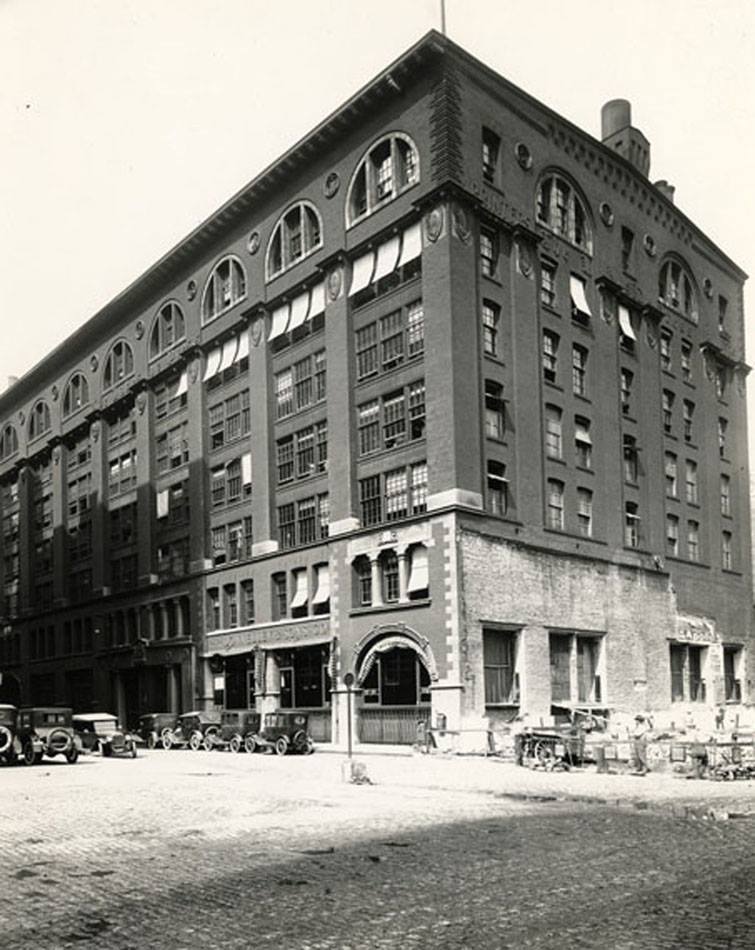
RR Donnelley, Chicago, Illinois.

The rapid growth of RR Donnelley's business required the erection of a new building at Plymouth Court and Polk Street, south of the Loop in an area that would soon be called Printing House Row (known today as Printer's Row). The architect of the new plant was Howard Van Doren Shaw, who had attended Yale with T. E. Donnelley. When the first phase was completed in May 1897, it was immediately touted by the press as the largest and most modern plant in one of the most important printing districts in the country.
Inside were a composing room, electrotype foundry, press rooms with twenty-two cylinder presses, eight high-speed rotary perfecting presses, twenty job presses, one rotary offset press, folding machines, gathering machines, and patent binders, with an annual capacity of 2.5 million books and 75 million booklets. A second phase of the building was completed in 1901, nearly doubling the manufacturing space.

The business expanded so quickly that within a decade, the Plymouth Court building was cramped. RR Donnelley executives planned a new plant on Calumet Avenue, between 21st and 22nd Streets. Again, Shaw was asked to design the building, an eight-story Gothic structure with a tower that was completed in several phases over the next seventeen years.

Once completed in 1929, the Calumet Plant was the largest building in the United States devoted to printing. It contained over 1.1 million square feet of floor space. The daily capacity of the case bindery was 25,000 books; the mail-order bindery could deliver several hundred thousand catalogs and telephone books.


The building's exterior featured terracotta shields with fanciful designs evoking English heraldry and the marks of history's great printers. The initials of T. E. and Reuben H. Donnelley and of Howard Van Doren Shaw were carved on either side of the portal of the 22nd Street entrance.

Compiled by Dr. Neil Gale, Ph.D.

Thursday, May 5, 2022

Lost Towns of Illinois - Cloverdale, Illinois.

Cloverdale, Illinois, was a small unincorporated DuPage county farm community located 25 miles west of Chicago at Army Trail Road and Gary Avenue in Bloomingdale township. Founded in 1888, the community became part of the Village of Carol Stream in 1959.

In the mid-nineteenth century, the area surrounding Cloverdale had been populated by German dairy farmers, and they founded a cooperative creamery to process their products. In business, at least as late as 1915, the creamery was not large enough to absorb the local milk production. Local farmers were looking for access to the Chicago market, hauling milk daily to a rail connection near Bloomingdale, Illinois.

In 1888 the Illinois Central railroad (IC) expanded routes in northern Iowa, connecting them to the IC's original Freeport to Dubuque trackage. But the IC lacked a direct eastbound connection to Chicago, routing through traffic east of Freeport over the Chicago Northwestern. The IC built its own connecting line from Chicago to Freeport to solve this problem, completing it in 1888.
The Cloverdale Creamery was in the southwestern part of Bloomingdale Township in Cloverdale, Illinois. c.1910


The route was close to the Cloverdale Creamery, and a stop was established to service it. Much closer than Bloomingdale for the local farmers, Cloverdale became a central milk shipping point, giving them direct access to the Chicago market. The milk traffic was large enough for the IC to warrant constructing a large depothome to a station master and his familyand a milk loading facility.
Farmers lined up with milk cans on their wagons, waiting for the 10 A.M. eastbound Illinois Central train in front of Tedrahn's General Store. Tedrahn's was located next to the railroad. c.1905


Shortly after the line opened, a Chicago hotelkeeper, Charles Tedrahn, and his wife purchased land. They opened a general store on property north of the IC tracks, adjacent to the depot, and on the southwest corner of Cloverdale Road (later Gary Avenue) and Army Trail Road. 

In 1888 Charles Tedrahn bought a one-acre site in Cloverdale, Illinois. He built Tedrahn's General Store, a two-story building elevated to a height that allowed easy loading from the storefront directly to the bed of horse-drawn wagons. There was a small picnic grove to accommodate the local farmers as they waited for the arrival of the milk train. The store stayed in the family till 1984.
The Nick Lies Farm in Cloverdale, Illinois. c.1900


In addition to food and hardware supplies, Tedrahn General Store became a US Post Office, sold Chicago newspapers dropped by the 7 IC trains serving Cloverdale daily, and provided notary services for the local farmers. Although never incorporated, various other civic functions for the community were housed at Tedrahn's. The basement was the local polling place, and dispatch for the local volunteer fire department was coordinated by the Tedrahn family. The steep front stoop was modified to accommodate two Standard Oil gas pumps.

In 1934 when the original store burned down, Tedrahn constructed a nearly identical single-story building on the old foundation and built living accommodations for his family behind the store. In 1946, during a wave of postal consolidation, the post office was closed, and rural deliveries were split between the Wheaton and Bartlett stations.

Across from Tedrahn's, on the northwest corner of the intersection, was a tavern, and on the northeast corner was the old creamery, now converted to a gas station and repair shop. The remaining southeast corner was a vacant farmed field.
The former Cloverdale Creamery, by the mid-1950s, had become a gas station and repair shop. It cost 25¢ to get them to light the acetylene (welding/cutting) torch.


The local farmers were predominantly German Catholic—the Stark, Hahn, and Mueller families had settled in the area in the 1850s. Arriving from Bavaria, they purchased land from the original Irish Catholic settlers. In 1852 the Diocese of Chicago authorized the construction of a small wooden church, St. Stephens, near the home of a prominent sheep rancher on the township's southern border. St. Stephens continued in operation for over thirty years. But in 1887, with access to its property cut off by the construction of the Chicago Great Western Railway, the church was forced to close. Parishioners were redirected to St. Michael's parish in Wheaton, five miles south, and the old church was torn down. The salvaged wood from it was used to build St. Michael's school. Only the St. Stephens Cemetery remains.

In 1920 the Cloverdale area Catholic farmers petitioned the Catholic Diocese of Chicago, asking for a new church to be built on land donated by the Stark family adjacent to Cloverdale on Army Trail Road. Bishop (later Cardinal) Mundelein approved, and, in 1924, construction was completed. In addition to the sanctuary, the new complex included a three-room school attached to the main church building, a rectory, a cemetery, and a small convent for the Order of Saint Frances nuns who taught at the school. The new church was named St. Isidore for the patron saint of farmers.

In addition to the Catholic school, Bloomingdale Township had established a small, one-room public school for the community. The school was expanded to four classrooms during the suburban expansion in 1959.
 
As roads in the area were improved, farmers began to have other options for shipping their milk. Competing for milk supply, Dairies in Chicago would send large refrigerated trucks directly to the farms early in the morning. As the milk transportation business fell off, the depot in Cloverdale was closed in 1934. Cloverdale returned to a flag stop—eastbound onlyfor a single local train running between Chicago and Freeport.

More significantly impacting Cloverdale was the creation of a live-work subdivision just south of town along Gary Avenue. Carol Stream, a community, named after the crippled daughter of the developer, Jay Stream, began building homes in the late 1950s on land purchased from several local farmers. Improvements in road access to Chicago, the impact of blockbusting and white flight on the city, and the provision of new jobs in an industrial development created by Jay Stream caused the rapid growth. Incorporated as the Village of Carol Stream, its new boundaries included Cloverdale. (The Lost Towns of Illinois - Gretna, Illinois, article has more detail on the development of Carol Stream.)

With increasing population and changes in zoning, more competition developed for businesses in Cloverdale. The restaurant and tavern closed in the early '80s and were leveled after being destroyed by fire a few years later. The old creamery was abandoned and later torn down. The lumber yard became a storage facility and staging area for a construction firm.

Tedrahn's soldiered on, still owned by descendants of the original founder and open, as always, daily until 10 P.M. seven days a week. But in the mid-1980s, the development of the new Stratford Square Shopping Center, just north of Army Trail Road, required a major eastward relocation of Gary Avenue. Left in the backwater and now in competition with a new convenience store and gas station on the main road, they finally closed after 95 years of operation by the same family.

St. Isidore's, benefitting from the growing suburban Catholic population, significantly expanded their facility, adding classrooms and building a new church building and rectory. The original church building still stands, used as a chapel. The Cloverdale Public School, now District 93, has expanded to a modern facility on the original site.

As Carol Stream expanded, the local land, once thought to be the most fertile in Illinois, became too valuable for framing. Most local farm families arranged land swaps, trading their Cloverdale farms for larger acreages further west in Illinois and Iowa.

Comment from the Author: 
I grew up in Cloverdale in the 1940s and 50s. I was an altar boy at St. Isidore's and took my first communion there before leaving the area. My years living in the rural Cloverdale area were some of the happiest in my life. But in 1959, Jay Stream made my father a cash offer for our farm, one of the smaller ones in the area, that my Dad just couldn't refuse. He left farming, and we left Cloverdale a year later. Ironically, although virtually everything else has been changed, leveled, and redeveloped, our old house is still standing. My memories of eating orange push-ups while sitting on the steps of Tedrahn's, maybe all that's left of the town….

By Ken Molinelli, amateur historian, storyteller, and former Cloverdale resident.
Edited by Dr. Neil Gale, Ph.D.

Lost Towns of Illinois - Tiedtville, Illinois.

Frederick "Fred" C. Tiedt was born in 1868 at his family's home on the northeast corner of 91st Street and Wolf Road (now Willow Springs, IL). 


A born entrepreneur, Fred saw an opportunity to capitalize on the presence of over 2,000 ditch diggers working on the Des Plaines River Sanitary Canal and opened a saloon. The first two barrels of beer were sent to Tiedt's new saloon on credit from Atlas Brewery. It rained the day the saloon opened, but that didn't dampen the success of the new saloon in the wilderness.

Tiedt's community almost immediately acquired a rowdy reputation. The laborers finally had a place to go for a good time, and they arrived in bunches - dirty, full of lice, but carrying good money.

Twenty-four-ounce schooners of beer sold for 5¢. Whiskey was 10¢ a shot. A popular pastime among the boisterous canal workers was holding lice races, a filthy forerunner to the stock car races that would follow in later years.

There were already a few farmhouses clustered along 91st Street at Flag Creek, and with the addition of Tiedt's new business building at the very end of what is now Wolf Road, they came to be known collectively as Tiedtville (pronounced TEET-Ville). Tiedtville was in unincorporated Hinsdale in present-day Willow Springs, Cook County, Illinois.


In the late 1800s, Tiedtville had about 200 residents nestled around 100 acres of woods. After the canal workers left the area, Fred developed a picnic area on a wooded grove near the Santa Fe railroad stop. The Santa Fe railroad agreed to make unique weekend stops, attracting many city dwellers to the picnic site. City dwellers would visit for a day or stay in a cabin to fish and hunt. The railroad built two spur tracks: one at the saloon for delivering beer and coal and the other for transporting passengers to the Park.

Inspired by the success of his saloon and general store, Tiedt constructed several other buildings. A dance pavilion, a restaurant, and a four-lane bowling alley were built in a vague half-circle. The pavilion was constructed with huge beams bought from the Santa Fe Railroad that had been used in a bridge over the railway for wagons taking stone and materials to the canal workers.

Tiedt also decided that Tiedtville, his privately owned town, ought to have a post office and that he ought to run it. He got himself appointed postmaster for the district on February 20, 1899. He hung a post office sign out in front of his general store. He began going down the railroad track each morning to meet the train and hanging a bag of mail on the mail hook while catching another from the passing train. Tiedtville was only an unofficial whistle-stop, which meant that sometimes the trains didn't bother to stop, depending upon time and the mood of the engineer. Passengers sometimes had to return to the saloon and wait for the next train.

Tiedt built a picnic grove with a bar and an icehouse to cool the beer. Picnics became so popular at Santa Fe that Tiedt increased his investment. Using his business acumen, Fred continued to grow his business enterprises. In 1896-97, Fred expanded the Picnic Grove to include a $6,000 quarter-mile track for horse and bicycle races. Horse-drawn land scrapers consisting of sixteen teams of horses built the track, which included two grandstands. Initially, farmers raced their horses. As the picnic grove and race track expanded, they were called Santa Fe Park. (During the 1920s, a tornado wiped out the grandstands, and racing was discontinued.) The enterprise was lucrative, with Tiedt sometimes making $1,500 to $2,000 daily.

He continued to look for gimmicks to attract customers and keep them busy. Tiedt built a steam-driven merry-go-round in the next few years with a motor adapted from a threshing machine, a tintype gallery, and game booths. Many picnickers fished in water, and Tiedt diverted to a low spot on his property from Flag Creek. He rented rowboats, and he built a baseball diamond inside the racetrack in a position so that spectators could view the game from the track grandstands.


Customers found a full day of entertainment, and some of the more boisterous ones found themselves incarcerated in a small jailhouse Tiedt had built. Tiedt had no legal authority to pass sentences on rowdies, of course, but this was his method of crowd control.

Tiedt's picnics became bigger every year. He occasionally featured special attractions, like a balloon ascent. One day, a giant balloon was held down by 40 men and filled with hot air. Then, a stuntman stepped into the basket, releasing the balloon. He parachuted out and was injured falling into a tree. That was the last balloon ascent.

But it wasn't the last gimmick. One was a "wine climb," in which Tiedt would hang a gallon of wine from the center of the dance pavilion roof. The first person to climb up and get the wine after 9 PM could keep it.

A farmer in the Santa Fe Park area had a half-blind pony who appeared to be on his last legs. All he could do was run, which he did regularly and speedily, frequently beating much sturdier-looking city horses to the finish line while the locals lined their pockets.

Winters were comparatively dull around Tiedtville. Most of the action centered on the chopping of wood and the cutting of ice. Tiedt and his men would cut the ice off the top of the Des Plaines River and haul it in wagons to the ice houses in the back of the bars. The ice blocks were kept separated with sawdust and stored until summer for use in cooling beer.

Fred continued to build upon the family's successful annual Farmers' Harvest Day Picnic. The event began as a way to help local farmers celebrate the end of the harvest. The popularity of the Farmers' Day Picnic continued well into the 1950s. Santa Fe Park eventually canceled its special arrangement with the Park due to the rowdiness of the passengers. This, along with the Great Depression, adversely impacted Santa Fe Park.


In 1892, Mt. Forest and Willow Springs were incorporated, combining their names to form Spring Forest, Illinois. The Tiedtville post office was discontinued in 1931. In 1937, Tiedtville was annexed when the village of Willow Springs was incorporated, and the name was changed back to Willow Springs.

Fred Tiedt and his wife (Amanda Prescott) had four sons: Ralph, Lawrence, Howard, and Emery. When Fred died in 1946, his son Howard took over Santa Fe Park. Exhibiting the same entrepreneurial skills as his father, Howard formed a corporation to rebuild the race tracks--this time capitalizing on the growing popularity of stock car racing. In 1953, the Santa Fe Speedway opened. The Speedway had a quarter and a half-mile track with a motor cross course and two grandstands. The track used blue clay from southern Illinois for its surface. Howard added motorcycle races and promotions such as the Tournament of Destruction and Powder Puff. Howard died in 1990, and his daughter managed the Speedway until it closed in 1995.

Compiled by Dr. Neil Gale, Ph.D.