Wednesday, December 13, 2017

O'Hare Stadium Midget Car Racing in Schiller Park, Illinois. (1956-1968)

O’Hare Stadium, part of the Chicagoland racing scene for 13 years, was located just southwest of the corner of Mannheim and Irving Park Road in Schiller Park. The speedway, which operated between 1956 through 1968, was initially surrounded by farm fields and was situated just south of Chicago’s famed O’Hare International Airport.
Records show that the track, which for a number of years was in the planning stages by a group which included former midget racing ace, Bob Muhlke, opened its gates for the first time on June 17, 1956, with stock cars and midgets on the inaugural card.
Chicago Tribune Ad - Opening Day, June 17, 1956.
Tom Croft, wheeling a 1950 Mercury, won the 25-lap stock car main event on opening night with Ernie Zartler capturing the special 15-lap midget event. Other stock car drivers in competition during the inaugural program included Red Swanberg, Tony Venturini, Howard “Marblehead” Thome, Vince Rizzo, Jack Holbrook, and Ben “Shorty” Michonski.

Gene Marmor claimed the track’s late model stock car championship that first year, which also saw modified stock cars in competition. Marmor and his Chevy topped Tom Cox and Fred Lorenzen in the final standings in ’56.

Under the promotion of Bill Cherney and Tex Wooten, the speedway would see Marmor win the late model title again in 1957. Marmor in a ’56 Chevy again bested Cox, who was trailed by Kenny Paulsen.

1958 saw Lorenzen, a 23-year-old Elmhurst resident, win the track championship.  Lorenzen, who would later go on to fame in NASCAR Grand National racing, captured 17 feature races that year in his Talarico Brothers 1957 Chevrolet. Lorenzen finished ahead of Bill Lutz and Arnie Gardner in the standings.
1958 O'Hare Stadium Program Cover.
Lutz, who commuted from his home in Louisville, Ky., was Lorenzen’s chief rival in ’58 and the overall champion of the three-track “Chicago City Series” that included top drivers from O’Hare as well as Raceway Park and Soldier Field in a series of three special feature events.

Lorenzen, who would also capture the 1958 and 1959 USAC “National” stock car championships, won the features at both O’Hare and Soldier Field. Lorenzen came home fifth in the Raceway 100 lap chase that was won by Raceway regular Bill Van Allen and his ’58 Studebaker Hawk late model. Lutz and his 1956 Chevy finished second in all three races and missed winning the finale at Raceway when a rear tire exploded with one lap to go.

Lutz was the late model track titlist in 1959, taking season title laurels over Marmor and Lorenzen.

NASCAR sanctioned the late model racing at O’Hare in 1960 and 1961.  Roy Czach was the man to beat in ’60 and ’61, winning back-to-back titles. Czach, who won six feature races in his Hollywood Automotive-sponsored ’57 Chevy, was crowned the 1960 Midwest NASCAR Champion ahead of Skippy Michaels and Lorenzen. Czach was again O’Hare’s NASCAR late model champ in 1961, winning seven main events and topping the points over Erik Johnson and LeRoy Roberts.

Johnson, in his Reno Martinelli-prepped ’61 Chevy “hardtop” No. 7, was the champion in 1962. Johnson won a single-season record 18 features during the campaign and finished ahead of Lutz and “teammate” Martinelli in the standings.
Erik Johnson is joined by Miss Chicago and starter Art Kelly after a big win at O'Hare in 1963.
During 1963, 1964 and 1965, O’Hare rules, under the guidance of Frank “Ham” Lobaza, called for all late models to be strictly convertibles. Marmor and his ’63 Chevy “ragtop” garnered this third title in 1963 over Johnson and Lutz, while Lutz repeated his title-winning efforts in 1964 in his Grand Car Wash-sponsored ’63 Chevy convertible. Lutz bested William “Whitey” Gerken and Bob Urban in the final standings. Martinelli was the champion in 1965, defeating Lutz and Czach.

From 1962 through 1966, the speedway, now under the sanction of the American Racing Organization, would host the O’Hare American 500 each year with the 500 lapper being the longest contest in the area. Lutz, with two victories, along with Gerken, Johnson, and Martinelli, were winners of the 500 lap grinds.

Teammates Johnson and Martinelli would dominate the track’s late model action in the speedway’s final years. Wheeling their “Pride of Half Day” mounts, the duo would claim the final four-track titles with Martinelli and his red and white ‘64 Chevy convertible winning it in 1965 and 1966 and Johnson capturing back-to-back titles in 1967 and 1968. Johnson used his Martinelli Brothers-owned, Wing & Wheel Café-sponsored ’68 Chevelle to grab the ’68 crown.
1964 O'Hare Stadium Poster.
With property values rising, the track, which also featured cadet (sportsman), figure eight, Volkswagen and midget racing over the years, was demolished weeks after the final race program on September 7, 1968. Martinelli was the winner that night of the late model 30-lap feature.
April of 1968 saw Jerry Kemperman (left) drive Dave Roulo's "full-size" Chevy to the victory in the opening night late model feature at the O'Hare Stadium in Schiller Park, Illinois. Joining Kemperman after the win is Art Dexter, who lettered Kemperman's Raceway Park championship car.
Longtime officials, in addition to Lobaza, included starter Art Kelly, assistant starter Jack Minster, scorer Elmer Steinbeck, timer Keith Switzer and pit steward John Stanek, along with public relations man Bud Booth. The announcing chores were handled mainly by the legendary Ed “Twenty Grand” Steinbock and Art Hellyer. Don Theobold provided the laughs as “T-Bone” the Clown.

Visit Our Souvenir Shop 

Compiled by Neil Gale, Ph.D. 

Monday, December 11, 2017

Wimpy Grills in the Chicago, Illinois Area. (1934-1978)

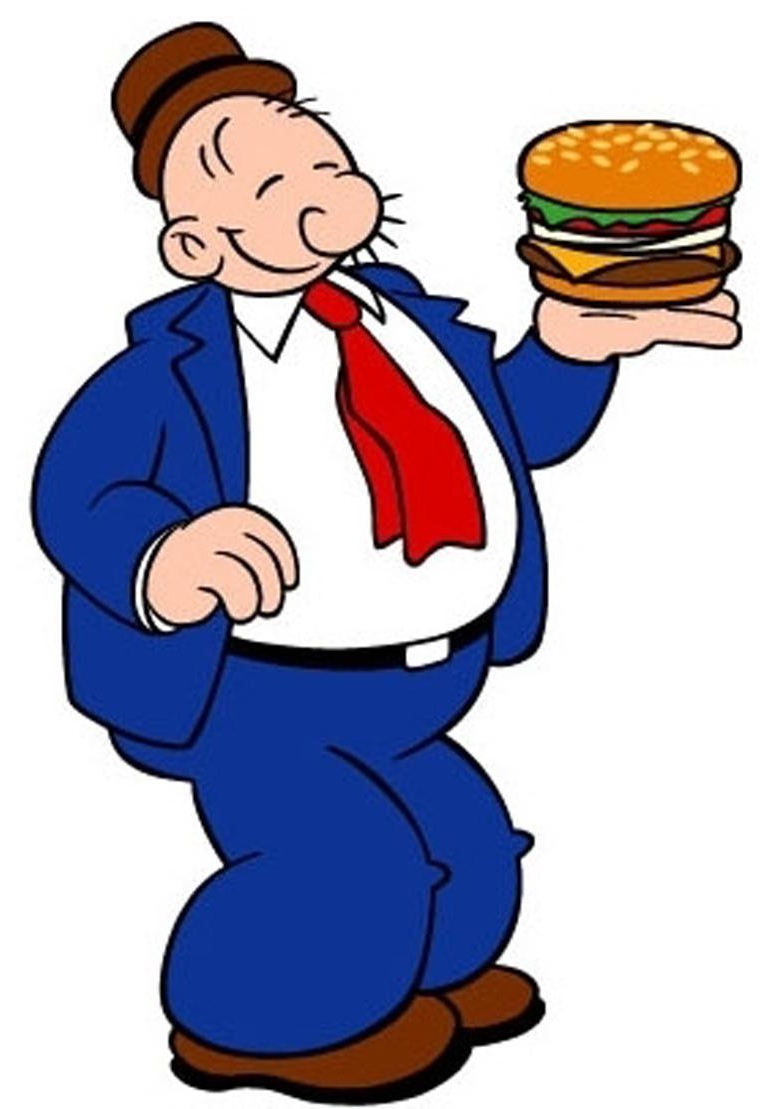
Originally called Wimpy Grills, the Wimpy brand was incorporated on September 12, 1934, by Edward V. Gold when he opened his first location in Bloomington, Indiana. The name was inspired by the character of J. Wellington Wimpy from the Popeye cartoons created by E. C. Segar. "I would gladly pay you Tuesday for a hamburger today."

First Logo Trademark
March 16, 1937
Gold copyrighted the slogan "Join the Wimpy Lucky Club" to promote repeat business in February 1935.

Although the Wimpy name is most closely identified with the city of Chicago, Gold opened his first Chicago area location two years later, in 1936, and after opening units in five other Midwestern cities. 

When Wimpy's leased the Northeast corner of Randolph Street and Wabash Avenue in 1940, making that unit the 10th Wimpy Grill in Chicago and the 25th restaurant in the United States.

Approximately 8 million hamburgers were sold in the Chicago area in 1940.
Wimpy Grills at 1 North Clark Street, Chicago, on the northeast corner. 1958
The Wimpy hamburgers were steamed, 5-hole round patties with a 'special sauce. They used the same hamburger vendor as White Castle, which opened in 1921, thirteen years before Wimpy's. 

I couldn't find any references about when Wimpy's small round burgers became regular-size burgers.


Edward Gold, Founder of Wimpy Chain, Dies. 
Chicago Tribune, October 16, 1977
"I would gladly pay you Tuesday
for a hamburger today.
"

Services for Edward V. Gold, 70, founder of the International chain of Wimpy hamburger restaurants, will be at 2:30pm, Tuesday in the chapel at 5206 North Broadway. Mr. Gold, of 1150 North Lake Shore Drive, died of an apparent heart attack on Friday, October 14, 1977, in the Crane Restaurant he owned at 69 West Washington Boulevard. He and two friends founded Wimpy Grills Inc. in 1934. 

Eventually, he had more than 25 restaurants throughout the United States. In the 1950s, he closed most of them and expanded his operation to Europe, working with J. Lyons & Co., a British catering company. In 1967, Mr. Gold sold the foreign business to Lyons, which had expanded to 1,500 restaurants, but kept the U.S. restaurants. At his death, there were nine Wimpy restaurants, all in the Chicago area, and two downtown Crane restaurants. Mr. Gold, an ardent collector of painting and sculpture, was a former director and treasurer of the Chicago and Illinois restaurant association.


Wimpy's for sale; is there a 2nd Ray Kroc?
Chicago Tribune, July 28, 1978

Wimpy's, one of the better-known names in the hamburger, is up for grabs. U.S. rights to the name and trademark are being offered by the estate of the founder of the holding company of Wimpy Grills, Inc., a Chicago firm established in 1934.

"It's a good name, and we hope somebody takes it and runs with it," says Tom Moran, a principal of Rothbart, Stein & Moran, attorneys for the estate of Edward V. Gold, Wimpy's founder. Gold, who died in October of 1977, once had 25 Wimpy's restaurants in the U.S. There are only four left 
 all in the Chicago area - with ownership in the estate. Gold had sold the rights of Wimpy's overseas, where 1,500 Wimpy's are operating in 39 countries.

"Maybe there's another Ray Kroc (founder of McDonald's Corp.) around for the 1980s, a man who can do a job with Wimpy's in the fast-food or hamburger business," said William Norwell, a trust officer with American National Bank & Trust Co. The name and trademark would be sold by the American National Bank, co-executor of the estate.

By today's standards, Wimpy's outlets would not be considered fast-food outlets, though the chain was a pioneer in the fast-service restaurant business. There once were more than 10 Wimpy outlets in this market. Wimpy has Loop units at 17 East Washington Street, 159 North Wabash Avenue, and 20 West Monroe, which is adjacent to the Shubert Theater. The Wimpy's unit in Woodfield Mall in Schaumburg is being sold. According to the estate's co-executor, the Loop outlets are also for sale. If they are sold [separately], the buyer would only have rights to the Wimpy's name and trademark if he bought them all.

Though Wimpy's has high name recognition, it may be challenging to re-establish the name in the $20-billion-a-year fast-food business. But that growth figure suggests a sales opportunity, considering that hamburger outlets account for a least $10 billion of the total.

"For a long time, McDonald's was king (in the hamburger set), and they are still top - but look at what Wendy's (International) did coming from scratch in the last decade," says an industry observer.

Gold's U.S. stores received no offers, and the units were shuttered.
Wimpy Grills at 1 North Clark Street, Chicago, on the northeast corner. Circa 1955
Wimpy Grills at 1 North Clark Street, Chicago, on the northeast corner. 1955
Wimpy Grills at 1 North Clark Street, Chicago, on the northeast corner. 1957
Looking east on Monroe Street from Dearborn Street, Chicago, 1966.
Wimpy Grills at 20 West Monroe is near the side of the Shubert Theater.
Wimpy Grills at 4861 North Milwaukee Avenue, Chicago (July 4, 1965)
Wimpy Grills at 17 East Washington Street at Wabash Avenue, Chicago. (year unknown.)
Wimpy Grills at 17 East Washington Street looking West from Wabash. Marshall Field's on the right, Chicago. (year unknown.)

Note: Only some of the locations were open during the same time; some stores moved to new locations, and some were closed. These are the restaurant locations I could verify.

WIMPY'S GENERAL OFFICE
1st - 307 North Michigan Avenue, Chicago; 8th Floor
             The general office moved to:
2nd - 140 North Dearborn Street, Chicago; 12th Floor
             The general office moved to:
3rd - 22 West Monroe Street, Chicago; 2nd Floor

CHICAGO LOOP LOCATIONS (beginning in 1937)
1 North Clark Street, Chicago (@ Madison Street .)
17 East Washington Street, Chicago (@ State Street .)
20 West Monroe Street, Chicago (@ State Street .)
50 East Randolph Street, Chicago (@ Wabash Avenue .)
140 North Dearborn Street, Chicago (@ Randolph Street .)
159 North Wabash Avenue, Chicago (@ Benton Place.)

CHICAGO LOCATIONS 
1055 West Lawrence Avenue
1461 East Hyde Park Boulevard
2104 North Harlem Avenue
3309 North Ashland Avenue
4861 North Milwaukee Avenue
5146 West Madison Street
5322 West Lawrence Avenue
5500 South Lake Park Avenue
6206 West Cermak Road
6350 North Lincoln Avenue (Drive-In w/Car Hop Service)
7133 South Kedzie Avenue
7601 South Cicero Avenue (Ford City Mall)
7935 South Halsted Street

OTHER CHICAGOLAND LOCATIONS
Schaumburg, 5 Woodfield Mall (lower level next to Fannie Mae Candies) opened in 1971.
Oak Park, 6200 Roosevelt Road.
Evergreen Park, 98th Street and Western Avenue (Drive-In w/Car Hop Service) opened in 1968.
Evergreen Park, Evergreen Plaza, 9500 South Western Avenue.
Waukegan, Lakehurst Shopping Center, 83 Hurst Road (lower level by J.C. Penny).

ALL OF THE U.S. "WIMPY GRILLS" ARE LONG GONE.
If you see the Wimpy's name, look carefully, because restaurants 
borrowed the "Wimpy" part of the name and added a second word.

INDEX TO MY ILLINOIS AND CHICAGO FOOD & RESTAURANT ARTICLES. 


WIMPY WORLDWIDE
In 1954, Gold sold a license to J. Lyons and Co. to use the Wimpy name in the United Kingdom. Subsequently, in 1957, Wimpy Grills Inc. of Chicago formed a joint company with Lyons called Wimpy's International Inc., based in Chicago, to operate Wimpy Grills in the rest of the world.

The joint company eventually grew to 1,500 locations, and Gold later sold his share to Lyons before his death. After obtaining complete control of international licensing outside of the United States, Lyons and its successors handled global franchising through their United Kingdom-based subsidiary Wimpy International Ltd. This arrangement ceased when Wimpy UK became a subsidiary of South Africa-based Famous Brands in 2007, and the South African company started to handle worldwide franchising duties directly from Johannesburg.


WIMPY UK - UNITED KINGDOM
Lyons obtained a license to use the Wimpy brand in the United Kingdom from Edward Gold's Chicago-based Wimpy Grills, Inc. In 1954, the first "Wimpy Bar" Lyons was established at the Lyons Corner House in Coventry Street, London.
Britain's first Wimpy Hamburger Parlor in the Lyons Corner House cafe (as a Wimpy franchise) on the corner of Rupert Street and Leicester Square, London. 1954
Initially, the bar was a unique fast food section within the more traditional Corner House restaurants. The success soon led to the establishment of separate Wimpy restaurants serving only hamburger-based meals.

In the 1955 newspaper column, Art Buchwald, syndicated writer for the Washington Post, wrote about the recent opening of a "Wimpy's Hamburger Parlor" on Coventry Street and about the influence of American culture on the British.

Buchwald wrote, "Food served at the table within ten minutes of ordering and with atomic age efficiency. No cutlery is needed or given. Drinks are served in a bottle with a straw, and condiments in pre-packaged single-serving packets." In addition to the usual Wimpy burgers and Whippsy milkshakes, the British franchise initially served ham or sardine rolls called torpedoes and cold frankfurter with pickled cucumber sandwiches named Freddies.

During the 1970s, Wimpy refused entry to women on their own after midnight. Some sources speculate that this may be because of an assumption they might be prostitutes.

By 1970, the business had expanded to over 1,000 restaurants in 23 countries.

In July 1977, the business was acquired by United Biscuits. By the end of the 1980s, Wimpy was beginning to lose ground to McDonald's, which had opened its first restaurant in the country in 1974. So the new management of Wimpy started to streamline the business by converting some of the traditional table service restaurants to counter service.

When United Biscuits decided to divest its restaurant division in 1989, it sold the business to Grand Metropolitan (now Diageo). At the time of the sale, there were 381 locations in the United Kingdom. Grand Metropolitan acquired Burger King the previous year and began converting the counter service restaurants to Burger King since it had greater global brand recognition.

In February 1990, the remaining 216 table service restaurants were purchased by a management buyout backed by 3i. These were locations that were considered less desirable by Grand Metropolitan. At the time of the buyout, there were also 140 franchised locations outside of the United Kingdom. In October 1999, Wimpy rolled out a chain of restaurants known as Dr. Beaks to take on brands such as KFC.

The second management buyout occurred in May 2002, backed by the Bank of Scotland. At the time of the sale in 2002, there were approximately 300 locations in the United Kingdom and Ireland.
Food was served on real plates with silverware.
Although Wimpy outlets have decreased in numbers in the United Kingdom, they are still found in many cities and at seafront/seasonal locations, such as Clacton-on-Sea, Clarence Pier in Southsea, Porthcawl, and Brean Leisure Park in Somerset. By the beginning of the 21st century, most Wimpys were found in less desirable low-rent locations that primarily cater to pensioners and others on a fixed income rather than in the former high street locations of their earlier days. Another significant change from earlier times was that most locations were now franchises and not company-owned.

On February 27, 2007, Famous Brands, which owns the Wimpy franchise in South Africa, announced that it had acquired Wimpy UK. Having acquired the brand, Famous Brands has rebranded Wimpy in the United Kingdom to bring it in line with Wimpy South Africa. The "new" logo is used by Wimpy UK from the 1960s until the 1980s.

In November 2009, Famous Brands began to upgrade its 170 locations in the United Kingdom to resemble United States-style diners.
By June 2017, only 80 restaurants remained in the United Kingdom, down from over 500 during its height in the 1970s.


WIMPY SOUTH AFRICA
Wimpy International opened its first South African location in Durban in 1967. The South African restaurants were sold to Bakers SA Ltd in the late 1970s, which in 1987 sold the South African chain to Pleasure Foods, then known as Juicy Lucy SA. Famous Brands Limited, then known as Steers Holdings Limited, acquired Wimpy when it bought Pleasure Foods in 2003.

In February 2007, Famous Brands acquired the United Kingdom-based Wimpy to become the parent company for the chain and collect the franchise fees from the other franchises.
The new style of Wimpy Restaurant in Komani/Queenstown, South Africa.
By 2011, Famous Brands had 509 Wimpy restaurants in South Africa, making it the largest franchise in the Wimpy franchise system. 


Compiled by Dr. Neil Gale, Ph.D. 

Autos Scare Horses, Three Women Injuried in Homer, Illinois, November 21, 1907

A WORD OF WARNING

Since three serious accidents have occurred lately to ladies in this vicinity directly attributable to horses being frightened at automobiles, this question has become an important one and a word of warning to automobile drivers has become necessary.
Downtown Homer, Illinois in 1908 as viewed from the Rose Grain Elevator.
We believe that Homer owners and drivers of automobiles are desirous that their machines not prove a menace or a disturbance to the community, yet many are that claim and circumstances to prove it. Many horses never will become accustom to these horseless conveniences, and since horses were here first and must necessarily remain, the auto drivers must do all in their power to avoid accidents in the best interest of everybody. 

Homer Enterprise Newspaper, Homer, Illinois
November 21, 1907 

Sunday, December 10, 2017

Electric (Amusement) Park, Kankakee, Illinois. (1894-1934)

Electric Park opened at the end of Kankakee's streetcar line on Osborn Avenue in 1894. The park was considered the "Coney Island" of Kankakee. It was located on what was then the eastern limits of Kankakee, on the edge of the city. The name "Electric Park" was itself a draw. For these were the times before modern street lights. Most streets in the city were unlit. A place with lighting after dark was enchanting.
The amusement park was an Emory Cobb[1] promotion. Cobb was an early Kankakee entrepreneur responsible for several municipal improvements, including the town waterworks and Hotel Riverview, which opened in 1887 at a cost of $80,000 ($2,128,481 today). The hotel consisted of 80 guest rooms, an immense covered veranda, tennis courts and croquet grounds, and beach access to the river complete with rowboats.

The idea behind the amusement park was, in part, to sell more streetcar tickets. Admission to the amusement park was a nickel, but it was free if you used the trolley. Use of the bath house, to change into your swimming suit, was an extra one and a half cents[2]. In the winter the park offered ice skating. The theater on the site could hold 700. The dance pavilion was named the "Green Lantern."

Over the years Electric Park held boxing matches and dance-a-thons. Special events at the theater, like a play or an orchestra performance, would command an extra dime for admission.

Electric Park was part of a time when Kankakee served as a Northern Illinois tourist mecca, drawing customers out of Chicago. The Hotel Riverview, the Great Interstate Fair (located where Old Fair Park is today), steamboats and amusement parks were all part of that time. From 1897-1899, the YMCA operated an Athletic Park, which included bicycle racing, adjacent to Electric Park.

Electric Park was designed to be family-friendly. No alcohol was sold. It was a competitor to the rougher Gougar's Grove further up the river. Gougar's Grove began to decline when the Sunday laws against beer sales and gambling were enforced.

The advent of the automobile helped lead to the demise of Electric Park. The park became part of the Kankakee Parks system in September, 1928. The coaster and buildings were dismantled by 1934.


[1] Emory Cobb was the first settler to what would become the Riverview Historic District in Kankakee. Cobb was instrumental in the founding of Western Union, but retired in 1866 at age 34. He moved to Kankakee at this time and built his house at the southwest corner of what is now River Street and South Chicago Avenue. Cobb owned much of the land that would become the district, which he initially used as pasture. Heavily involved in Kankakee's early commercial development, Cobb decided to build a resort hotel on his property. The Riverview Hotel, located in what is now the triangle formed by Park Place, South Chicago Avenue, and South Greenwood Avenue, opened in 1887 and operated for ten years before it was destroyed in a fire. After the fire, Cobb subdivided most of his property for residential use.

[2] The half-cent is the smallest denomination of United States coin ever minted.
First authorized by the Coinage Act of 1792 on April 2, 1792, the coin was produced in the United States from 1793 to 1857. The half-cent piece was made of 100% copper and was valued at one two-hundredth of a dollar. It was slightly smaller than a modern U.S. quarter with diameters 22 mm (1793), 23.5 mm (1794–1836) and 23 mm (1840–1857). The half-cent coin was discontinued by the Coinage Act of February 21, 1857. They were all produced at the Philadelphia Mint.

Saturday, December 9, 2017

The History of Cantonment Wilkinson (Army Base), located in the Indiana Territory, (now Pulaski County, Illiniois) 1801-02.

Cantonment Wilkinson was a large U.S. Army base located in the Indiana Territory, (now Pulaski County, Illiniois), from January, 1801, to April, 1802. “Cantonments” were essentially large temporary camps that lacked stockade or fortification walls. At its peak, cantonment Wilkinson was the largest military base in the country containing approximately 1,500 Infantry, Artillery, and Dragoon (cavalry) soldiers. 
The cantonment had its inception in a late 1790s diplomatic crisis between the United States and France. The French had begun seizing American ships on the high seas and it appeared that all-out war was imminent. In response, George Washington and Alexander Hamilton developed a plan for a large American military base or cantonment in the Ohio River valley. Once the war started, troops from this “Reserve Corps” would move into the Mississippi River Valley and capture the river and New Orleans and from the Spanish who were expected to ally themselves with the French. 

The contonment was established by Lieutenant Colonel David Strong in 1797 as a post of the United States Army. General James Wilkinson[1] (1757-1825) was put in charge of this operation despite rumors that he was a traitor in the pay of the Spanish Government as "Agent № 13," known as the "Spanish Conspiracy."[2]

Wilkinson ordered smaller posts such as Fort Massac[3] to be abandoned and added their garrisons to the Reserve Corps. Commonly alleged is that Wilkinson actually plotted with the Spanish for their seizure of Fort Massac (Metropolis, Illinois) in the so‑called "Tom Powers Plot."[4]

On November 14, 1801 Lewis and Clark deliberately passed the fort on the far side of the river and did not stop because they were worried about the motives of General Wilkinson being a conspirator for the Spanish.
General James Wilkinson
The crisis ended in late 1799 with the signing of a treaty between the U.S. and France. Despite this, ardent federalists such as Alexander Hamilton still hoped for war and plans for the cantonment continued. The first troops arrived at Cantonment Wilkinson in early January, 1801, and immediately began constructing log huts for shelter. According to an 1803 traveler’s account of the abandoned cantonment, it contained “2 to 3 hundred logged houses… built for our army in regular streets as a post or place of arms.” 

Some 500 to as many as 1500 men were stationed here during the period of 1798-1805, which was commonly called Fort Wilkinsonville.

As this description indicates, the cantonment was essentially a large camp of huts and other buildings used by the Army. The camp lacked a stockade wall with the boundaries of the camp instead patrolled by sentinels. Other features of the cantonment included quarter master supply buildings, hospital, bakery, brick works, powder magazine, commanding officer’s quarters, vegetable gardens, parade grounds, a boat yard and a log palisade enclosing the compound. About 400 acres were cleared with the site overlooking the Ohio River at the head of the Grand Chain of Rocks, about 14 miles above the confluence of the Ohio and Mississippi Rivers.

The cantonment reached its peak strength in summer, 1801, when it contained approximately 1,500 soldiers and an unknown number of civilians including laundresses, nurses, sutlers (peddlers), and boat men. During this same time a deadly illness struck the cantonment with a reported 70 soldiers dying from what appears to have been a combination of malaria[5] and dysentery. These soldiers and the base commander Lt. Col. Strong, who died of an unrelated illness, were buried in the cantonment cemetery, the location of which is now unknown.

The majority of the troops moved to the mouth of the Tennessee River following Colonel Strong’s death with Major Jonathon Williams, a grand-nephew of Benjamin Franklin and the later founder of West Point and the U.S. Army Corps of Engineers, left in charge of approximately 70 soldiers including those sick who could not be moved. The 2nd Infantry troops at the mouth of the Tennessee River returned to the cantonment in the fall of 1801, raising the garrison strength to approximately 800 men.

Final abandonment of the cantonment appears to have occurred in April, 1802, following the election of Thomas Jefferson and his subsequent reduction in size of the U.S. Army. Following the departure of the last of the soldiers.

The abandoned structures later became the small community of Wilkinsonville. Approximately 200 Cherokee occupied the abandoned cantonment buildings for several years.

These buildings appear to have gradually collapsed or been destroyed for their wood although scattered accounts exist that indicate the Cherokee burned the buildings. The last known account of still-standing structures at the abandoned cantonment dates to 1817. After that, the abandoned cantonment became the site of a small settlement named Wilkinsonville consisting of no more than a few buildings that appeared on maps throughout the early nineteenth century.
The marker is located just south of New Grand Chain,
on the east side of IL Route 37.
On the Ohio River three miles south of here Cantonment Wilkinson-Ville, named for Gen. James Wilkinson, was established by Lt. Col. David Strong in 1797 as a post of the United States Army. It was garrisoned until 1804. Here are buried Colonel Strong and scores of soldiers who died on duty. Erected by the State of Illinois, 1935.

Compiled by Neil Gale, Ph.D.


FOOTNOTES
[1] The The Complete Three Volume Set: "Memoirs of My Own Times" written by General James Wilkinson, published in 1816; in my Digital Research Library of Illinois History® 

[2] In April 1787, Wilkinson made a highly controversial trip to New Orleans, which was the capital of Spanish colonial Louisiana. At that time, Americans were allowed to trade on the Mississippi River, but they had to pay a hefty tariff. Wilkinson met with Spanish Governor Esteban Rodríguez Miró and managed to convince him to allow Kentucky to have a trading monopoly on the River; in return he promised to promote Spanish interests in the west.

On August 22, 1787, Wilkinson signed an expatriation declaration and swore allegiance to the King of Spain to satisfy his own commercial needs. The "Spanish Conspiracy," as it is known, was initiated by Wilkinson's "First Memorial," a 7,500-word report written before he left New Orleans for Charleston, to the Spanish concerning the "political future of western settlers," and to convince Spain to "admit us [Kentuckians] under protection as vassals (a person or country in a subordinate position to another.)." This was encoded with myriad symbols, numbers, and letters that was decoded via a complex English-Spanish cipher code-named "Number 13," which became the basis for his pseudonym, "Agent № 13."

Upon returning to Kentucky in February 1788, Wilkinson vigorously opposed the new U.S. Constitution. Kentucky had nearly achieved statehood under the old Articles of Confederation, and there was widespread disappointment when this was delayed because of the new constitution.

When the United States government reorganized the Army as the Legion of the United States, President George Washington was faced with the decision of whom to name as its commanding general. The two major candidates for this promotion were James Wilkinson and Anthony Wayne. In the end, the cabinet chose Wayne due to Wilkinson's suspected involvement with the Spanish government. The cabinet promoted Wilkinson to brigadier general as consolation, since President Washington was aware of Wilkinson's fragile ego.

Wilkinson developed a jealousy of Wayne, but he maintained an ostensible (stated or appearing to be true, but not necessarily so) respect toward the general. However, when Wayne wasn't invited to Wilkinson's Christmas party, Wayne developed a full-fledged hatred for Wilkinson, deeming it to be an act of disrespect.

Wilkinson proceeded to file formal complaints with President Washington, against Wayne and his decisions. Upon finding out about the complaints against him, Wayne decided to fight back, launching an investigation into Wilkinson's history with the Spanish. During all of this time, Wilkinson had renewed his secret alliance with the Spanish government (through the Governor of Louisiana Francisco Luis Héctor de Carondelet), alerting them to the actions of both the U.S. and the French occupancy in North America. When Spanish couriers were intercepted carrying payments for Wilkinson, Wayne's suspicions were confirmed and he attempted to court martial Wilkinson for his treachery. However, Wayne developed a stomach ulcer and died on December 15, 1796.

[3] Some historical references seem to confuse Fort Massac and Cantonment Wilkinson. Fort Massac is a state park in the west edge of Metropolis, also along the Ohio River. The two are separated by about 15 miles.

[4] Under this plan Fort Massac was to be taken by the Spanish and mounted with twenty guns. The plotters were also to have a sum of $100,000 for raising and maintaining forces there. 

[5] Malaria was a common disease in Chicagoland and southern Illinois in pioneer days, wherever swamps, ponds, and wet bottom lands allowed mosquitoes to thrive; the illness was called ague, or bilious fever when liver function became impaired; medical historians believe that the disease came from Europe with early explorers around 1500; early travel accounts and letters from the Midwest reports of the ague (a fever or shivering fit), such as those of Jerry Church and Roland Tinkham, the details of which are extracted from their writings:

From the Journal of Jerry Church, when he had "A Touch of the Ague" in 1830: ...and the next place we came to of any importance, was the River Raisin, in the state of Michigan. There we met with a number of gentlemen from different parts of the world, speculators in land and town lots and cities, all made out on paper, and prices set at one and two hundred dollars per lot, right in the woods, and musquitoes and gallinippers thick enough to darken the sun. I recollect the first time I slept at the hotel, I told the landlord the next morning I could not stay in that room again, unless he could furnish a boy to fight the flies, for I was tired out myself; and not only that, but I had lost at least half a pint of blood. The landlord said that he would remove the musquitoes the next night with smoke. He did so, and after that I was not troubled so much with them. We stayed there a few days, but they held the property so high that we did not purchase any. The River Raisin is a small stream of water, something similar to what the Yankees would call a brook. I was very much disappointed in the appearance of the country when I arrived there, for I anticipated finding something great, and did not know but that I might on the River Raisin find the article growing on trees! But it was all a mistake, for it was rather a poor section of country. ...We then passed on to Chicago, and there I left my fair lady-traveler and her brother, and steered my course for Ottawa, in the county of Lasalle, Illinois. Arrived there, I put up at the widow Pembrook`s, near the town, and intended to make her house my home for some time. I kept trading round in the neighborhood for some time, and at last was taken with a violent chill and fever, and had to take my bed at the widow`s, send for a doctor, and commence taking medicine; but it all did not do me much good. I kept getting weaker every day, and after I had eat up all the doctor-stuff the old doctor had, pretty much, he told me that it was a very stubborn case, and he did not know as he could remove it, and thought it best to have counsel. So I sent for another doctor, and they both attended me for some time. I still kept getting worse, and became so delirious as not to know anything for fifteen hours. I at last came to and felt relieved. After that I began to feel better, and concluded that I would not take any more medicine of any kind, and I told my landlady what I had resolved. She said that I would surely die if I did not follow the directions of the doctor. I told her that I could not help it; that all they would have to do was to bury me, for my mind was made up. In a few days I began to gain strength, and in a short time I got so that I could walk about. I then concluded that the quicker I could get out of those "diggins" the better it would be for me. So I told my landlady that my intention was to take my horse and wagon and try to get to St. Louis; for I did not think that I could live long in that country, and concluded I must go further south. I accordingly had my trunk re-packed, and made a move. I did not travel far in a day, but at last arrived at St. Louis, very feeble and weak, and did not care much how the world went at that time. However, I thought I had better try and live as long as there was any chance. 

From a letter by Roland Tinkham, relative of Gurdon. S. Hubbard, describing his observations of malaria during a trip to Chicago in the summer of 1831: ...the fact cannot be controverted that on the streams and wet places the water and air are unwholesome, and the people are sickly. In the villages and thickly settled places, it is not so bad, but it is a fact that in the country which we traveled the last 200 miles, more than one half the people are sick; this I know for I have seen it. We called at almost every house, as they are not very near together, but still there is no doubt that this is an uncommonly sickly season. The sickness is not often fatal; ague and fever, chill and fever, as they term it, and in some cases bilious fever are the prevailing diseases.